Rail For the Valley – QUESTIONNAIRE RESPONSES FROM THE CANDIDATES

CLICK HERE FOR THE COMPLETE QUESTIONNAIRE + RESPONSES
With new leadership coming to both major political parties in B.C., Rail For the Valley found out where the candidates stand on crucial transportation issues for the rapidly growing Fraser Valley.
On January 26, a Questionnaire was distributed to all leadership candidates from both political parties. Three weeks later, and the responses are in.
Encouragingly, all BC NDP Candidates responded, with the exception of Harry Lali. There are some very positive responses. Click here to read.
Unfortunately, as of February 16, none of the BC Liberal candidates have responded. With the Liberal race concluding next week, candidates are strongly encouraged to respond to the Questionnaire, as it deals with issues of the utmost importance to citizens of the Fraser Valley.
Some quotes from the candidates
John Horgan: “I support an at-grade light rail system through Surrey and Langley, eventually reaching Abbotsford and even Chilliwack. Skytrain is a mass transit/high density option that is neither suitable nor desirable for the needs of the Fraser Valley.”
“The Fraser Valley needs to have an integrated transit system that uses light rail to connect communities, with buses bringing commuters from their neighbourhoods to the line.”
“We need complete communities, with jobs, services and entertainment for local residents. Light rail encourages the private sector investments that provide those options.”
Adrian Dix: “Yes, [I support moving forward with planning Interurban Light Rail] with the objective of developing light rail to connect Central City to Newton then to Langley, using the existing line.”
“There is no question in my view that the south of the Fraser region has to have a much higher priority in transit priorities due to rapid growth and the overall neglect of transit south of the Fraser.”
Mike Farnworth: “Local communities should make decisions about their transit needs and solutions that fit their communities and are not imposed by Victoria.”
“Light Rail needs to be part of a comprehensive sustainable transit strategy both here in the lower mainland and in other growing urban areas in British Columbia.”
Nicholas Simons: “The province is trying to force both your communities and Lower Island communities into a Rapid Bus system that will not accomplish community aims, but may be marginally cheaper to implement in the short term than LRT.”
“The ability of LRT to attract ridership means that it can help build density at nodes and further complete-community objectives, where Rapid Bus cannot.”
Dana Larsen: “As Premier, I would immediately halt highways expansion and fund the rapid deployment and expansion of rail throughout the Fraser Valley, Metro Vancouver, Greater Victoria, and if feasible, the Okanagan.”
A note from Zweisystem and Modern Track laying
Just to let everyone know, Zweisystem is on the road to recovery after a serious illness. Many thanks to Cardinal Fang for his timely and interesting posts.
The following is an interesting link to a video showing modern track laying and replacing technique – click and play.
Light Rail, Tramway & Streetcar news from America
The Cardinal has posted a number of news articles on European Light Rail & Tramway developments in the past month; now from the US comes news of two new transit scheme initiatives and developments on a third.
Washington DC
Streetcars on track for return to D.C.
Washington Post 15 February 2011
http://www.washingtontimes.com/news/2009/mar/15/streetcars-on-track-for-return-to-dc/

Czech built Skoda Inekon Streetcars destined for the streets of Washington DC
Superior Plus is a 100 % Low Floor Tram designed for Toronto's unique requirements and specifications, issued in the original Request For Proposal by TTC in January 2008. http://www.inekon-trams.com/toronto/superior-plus-100percent-low-floor-tram.html
Minneapolis
Minneapolis CBS December 21 2010
Minneapolis A Step Closer To Return Of Street Cars
http://minnesota.cbslocal.com/2010/12/21/minneapolis-a-step-closer-to-return-of-street-cars/
New Orleans
New Orleans tram project approved
Railway Gazette February 15 2011
http://www.railwaygazette.com/nc/news/single-view/view/new-orleans-tram-project-approved.html
Birmingham [UK] city centre tram project moves forward
City centre tram project moves forward
Centro Press release
Work to extend the Metro tram system through the streets of Birmingham city centre took a major step forward today after the Government made more than Ai??A?75 million available for the exciting scheme.

The joint project by Centro, the regionA?ai??i??ai???s transport authority, the Black Country and Birmingham City councils, is expected to boost the West Midlands economy by Ai??A?50 million a year and create up to 1,300 sustainable new jobs.
It will provide a fast link between BirminghamA?ai??i??ai???s two major rail stations and deliver more than 3.5 million passengers a year right into the heart of the cityA?ai??i??ai???s shopping district.
It will also give a fast link from New Street Station to the emerging business district at Snow Hill and the unique and historic Jewellery Quarter and serve as a platform for a futureAi??Ai??rapid transit network that can connect and feed into the cityA?ai??i??ai???s forthcoming High Speed Rail terminus.
Meanwhile, the fleet of new, bigger trams will bring major benefits to Metro in the Black Country by increasing passenger capacity and frequency of service to every six minutes throughout the day.
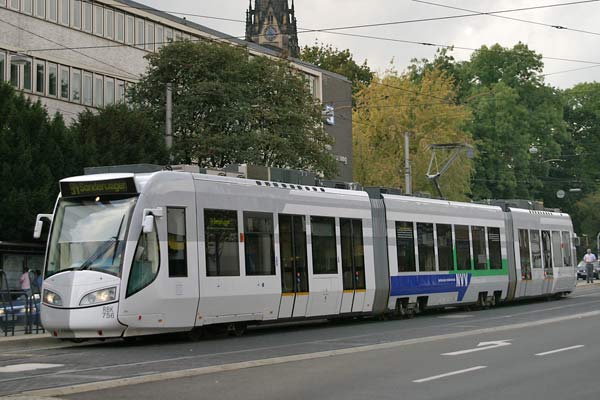
A city committed to tram-trains
Kassel’s tram-train system has transformed public transport in the region. With other cities starting to take an interest in the concept, it is no wonder people from around the world are making the journey to central Germany.
Report from the Light Rail Transit Association [LRTA] published in the January 2010 edition of Tramways & Urban Transit [TAUT]
http://www.lrta.info/tramforward/TAUT_Jan_Tramtrain.pdf
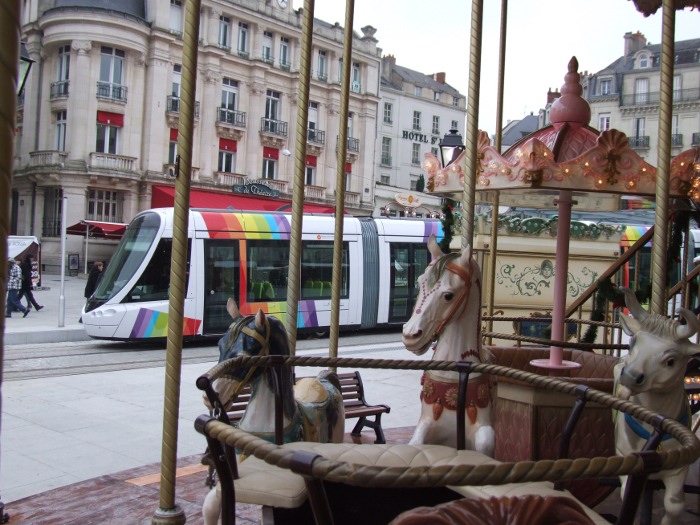
29 new Tram Projects announced for France
11 February 2011 Railway Gazette
Funding allocated to 78 French urban transport projects
FRANCE: Transport Minister Natahalie Kosciusko-Morizet announced the final tranche of light rail, metro and bus funding allocations under the Grenelle de l’Environnement on February 9.
The announcement covers a total of €590m allocated to 78 urban transport projects in 54 conurbations outside Ile-de-France. These include 29 tram projects (152 km), two metro projects (14 km) and 45 bus corridors (456 km).
The city of Lille will receive €9·1m to improve services on metro Line 1 while Rennes will get €90·7m towards the construction of metro Line B. The 14 km automated line will be built by Siemens and is due to open in 2018.
The projects were selected on the basis of their contribution to air quality and addressing climate change; improving links to suburban areas; attractiveness to passengers; accessibility and transport punctuality; and making a direct contribution to the local economy and employment. Works are due to start within the next two years.
The long-term objective of the Grenelle de l’Environnement policy is to invest €1·3bn to create 1500 km of new lines over 15 years. Of this, 1000 km will be completed or underway by the end of 2013.
The original article by the French Ministry of Ecology & Sustainable Development can be read here:
78 nouveaux projets de transports urbains collectifs en site propre (TCSP)
http://www.developpement-durable.gouv.fr/78-nouveaux-projets-de-transports.html
Dix in favour of light-rail transit in the Fraser Valley: group
Dix in favour of light-rail transit in the Fraser Valley: group
BY IAN AUSTIN, THE PROVINCE FEBRUARY 7, 2011
Advocates for light rail in the Fraser Valley can claim an early victory in their quest to get support from leadership candidates for the B.C. NDP and the B.C. Liberals.
Adrian Dix, one of the favourites in the race to become the new leader of the B.C. NDP, has thrown his support behind light rail on the Interurban Line.
A?ai??i??Ai??WeA?ai??i??ai???d like whoever is elected to take into consideration the new studies that show that light rail is a viable component of public transportation in the Fraser Valley,A?ai??i??A? said John Visser of Rail For the Valley, which argues that railcars on the existing rail right-of-way are far more cost-effective than expanding the SkyTrain heavy-rail line.
A?ai??i??Ai??For the cost of two to three kilometres of SkyTrain, we can build light rail for 250,000 people.A?ai??i??A?
Rail For the Valley sent out transit questionnaires to the dozen candidates vying for their partiesA?ai??i??ai??? leadership, and Dix is the first to endorse the light-rail proposal.
A?ai??i??Ai??All responses will be posted on our website (railforthevalley.com)A?ai??i??A? said Visser. A?ai??i??Ai??WeA?ai??i??ai???re looking forward to honest assessments from all the candidates.A?ai??i??A?
Dix is very supportive of the light-rail concept in his response to the five-question survey.
Asked, A?ai??i??E?Do you support moving forward with planning Interurban Light Rail?A?ai??i??ai???, Dix replied:
A?ai??i??Ai??Yes, with the objective of developing light rail to connect Central City to Newton then to Langley, using the existing line. This core service could be supported with expanded fast-bus and bus feeder services.A?ai??i??A?
Residents south of the Fraser River have long lobbied for improved transit services as an alternative to the daily traffic bottlenecks at the Port Mann Bridge.
A?ai??i??Ai??With new political leadership soon coming to this province, it is vital the public, and political party members, know where candidates stand on a crucially needed light rail system,A?ai??i??A? said Rail For the ValleyA?ai??i??ai???s John Buker.
iaustin@theprovince.com
twitter.com/ianaustin007
Ai??Ai?? Copyright (c) The Province
via Dix in favour of light-rail transit in the Fraser Valley: group.
Istanbul & Hafif Tram/Light Rail news
Low-floor trams in service as Istanbul extension testing begins
Railway Gazette 20 February 2011
http://www.railwaygazette.com/nc/news/single-view/view/low-floor-trams-in-service-as-istanbul-extension-testing-begins.html
TURKEY: The Mayor of Istanbul attended a ceremony on February 3 marking the entry into service of the first 14 of 37 Citadis trams being supplied by Alstom Transport. The remainder will enter traffic in the coming weeks.
The ai??i??73m contract for the trams was awarded by operator Istanbul Ulasim in September 2007, acting on behalf of Istanbul Metropolitan Municipality. The new cars are being used to provide a completely low-floor fleet on route T1 from Zeytinburnu to Kabatas, and are replacing high-floor cars on T2 from Zeytinburnu to Bagcilar. They operate in coupled pairs, carrying up to 500 passengers per set.
Trial running will begin shortly on the Bagcilar – Ikitelli – Olimpiyat extension of the Hafif light metro, using 20 four-car Metropolis metro trains which Alstom delivered between October 2008 and February 2010.

World Tramway patronage statistics
At grade tramway system statistics.
Passenger patronage, in excess of 100 million boardings per annum
Updated for 2010
St Petersburg, Russia: 476 million
Budapest, Hungary: 364 million
Prague, Czech Republic: 350 million
Warsaw, Poland: 270 million
Moscow, Russia: 251 million
Vienna, Austria: 240 million
Zagreb, Croatia: 214 million
Zurich, Switzerland: 199 million
Yekaterinburg, Russia: 180 million
Melbourne, Australia: 180 million
Berlin, Germany: 171 million
Gothenburg, Sweden: 140 million
Amsterdam, Netherlands: 130 million
Stuttgart, Germany: 130 million
Toronto, Canada: 105 million

Budapest Trams, courtesy of Akos Varga
Statistics, courtesy of;
Tony Prescott, Jeff Kenworthy and Michelle Zeibots, Janes Urban Transport Systems
Interurban gains major political support
Early bird gets the worm…… as in, extra media coverage, being a…. worm, yes
Stay tuned for a complete posting of Candidate Responses on http://www.railforthevalley.com, once candidates have been given sufficient time to respond.

Adrian Dix calls for Interurban Light Rail to Langley, supports Task Force Demo Project
For immediate release
Rail For the Valley recently sent out a Questionnaire on Passenger Rail to all BC Liberal and BC NDP Leadership Candidates.
Already, some candidates have responded to the Questionnaire. Most notably so far, NDP Leadership Candidate Adrian Dix is calling for Interurban Light Rail to Langley, as well as promising support for a Demonstration Project being promoted by the South of Fraser Community Rail Task Force.
In answer to the question, "Do you support moving forward with planning Interurban Light Rail?" Dix replied,
"Yes, with the objective of developing light rail to connect Central City to Newton then to Langley, using the existing line. This core service could be supported with expanded fast-bus and bus feeder services."
Dix also promised support for an Interurban Demonstration Project promoted by the South of Fraser Community Rail Task Force, a group chaired by Langley Township Mayor Rick Green with official representation from almost all South of Fraser municipalities, and all universities. In his response, Dix stressed the need to get effective transit solutions in place south of the Fraser as soon as possible."Carbon tax revenues should be directed to transit and other green infrastructure, in all regions," he wrote, adding: "How is it that a stadium roof costing hundreds of millions of dollars can be ordered up by the Liberals without any discussion of priorities, while necessities such as transit are ignored?"
Full Responses of all Leadership candidates – from both BC Liberal and BC NDP leadership races – will be made public soon, once all candidates have had ample opportunity to respond, and will be viewable online at http://www.railforthevalley.com.
"With new political leadership soon coming to this province, it is vital the public, and political party members, know where candidates stand on a crucially needed light rail system."-Dr. John Buker, Rail For the Valley
Below are the 5 questions that have been asked of the candidates:
1) Premier Campbell has promised to extend SkyTrain to Langley City but both Mayor Watts of Surrey and Mayor Green of the Township of Langley have expressed a strong preference for developing a more affordable at-grade Light Rail system and are against extending SkyTrain to Langley City. Do you support developing an at-grade Light Rail system to serve the South of Fraser region?
2) Under Premier Campbell, the Provincial government advocated a form of Rapid Bus for the Fraser Valley Regional District, instead of integrating Light Rail into a reorganized and integrated bus and rail network. Do you have the same preference for a bus only system or do you support an additional Light Rail option for the Fraser Valley? Under what timeline?
3. The recent provincial study "Strategic Review of Transit in the Fraser Valley" covered the Fraser Valley Regional District but also reviewed and rejected introducing a "Commuter Rail" service using the provincially owned Interurban rail corridor. There were just 7 stops between Chilliwack and Scott Road SkyTrain in Surrey (100 kms). This type of Commuter service is not a sensible approach using the Interurban corridor. Community Rail, on the other hand, would result in a modern Light Rail system suitable for travel between communities along the 100 km line. Do you support the Community Rail concept of a rail service designed to move people around Fraser Valley communities?
4) The Interurban (Southern) Railway has long been mentioned as a potential route for a Light Rail service in the fast-growing Fraser Valley. The 2010 Leewood Projects Ltd. Study takes a detailed look at the Interurban and suggests an initial service can be built quickly and affordably. The Study recommends early implementation in order to maximize the benefits. Do you support moving forward with planning Interurban Light Rail?
5) The South of Fraser Community Rail Task Force, with official representation from almost all South of Fraser municipalities, and all the universities, is promoting a Community Rail (Interurban) demonstration project. Under your leadership, will the Provincial government work with this Task Force to ensure that such a project is a success?



Recent Comments