It seems there is much confusion with TransLink and metro cities regarding transit mode. It is the old shell game, practiced by BC Transit, TransLink, both the provincial Liberal Party and the NDP, regional Mayors and very sadly, both University of BC and Simon Fraser University.
Rapid transit refers to metro and not light rail, which is a stand alone transit mode and far more adaptable than rapid transit and very successful in application. LRT can be built as rapid transit, as we see in Ottawa and Seattle but it can also operate as true LRT or even a streetcar if need be.
Unlike rapid transit, LRT is extremely flexible in operation and not restricted by automatic train control, which demands a grade separated rights-of-way, either on a viaduct (very expensive) or in a subway (hugely expensive).
So why does the old shell game continue? Why to bureaucrats confuse both the public and politicians with non existent transit modes?
It is time for clarity in planning, which make many bureaucrats and politicians very, very nervous.
The first letter sent, Janurary 5, 2021 to Richmond mayor and council.
Mayor and council;
*
A recent article in the Richmond News makes me wonder if city staff understand the nuances of rail transit.
*
We currently operate light metro in the region, with Richmond being served with a pygmy heavy rail metro, operated as a light metro and lacks both capacity and affordability.
*
Rapid transit is a bureaucratic term that can mean anything, but the transit industry refers to rapid transit as a heavy rail metro.
Light Rail Transit or LRT is just a modern tram operating on a dedicated rights of way, which the former interurban route is a good example of.
*
Modern light rail can affordably cater to traffic flows from 2,000 persons per hour per direction to over 20,000 (pphpd), which is currently more than the maximum capacity of 15,000 pphpd for the Expo and Millennium Lines and around 9,000 pphpd with the Canada Line.
*
There is no need to densify the route for modern light rail, in fact the density issue is strictly a SkyTrain issue because there is no other credible reason for building the light metro in the Metro Vancouver region. The density issue was created to support the development of towers and high rise condos, which benefit land speculators and land developers, who tend to support politicians at election time.
*
What is needed for LRT to succeed is building a user-friendly service that takes customers from where they live to where they want to go; something most transit planners in Metro Vancouver tend to forget.
The cost of the SkyTrain light-metro is now over $200 mil/km to build. Richmond does not have the population to support such an investment.
The reply from a City of Richmond Engineer;
As you note, there certainly exists a range of rapid transit technologies available today. Although costs and infrastructure requirements vary by type, each feature high-capacity vehicles and provide priority over general traffic that goes beyond what is achieved with conventional transit.
*
Metro Vancouver’s rapid transit system currently includes the Rail Rapid Transit (RTT) Expo, Millennium and Canada Lines. TransLIink, the authority responsible for providing public transit in the region, have also considered two other forms of rapid transit: Bus Rapid Transit (BRT) and Light Rail Transit (LRT). There are five BRT lines currently in operation and a future BRT linking Richmond City Centre to the Expo Line is planned by TransLink.Given the higher cost of rail rapid transit relative to conventional bus service, ridership is a key consideration to ensure effective and productive service.
*
Transit Service Guidelines established by TransLink provide general thresholds to determine the type and provision of transit services. Typically, the type of transit service depends on a variety of factors including trip type, number of destinations and travel demand based on current and future land use on a corridor. For rapid transit service, TransLink relies on comprehensive and specialized studies to consider eligibility for investment in consideration of other regional priorities. Studies focus primarily on high performing frequent transit routes that already have significant established ridership that is anticipated to increase with densification in the future.
I have forwarded your comments to TransLink for consideration, given they are the authority that provides regional public transportation.
Regards
The Wuppertal Schwebebahn could be considered Rail Rapid Transit, simply because it is a true monorail and uses one rail, unlike straddle-beam monorails.
The reply, Janurary 12, 2021
Thank you for your email.
*
There is really no such thing as Rail Rapid Transit and generally it is a bureaucratic term to encompass all rail systems, which in the end does not really describe any mode.
*
Today we have metro, light-metro and light rail and their sub variants. Light-metro is largely obsolete, superseded by light rail and metro.
*
The Metro Vancouver region operates light metro, with the Expo and Millennium Lines operating a proprietary light metro system and the Canada Line which is a heavy-rail metro built as a light metro.
*
Light rail is a transit mode unto itself and comes in sub variants, such as streetcar or tram, light rail, which is a tram operating on a dedicated rights-of-way, tramtrain which is a tram that can operate on both tram or streetcar lines or on a mainline railway and now ultra light tram, which is said to be cheaper than BRT.
*
We do not have BRT in the lower mainland, rather we have express buses tarted up as BRT. To be called BRT a bus must operate on a dedicated rights-away and with greater land take and lower unit capacities, have costs approaching modern light rail!
*
BRT is not more efficient than LRT, especially as the number of passengers increases. Operationally, BRT becomes very inefficient compared to LRT at only moderate levels of passenger flows. The operating costs of having to operate greater and greater numbers of buses compared to the number of (Light Rail Vehicle), to move the same number of passengers, is why Ottawa started transforming the continent’s largest BRT network into an LRT network.
*
The problem in Richmond is that at over $200 million/km, it is impractical to extend the Canada Line and the best course of action is to build a stand alone LRT line and maybe convert the Canada Line to LRT at a later date. I have been advised that it would be the cheaper option to increase capacity.
*
TransLink, unfortunately, is decades behind the times and their studies reflect this. No one builds with light-metro and proprietary railways are losing favour due to their high costs, especially as they age.
*
I have been advised by both Canadian, American and European engineers about our local transit issues and their answers are blunt and to the point, Metro Vancouver operates a dated light-metro system that does not conform to modern public transport philosophy and by doing so is costing the taxpayer far more money that it should. A great disservice has been done to the transit customer, by providing an inferior service, decades out of date.
*
The letter is a warning of financial ills to come and indeed financial ills will come.
The modern tram, can obtain much higher capacities than our light-metro system, but can be built at a fraction of the cost.
Zwei has been copied a letter that has been sent out to Metro politicians. I also have been informed that the provincial NDP have blocked receiving said letter.
It is of great importance that the media should ask pointed questions about regional transit, but they don’t and have given largely given regional transit a free pass.
Making transit issues a ‘mom and apple pie’ approach is leading to a financial quagmire, which I am afraid will start giving the taxpayer sticker shock very soon.
The 50 year costs for SkyTrain are never mentioned and for good reason, they are huge.
My name is Malcolm Johnston and I have been involved with transit issues in the lower mainland for over 35 years. I am advised by transit experts, both in Canada and abroad and I am the person responsible for the Leewood Study, an independent study by Leewood Projects UK, about the viability of reinstating the former Vancouver to Chilliwack interurban service with modern TramTrain or light diesel multiple units, on behalf of the Rail for the Valley group.
The Lower mainland has a very expensive transit problem; Metro Vancouver mayors, the province and TransLink have approved $4.6 billion dollars, extending the Expo and Millennium lines 12.8 km.
This massive expenditure, extending the Millennium and Expo Lines a mere 12.8 km will not attract much new ridership because there will be little improvement for the transit customer.
Premier Horgan’s recent political promise to extend the Expo Line to Langley, has grave financial implications, akin to the FastFerry fiasco, which has followed the NDP as an Albatross around its political neck for two and half decades.
This $4.6 billion investment confirms Bent Flyvberg’s Iron Law of Mega-projects specifically addresses why politicians are obsessed with infrastructure at any cost.
…the “political sublime,” which here is understood as the rapture politicians get from building monuments to themselves and their causes. Mega-projects are manifest, garner attention, and lend an air of proactiveness to their promoters. Moreover, they are media magnets, which appeals to politicians who seem to enjoy few things better than the visibility they get from starting mega-projects. Except maybe cutting the ribbon of one in the company of royals or presidents, who are likely to be present lured by the unique monumental and historical import of many mega-projects. This is the type of public exposure that helps get politicians re-elected. They therefore actively seek it out.
It is time TransLink stops its deliberate game of confusion with Metro Vancouver’s rapid transit system, which has lead to decades of dubious transit projects.
Metro Vancouver’s rapid transit system is a light-metro system, which is called SkyTrain. The SkyTrain system is made up of two distinct railways:
The Canada Line, a conventional railway, built as a light metro and uses ‘off the shelf’ Electrical Multiple Units (EMU’s) currently supplied by ROTEM of Korea.
The Expo and Millennium Lines operate an unconventional, proprietary and often renamed light-metro system, now called Movia Automatic Light Metro (MALM), which cars are only built by Bombardier Inc.
The MALM system uses linear induction motors (LIM’s) and is not compatible in operation with any other railway except its small family of seven systems. Vancouver is now the sole customer for MALM.
A technology bias exists at TransLink. Internationally the MALM system is considered obsolete as it costs more to build, operate and maintain than conventional light rail. Cities that built light-metro, such as Ottawa and Seattle, use light rail vehicles, as they are much cheaper to operate and far more flexible in operation.
TransLink continues to use this cunning method of manipulating analysis to justify SkyTrain in corridor after corridor, and thus succeeds in keeping its proprietary rail system expanding.
Gerald Fox, Noted American engineer, retired.
TransLink’s well oiled propaganda machine, churning out ”fake news” and “alternative facts” has created the local SkyTrain myth. The SkyTrain myth has fuelled the SkyTrain Lobby, which repeats TransLink’s fake news so much, that politicians and the public have come to believe the SkyTrain myth.
The Broadway subway is testament to the power of the SkyTrain myth. Funding for the $2.83 billion Broadway subway has been approved, yet its foundation is one of half truths and questionable planning.
The North American Standard for building a subway is a transit route with traffic flows in excess of 15,000 persons per hour per direction (pphpd), yet peak traffic flows on the 99B Line is about 2,000 pphpd, based on 3 minute peak hour headway’s.
TransLink’s two top planners were fired for their opposition to the subway, by publicly stating the obvious; that there wasn’t the ridership on Broadway to justify an almost $3 billion subway.
TransLink quite happily lets people believe that Broadway is the “most heavily used transit route in Canada“, but claims “This is our region’s most overcrowded bus route.”, instead when there is a threat of professional or legal accountability.
“The problem with TransLink is that you can never believe what it says; TransLink never produces a report based on the same set of assumptions.”
Former West Vancouver Clr. Victor Durman, Chair of the GVRD (now METRO) Finance Committee.
The Mayor of Surrey’s flip flop from LRT to SkyTrain was also predictable, as the bureaucrats at TransLink did their best to ensure this would happen.
The well oiled SkyTrain Lobby was in full force with every bit of classic fake news and alternative facts they could muster, yet ignored the fact that MALM is now considered obsolete internationally and only seven such systems have been built in over forty years.
The present mayor of Surrey’s election claim that a SkyTrain extension from King George station to Langley City could be completed for $1.65 billion, was later exposed to be false.
The figure was $1.25 billion lower than the $2.9 billion estimate by engineering firm Steer Davies Gleave & Hatch, yet TransLink, the provincial and federal governments stayed mute.
Now, with the NDP promising to complete the proprietary MALM railway to Langley at a further cost of $1.6 billion, a very costly issue arises.
The aging Expo line is desperately in need of a major rehab. This rehab includes a major overhaul and expanded electrical supply; a new automatic train control system, all the switches being replaced on both the Expo and Millennium Lines to permit faster operation and all stations must be rebuilt to deal with the higher customer flows which come with a higher capacity. The rehab is said to cost between $2 billion to $3 billion and must be done before any extension to Langley is built.
The real cost of the Langley extension will be $3.6 billion to $4.6 billion!
How is this to be funded?
The combined annual operating costs for the Broadway subway and the full Expo Line to Langley will exceed $70 million annually.
How is this to be funded?
Is a $4.6 billion expanding MALM 12.8 km a good investment?
By comparison, 2020 cost for The Rail for the Valley’s Leewood Study, for a 130 km, Vancouver to Chilliwack passenger service, using the BC Electric rail line, servicing North Delta, Cloverdale, Langley, Abbotsford, Sardis and Chilliwack and connecting the many business parks, universities and colleges along the route, will cost $1.5 billion.
TransLink does not support the Leewood Study’s Vancouver to Chilliwack rail service because it would outperform their $4.6 billion, pygmy 12.8 km extension to the Expo and Millennium Lines.
“But, eventually, Vancouver will need to adopt lower-cost LRT in its lesser corridors, or else limit the extent of its rail system. And that seems to make some TransLink people very nervous.”
Gerald Fox
With the Covid-19 emergency, a major rethink must be done on how we provide an affordable regional rail system. Metro Vancouver’s light-metro system has been well studied, yet those cities who have done so, have invested in light rail instead!
Why, in an era of unprecedented investment in regional rail transit, has no one copied Vancouver’s light metro system, including the exclusive use of the proprietary MALM system?
Of the seven systems built in the past forty years, Toronto is soon tearing down their version of SkyTrain and Detroit’s version will follow, as both systems infrastructure are near being “life expired”.
Two of the later versions of SkyTrain built in Malaysia and Korea have embroiled both the patent holders, SNC Lavalin and Bombardier in legal proceedings, including charges of bribery.
It is time to put an end to MALM expansion or the provincial government and current mayors, will become like Marley’s ghost, dragging an ever longer chain made of empty cash-boxes, IOU’s, red ink, bare pursesand increased taxes wrought in union made steel, election, after election for decades to come.
Remember the FastFerries?
Today, TransLink continues to be toxic with taxpayers and extending MALM to Langley will make TransLink and all who supported the gold-plated extensions radioactive politically, on a Chernobyl scale.
THE CAPACITIES of different modes of transport are generally quoted as 0-10 000 passengers per hour for bus, 2000-20 000 for light rail, and 15 000 upwards for heavy rail.
* Maximum capacity is only likely to be required for a few hours during peak hours, and even here there are likely to be variations both day by day and within each hour. The capacity required originates from the route’s social characteristics.
* As for the vehicles, buses have a comfort capacity equal to the number of seats, and a maximum capacity equal to seats plus standing load.
* In the case of trams, it is more complicated. The nominal maximum capacity is calculated at four passengers per square metre of available floor space (a reasonably comfortable level), plus the number of seats.
* As trams are designed to carry a large standing load, the ratio of standees to seats is quite high. The standing area is also important for the carrying of wheelchairs, pushchairs, shopping and sometimes bicycles. Some manufacturers quote maximum capacity using 6p/m2 while a figure of 8p/m 2 is used as a measure of crush capacity. This last figure is also employed to determine the motor rating of the vehicle.
* A further complication is that even when there are seats available, some passengers prefer to stand. This may be because they are only traveling for a few stops, that they want to stretch their legs, or may just prefer to stand.
* A tram’s comfort capacity can therefore be considered as the number of seats, plus the voluntary standees who may amount to up to 10-15% of the nominal maximum number of standing passengers.
ELASTICITY
* It is the difference between the average passenger load for any particular time and the crush load which gives light rail its Elasticity Factor, allowing it to cope with variations in conditions such as sudden surges or emergency conditions.
* Standing is made more acceptable by the design of track and vehicle, reducing the forces acting on the passenger to a minimum. This makes for a smooth ride, as well as ensuring ease of access, good support and the ability to see out without having to stoop.
* Where a route is mainly urban with short journey times, the number of vehicles required should be calculated on the nominal maximum. On longer journeys outside the central area, a lower level may be more appropriate, dependent on the route’s characteristics. Even on rural sections, there are likely to be a a number of short distance riders, and the loading factor will increase nearer to the urban area.
COMPRESSIBILITY
* While it might be thought desirable to offer every passenger a seat, it is in fact the ability to carry high loadings in a confined area (the Compressibility Factor) which enables light rail to achieve many environmental benefits, allowing large numbers of people to be carried without harming, and often improving, the features of a city.
* It is city centres where several routes combine that the most capacity is required. A typical situation could be a pedestrian street with six routes operating at 10-minute headway giving 36 double coupled trams per hour each with a capacity of 225. This gives a nominal capacity of16 200 passengers per hour which can be increased to 25 200 pph in extremis without extra vehicles.
Light rail is unique in this ability to operate on the surface with its capacity without detracting from the amenities which it serves. A further factor in setting the resources required is the need to lure motorists out of cars. The more difficult the traffic conditions, the higher the loading’s will be acceptable. It is however important that crush loads are not allowed for more than the shortest of periods on an infrequent basis, both to maintain customer satisfaction and prevent elasticity of the system being compromised.
* It is vital that public transport can cope with sudden changes in demand, such as extreme inclement weather or air quality violations which can cause private traffic to be halted. This is where the elasticity inherent in light rail is so beneficial in enabling an instant response in an economical fashion. A tram may be crowded, but its infinitely better than having to wait in the snow of smog until extra vehicles are brought into service.
* It is this unique combination of Capacity, Compressibility and Elasticity rather than capacity alone which makes light rail so successful as an urban transport mode.
* Note Statistics are based on Karlsruhe, using GT/8 cars
A comment from Zwei (2021): The Daily Hive has become the mouthpiece for TransLink and the Hive prints news releases as if they were news, without any fact checking.
Really, can’t the SkyTrain Lobby do any better?
The following is so silly and juvenile because it is all hearsay and opinion, not fact. But facts have never bothered the SkyTrain Lobby as they try once again try to fool the public about SkyTrain. They treat everyone like rubes at a country fair.
This is from the Daily Hive, written by anonymous. Forgetting the fact no one builds with SkyTrain anymore and only seven such systems have ever been built in the past 40 years, Zwei is going to explore the following claims.
Offer a low ultimate capacity that is only 27% that of the Canada Line’s
Be much slower and less frequent than SkyTrain
Potentially be unreliable and prone to collision
Cost comparable to a SkyTrain extension to build but generate less ridership, and
Have operating cost shortfalls for decades
1)Offer a low ultimate capacity that is only 27% that of the Canada Line’s
Not true.
Capacity is a function of train size and headway’s the Canada Line’s station platforms are a mere 40 metres long, it can only accommodate trains 41 metres long.
The capacity of the Canada Line is extremely limited, around 9,000 pphpd.
Modern LRT can carry in excess of 20,000 pphpd and in extreme circumstances much more.
In Karlsruhe Germany, due to the success of the regional tramtrain system, the traffic flows along Kaiserstrasse to trams and tramtrains operating at 40 second headway’s, offering a capacity in excess of 35,000 pphpd.
More local to home, in Toronto in the 1950’s, couple sets of PCC trams, were carrying 12,000 persons per hour on the old Bloor – Danforth route.
Currently, the operating certificate for the ALRT/ART proprietary light-metro lines limits capacity to 15,000 pphpd, one third that was carried on Kaiserstrasse in Karlsruhe Germany.
LRT operating on a reserved R-o-W, offers the benefits of a metro at a fraction the cost.
2)Be much slower and less frequent than SkyTrain
Not true.
LRT operating on-street, in mixed traffic, has it’s speed limited by posted speed limits and we call this a streetcar in North America. Not so, if LRT operates on a reserved rights-of-way, with no interfering traffic, LRT can match if not surpass the commercial speed of SkyTrain.
In Europe, peak hour headway’s can be as much as 30 seconds, on major routes.
3)Potentially be unreliable and prone to collision
Not true, but with a caveat.
LRT is extremely reliable when compared to automatic railways like SkyTrain.
LRT does have collisions with cars and or trucks, but 99.9% of tram auto/truck accidents are the fault of the car/truck drive, disobeying signs and signalling. In many European countries there are harsh penalties for drivers who are found at fault causing an accident with a tram.
More people die by SkyTrain in Vancouver annually, than by tram in Calgary.
4)Cost comparable to a SkyTrain extension to build but generate less ridership
Not true.
If LRT is being built as a light-metro on a segregated R-o-W, then yes the costs are comparable, like in Seattle where their LRT is being built as a light-metro with over 90% of its route operating on viaduct or in a subway. But then it is not LRT, but a light metro.
Costs for LRT start as low as $5 million/km for tramtrain; $15 mi./km to $25 mil./km for a streetcar; and $25 mil./km to $45 mil.km for LRT. Now if extra engineering for LRT includes complete street reconstruction and landscaping or new road construction, the costs will escalate.
The last cost estimate for SkyTrain (elevated) is $200 million/km. ; the cost of the proposed 7 km. Broadway SkyTrain subway is now well over $600/km!
At-grade transit has proven to generate more new ridership than elevated or underground transit and one of the reasons LRT is so popular!
In1992, the annual subsidy for SkyTrain was $157 million, more than the bus system!
5)Have operating cost shortfalls for decades
Not true.
As LRT is much cheaper to build and operate than SkyTrain, will have much less operating and cost short falls than SkyTrain.
The subsidy to operate the ALRT/ART/MALM SkyTrain system, is now over $350 million annually and then there is the Canada Line.
The Canada Line is not ALRT/ART/MALM, but a conventional heavy-rail metro built as a light metro, the result of a Gordon Campbell, BC Liberal faux P-3 project. The SNC Lavalin lead consortium receives about $110 million annually from TransLink to operate the line, about three times more than a conventional LRT line to operate.
What stands out with the SkyTrain Lobby’s cacophony of deceit, massive exaggerations of the truth, fake news and alternative facts, is the number seven (7), because only 7 SkyTrain type systems have been built under three names in the past 40 years, compared with over 200 new LRT systems built during the same time, adding to the already existing 350 tram/LRT networks operating around the world.
What is the SkyTrain Lobby really up to? Who are the SkyTrain Lobby working for? Who benefits with hugely expensive SkyTrain construction and operation; certainly not the transit customer or taxpayer.
As the saying goes , with SkyTrain “follow the money!”
Vancouver politicians live in “The Land of the Lotus Eaters”, when it comes to transit.
In Greek mythology the lotus-eaters, were a race of people living on an island dominated by the Lotus tree. The lotus fruits and flowers were the primary food of the island and were a narcotic, causing the inhabitants to sleep in peaceful apathy.
As TransLink, Vancouver Council, UBC, and the Mayor’s Council on Transit sleep in peaceful apathy, the realities of the real cost of the subway are ignored.
According to Metrolinx’s study, the real cost of the 5.8 km Broadway subway will be more like $6 billion over 50 years.
As costs mount ever higher elsewhere for subways, our politicians and bureaucrats remain ignorant of escalating costs for subway construction, continue to misinform the public as to the real cost of Broadway’s subway.
In Metro Toronto, Metrolinx has finally admitted that:”
“……the Scarborough subway costs simply aren’t worth it,” he said. “It’s been years that Scarborough subway advocates haven’t been telling the truth to Scarborough residents and people across the city.”
And for years now, Translink: the City of Vancouver, UBC, the Ministry of Transportation, the Minister of Transportation, the Minister responsible for TransLink, the Mayor’s Council on Transit and the subway lobby haven’t been telling the truth about the high costs of subway construction to taxpayers in metro Vancouver. Is the $6 billion. plus, cost over 50 years, giving good value?
Is it not time that the province steps in for a fiscal reality check? Is there the moral fibre in Victoria to do this?
Interesting that the numbers for LRT came via the TTC and the numbers for the subwaycame from the provincial government who wanted the subway.
The subway project in Scarborough has been hotly debated in Toronto since 2013, when its backers won council support for cancelling a light-rail line in the area and replacing it with an extension – the Toronto-York Spadina Subway Extension seen here in 2016 – of the subway to Scarborough Town Centre mall.
Kevin Van Paassen/The Globe and Mail
Two of Ontario’s marquee transit projects have costs that far exceed their benefits, according to a pair of analyses prepared for the regional transit agency Metrolinx.
The reports, released Friday afternoon, show that the Scarborough subway extension proposed for east-end Toronto and the westward extension of the Crosstown Eglinton light rail line across the city could, together, cost nearly $10-billion to build while producing benefits amounting to billions less. In spite of this, Metrolinx has recommended both projects be advanced.
The analysis deliberately errs on the side of caution and Metrolinx hopes to improve the benefits of these projects over time, agency CEO Phil Verster said in a statement.
The benefits are calculated by assigning a monetary value to such things as removing cars from the road and saving commuters time.
Shelagh Pizey-Allen, spokesperson for the advocacy group TTCRiders, said the projects were examples of proposals pitched with a modest price tag, but costs rose and value diminished over time.
The Metrolinx board received these reports at an in-camera meeting in January and, at the time, quietly approved pushing ahead with the projects. The agency refused to release the reports when asked earlier this month.
Both projects are being overseen by the provincial government, which struck a deal with the city of Toronto that handed over control and financial responsibility for major rail construction to Metrolinx.
A spokeswoman for Transportation Minister Caroline Mulroney said the government would continue to support both projects.
“These [reports] represent Metrolinx’s best understanding of the projects at a given moment in time and are inevitably subject to change during the projects’ life cycles,” Christina Salituro said in an e-mail.
“These documents are key elements in ensuring Metrolinx continues to make the most informed decisions going forward and are just one of a number of factors used in making a final decision.”
The subway project in Scarborough has been hotly debated in Toronto since 2013, when its backers won council support for cancelling a light-rail line in the area and replacing it with an extension of the subway to Scarborough Town Centre mall.
The analysis released Friday of the subway extension concluded it would bring $2.8-billion in benefits over a 60-year period, and cost about $5.5-billion to build. The Ontario government had last year pegged the cost at this level, which is about $2-billion more than the amount budgeted by the city when it was in charge of an earlier version of project.
“That subway is not going to be cost-effective,” said Brenda Thompson, with the advocacy group Scarborough Transit Action, adding that such a high price tag would preclude building anything else in that part of the city.
“I think this is going to suck up all of the money and I think politicians should be upfront about that. This is what we’re going to end up with, if at all.”
Toronto Councillor Josh Matlow, who has long advocated for the original plan for light rail instead in Scarborough, said that the report is another example of the claims of subway boosters being proved wrong.
“Today Metrolinx finally admitted that the Scarborough subway costs simply aren’t worth it,” he said. “It’s been years that Scarborough subway advocates haven’t been telling the truth to Scarborough residents and people across the city.”
The city had budgeted $3.56-billion for a one-stop Scarborough subway extension. During the last election campaign, now Premier Doug Ford pledged to add two more stations. The version being studied by Metrolinx includes the additional stations.
The newly released analysis for a light-rail extension of the Crosstown to Pearson International Airport shows that it will cost up to $4.4-billion, net present value, in 2019 dollars, if it has nine stops and is substantially below ground. In that form it would bring benefits of $1.4-billion over 60 years.
The project’s capital cost could be reduced to about $2.8-billion if most of the stops were removed, the analysis notes, or to as little as $2.1-billion if it was built on the surface.
Mr. Ford has pledged to bury as much of the Crosstown extension as possible.
Trondheim’s Gråkallbanen, is the worlds most northerly tramway in the world and golly gee whiz, it doesn’t need reindeer to enable to operate in the snow!
Interesting, that an Alberta University is doing a study about how Covid affects transit use.
All we hear from TransLink is yesterday’s ridership records, which were mainly for “subway propaganda” than anything else.
TransLink’s ridership claims are based on boarding’s and as boarding’s inflate actual ridership numbers, means ridership assumptions and predictions are inflated and over optimistic.
Instead of concentrating on making the transit system user friendly, TransLink does nothing. With Covid, all TransLink and the Provincial government has done was to ensure that that the Union bus drivers received full wages driving empty buses, through the pandemic.
The problem seems to be that the transit system is operated as a social service, with a few billion dollars spent here and there for politically prestigious ribbon cutting photo-ops at election time at new SkyTrain lines. Transit systems operated as a social service tend to be user unfriendly or non user-freindly, as they system operates to the lowest common denominator, trying to please everyone and in the end pleasing no one.
Covid-19 forced businesses and universities to adapt to new ways of conducting their affairs. Working at home, Zoom-meetings, and remote learning are just some of the few changes society has faced and met with Covid-19.
As fewer people commute and may former transit customers have reduce traveling, transit becomes less and less of an option and the car once again becomes the preferred transit vehicle.
A 45 minute commute by car trumps a 90 minute commute, two transfer journey by bus.
In the 21st century, user-friendliness of a public transit has been deemed the main reason people use transit and in Europe, the survival of city tramways and regional passenger train services can be attributed to the user-friendliness of the system. In Vancouver, the opposite is true where transit and political bureaucrats literally do not give a damn about the transit customer and continue to build extremely expensive monuments for themselves that will be of little incentive for transit customers to move.
Today in Germany, public transit is treated as a product and if the product is good, the customer will use it, but if the product is not so good and customers avoid it, managers will find the problem and improve the performance very quickly.
In Vancouver, politicians and bureaucrats just do the same thing over again, ever hoping for different results and with Covid-19, the transit customer is now voting with their feet, and the result could be ugly for 2021 and beyond.
The lawned rights-of-way is both user-friendly and non user-friendly.
Study probing whether and how TransLink can rebound from COVID-19 ridership woes
Researchers at the University of Alberta and TransLink want to hear from the public about what it will take to get them back on transit.
Around this time last year, the transit agency was smashing ridership records.
TransLink recorded more than 41 million boardings in October 2019. That’s all changed under the COVID-19 pandemic — in September, it recorded just 16.5 million boardings.
Emily Grise, an assistant professor of earth and atmospheric studies is leading a probe into what commuters’ anxieties are about using the system, and what they want to see change.
“What we’re looking to do is better understand how people’s perceptions of transit, particularly their safety and perception around crowding, are changing through the pandemic,” Grise told Global News.
“We’re trying to better understand how people will feel taking crowded transit vehicles in the future, and we want to better understand also what sort of safety measures and policies might be most effective in order to bring people safely and comfortably back.”
hose changes could range from things TransLink can do, such as alter routes or bus frequency, or what other stakeholders could do.
How TransLink and stakeholders respond could have major implications for the future of transit in the region, which Grise said risks falling into a vicious cycle.
“Service is a big predictor of ridership. So if revenues are falling and service levels have to be cut, we can expect then to see declines in ridership (and) service levels go down,” she said.
n that absence of fare revenue, without having subsidies from different levels of the government, transit agencies are essentially in jeopardy of further ridership losses.”
The survey is now live and will run until Christmas. The research team will launch a second wave of public engagement later in the winter to see how people’s perceptions change, along with the pandemic conditions.
Grise’s team will then produce a report which they will share with TransLink and other major Canadian transit agencies facing the same woes.
“Have we forever changed our ability to feel comfortable in close proximity to strangers?” she asked.
“Or are we sort of going to revert back to normal as a pandemic sort of fades away? Those are the sort of questions that we would like to be able to answer.”
Zwei has been a member of the Light Rail Transit Association for over 35 years and with membership comes a subscription to the most excellent magazine Tramways & Urban Transit.
The following will be of most interest for those wanting an affordable rail connection from Vancouver to Chilliwack using the existing and former BC Electric passenger line connecting to Chilliwack or reinstating passenger service on the E&N Railway.
Today six years after the this article was published in T&UT much has happened with TramTrain. today there are over 30 TramTrain systems operating around the world, with a further 30 plus systems being planned.
TramTrain is evolving and with newer, Greener propulsion systems and cheaper and safer signalling systems, TramTrain is no longer a niche transit system, but a safe, affordable and user friendly transit mode, that can expand ones transit system into lower population areas, providing an efficient and cost effective public transport service.
There are several candidates for a TramTrain service in BC, yet the provincial government and civic politicians still want massively expensive and financially ruinous extensions to the current light metro system as they love to cut ribbons in front of mega-projects at election time.
The time has come to seriously consider TramTrain in BC, but I am afraid with Horgan and the NDP, the affordable transit train has long left the station.
From Tramways & Urban Transit
Tram-train / JUNE 2014
www.tramnews.net.www.lrta.org
TRAM-TRAIN:A PROMISE UNFULFILLED?
Micheal Taplin
Prologue
“On 25 September 1992 dual-voltage LRVs began running between Karlsruheand Bretten… within a year passenger numbers were up 400%, and today the model works over nearly 500km (310 miles) of track.”
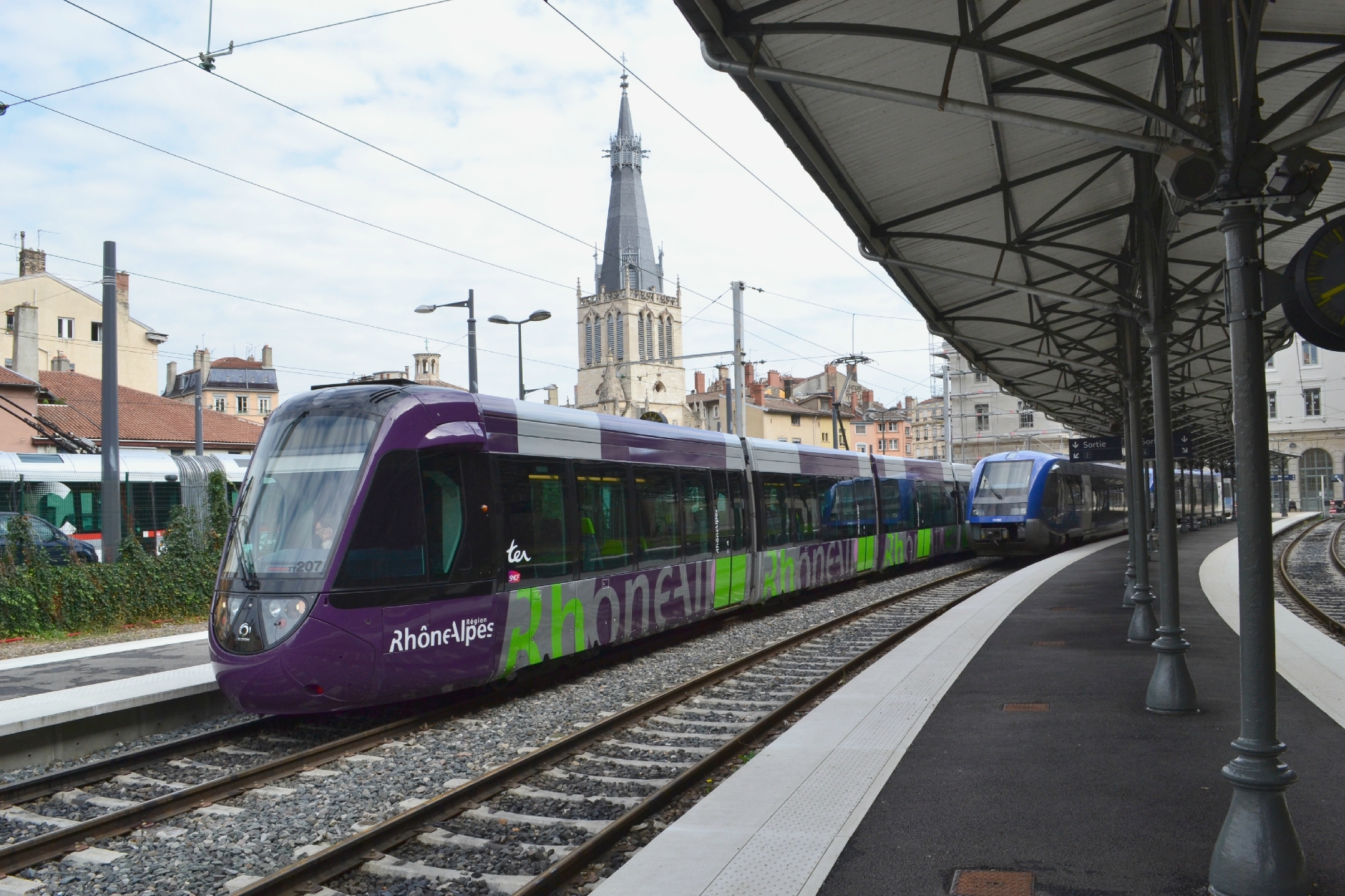
TramTrain and regional passenger train at station.
During 125 years of electric tramways, the tram as we know it has generally been developed as a vehicle suited to alignments on, or based on, city streets. Of course there were interurban lines that ran across country, particularly in North America, where they reached their apogee in 1915, before being decimated by the inexorable rise in motor vehicles. Some of these originated as steam railroads, and others entered cities on the tracks of urban tramways or rapid transit lines. In Europe, particularly Switzerland, such interurbans were called light railways (to distinguish them from their mainline cousins), and again running on to city streets was, and is, quite common. The former NZH in the Netherlands is another example.Japan, with its plethora of private railway companies, followed the US interurban pattern, though the boom there coincided with the decline in North America, and Michael Taplin gives a brief overview of the tram-train concept and asks if political and institutional issues form a greater barrier to its further implementation than technical concerns.
During 125 years of electric tramways, the tram as we know it has generally been developed as a vehicle suited to alignments on, or based on, city streets. Of course there were interurban lines that ran across country, particularly in North America, where they reached their apogee in 1915, before being decimated by the inexorable rise in motor vehicles. Some of these originated as steam railroads, and others entered cities on the tracks of urban tramways or rapid transit lines. In Europe, particularly Switzerland, such interurbans were called light railways (to distinguish them from their mainline cousins), and again running on to city streets was, and is, quite common. The former NZH in the Netherlands is another example.
Japan, with its plethora of private railway companies, followed the US interurban pattern, though the boom there coincided with the decline in North America, and Michael Taplin gives a brief overview of the tram-train concept and asks if political and institutional issues form a greater barrier to its further implementation than technical concerns.most lines survive today as rapid transit operations, with some penetration of city streets or subways. None of the above models were referred to as tram-trains, though the principle is not dissimilar.
Germany The modern tram-train concept, which saw its inauguration at Karlsruhe in Germany, uses a tram-based vehicle capable of operation on both mainline railway tracks and city tram tracks. Track-sharing between trams and trains was not unknown before, but the railways involved could hardly be deemed mainline.Karlsruhe had its own interurban operation, the Albtalbahn, which had track-sharing with Deutsche Bahn (DB) on its northern arm.
The possibility of travelling to the city centre without a change of vehicle was very attractive to passengers. Thanks to the German concept of the Verkehrsverbund joint tariff area, the financial consequences could be uncoupled from the commercial interests of the operators (AVG and DB), and work concentrated on the legal and technical hurdles to be overcome to permit through operation.On 25 September 1992 dual-voltage (750V dc and 15kV ac) light rail vehicles began running between Karlsruhe and Bretten, switching between city tram tracks and DB tracks at Grötzingen.
Within a year passenger numbers were up by 400%, and today the Karlsruhe model works over nearly 500km (310 miles) of track. There are 151 dual-voltage cars, 121 from Siemens, and 30 just being delivered by Bombardier (with options for up to 45 more). The tram-train model was truly a success, and good business for the Karlsruhe-based consultants involved.
Other German examples followed, in Saarbrücken, Chemnitz, Zwickau, Kassel and Nordhausen, though not exact copies. Saarbrücken runs 28 Bombardier Flexity Linkdual-voltage cars through the streets and then on DB tracks south to Sarreguemines,
Despite the hype and hoopla of regional mayors, five very important facts about our SkyTrain light metro system are glossed over in Metro Vancouver, by metro mayors, bureaucrats and transportation planners:
The Expo and Millennium Lines operate a dated proprietary railway, now called Movia Automatic Light Metro.
Only seven of these proprietary railways were sold and in operation and when the Scarborough Rt closes down, there will be only six.
There has been no sales of the Linear Induction Motored MALM for the past 15 years.
In January, MALM will have a new owner, as Alstom absorbs, Bombardier’s rail division and has history discontinuing production of unsalable transit systems.
Several of the ART (the fourth name for the now called MALM) systems have embroiled Bombardier and SNC Lavalin in legal cases stemming from corruption charges.
The Expo Line is aging and needs billions of dollars in upgrades and rehab, with many spare parts scarce because there is no market for mass production as the system is very dated.
*
Another unpleasant truth is that with Covid-19, peoples travel habits have changed and the expensive rapid transit systems not satisfy peoples travel demands, thus will face a drought of ridership, further increasing subsidies. The inherent inflexibility of light-metro means longer commutes and more unpleasant journey times for transit customers, as the entire regional transit system is based on feeding the light metro system.
When travel habits change, unlike light rail the light-metro cannot.
A second ICTS/MALM system in Detroit is on its last legs and probably will not survive the next five years, again spare parts are hard to come by and are expensive to maintain a safe operation. When Detroit shuts down, then there will be five.
*
The Scarborough ICTS, will soon be a page in the history books and Vancouver a very strong political subway lobby is forcing the TTC to build a costly subway, to serve fewer customers at a billion dollar or more higher cost.
*
As always, Metro Vancouver politicians would rather spend three times more for a dated light metro system, purely for photo ops and happily raise taxes to cover their myopic vision for Metro Vancouver of towers and high rise condos.
Unfortunately, the clock is ticking with MALM and the years are aging the light-metro. The past flows, the future ebbs. As the proprietary MALM ages, costs climb expansion declines and then there were six.
Scarborough RT will shut down before subway is finished, mayor says
The beleaguered Scarborough RT will fail before the long-awaited Scarborough subway is built, leaving residents on the bus — possibly for years — Mayor John Tory confirmed Thursday.
Council, meanwhile, will once again be asked to consider the alternative — a cheaper, more robust plan to build LRTs across the eastern part of the city.
Speaking to reporters at city hall, Tory said he had been briefed on the lifespan of the SRT ahead of a delayed report to the TTC board.
“There are very active discussions going on now between the TTC and Metrolinx with respect to exactly how long we have to provide that alternate transit service for, because it will not be the case that we can keep the SRT going until the Scarborough subway is finished.”
That news — after a decade of promises to Scarborough residents about improved transit — undercuts one of the central arguments for building a subway instead of the cheaper light-rail transit option preferred by some on council.
When first pushed under former mayor Rob Ford’s administration, proponents of the subway said it was, in part, a superior option because the SRT could continue running while the subway was built and not cause any disruptions in regular service.
The TTC refused to answer questions on Thursday, saying its report to the board would now be tabled in February.
“The seven-stop Scarborough LRT that I advocated for, along with being approved, funded and able to serve more neighbourhoods, would’ve already been built and operating by now,” said Coun. Josh Matlow, who has long questioned the lack of evidence for a subway.
He plans to move a motion at council next week asking councillors to request the province stop work on the three-stop subway and instead build the originally planned seven-stop LRT, while using any cost savings to build a second LRT along Eglinton Avenue East.
“Today, the worst outcome has happened and Scarborough residents are being left on a very long bus ride. When we cautioned this would happen, subway proponents falsely promised it wouldn’t. Scarborough deserves so much better than this.”
A three-stop subway, loosely estimated to cost $3.56 billion with zero design work done was first confirmed by council under Ford in October 2013 — more than seven years ago.
Campaigning for the mayoral seat in 2014, Tory himself promised to build the three-stop version of the subway until ballooning cost estimates forced him to pivot to a revised one-stop option.
At the time, he and then-chief planner Jennifer Keesmaat promised that the cost savings from that switch would allow the city to also build an LRT along Eglinton Avenue East to the University of Toronto Scarborough campus.
However, emails uncovered by the Star showed that the cost had never been verified as claimed, and city staff believed it could actually be much higher but didn’t tell council that ahead of a crucial vote. Later, the cost of that subway option grew to overtake the available funds, pricing out any additional LRT.
When Doug Ford, the late mayor’s brother, became premier of Ontario, he resurrected the three-stop option approved years earlier, scrapping ongoing plans for the one-stop version. Construction of that estimated $5.5-billion subway — which has not been fully funded — has not yet started. The province estimates it could be completed in 2029 or 2030.
In TTC reports to the board to be discussed next week, staff note that the SRT is not currently fully functional, with only four of five cars in service and a plan to return to full service in October had been delayed. Though a future service plan assumes all five cars will be operational through 2025, the report notes that the SRT’s lifespan is “currently under review.”
In 2012, the city, TTC and Metrolinx signed an agreement to build a seven-stop LRT in the SRT corridor, replacing that service which at that time was said to be nearing the end of its life. Back then, Metrolinx was contractually obligated to pay the cost of the bus replacement service.
The TTC would not say Thursday who would cover the cost of any alternate transit now.
In a 2016 business case on the subway, city staff said “replacing the existing SRT vehicles with buses is not a desirable option.”
It outlined that bus replacement for the SRT during construction would require 63 additional buses and other infrastructure requirements such as a new bus facility to accommodate the additional fleet and expansion of the bus terminals at Scarborough Centre and Kennedy stations at a cost estimated at that time to be $171 million.
Give the gift of trusted news.
If you refuse to settle for second hand news and think that your loved ones shouldn’t either, give them the gift of the Star.
“The SRT shutdown would also result in slower and less reliable transit service,” the business case said, “which would be likely to deter users from using public transit.”
At executive committee Thursday, a report updated members that the cost of the Eglinton East LRT has nearly doubled, further pricing it out of the city’s transit expansion plan as it is not a provincial priority project.
Glenn de Baeremaeker, a former Scarborough councillor for the area and the mayor’s appointed “subway champion,” told the Star Thursday that closing the SRT before the subway is built is a “worst case scenario.”
“I would encourage the TTC and Scarborough councillors … to keep that SRT going if at all humanly possible,” he said, calling the SRT cars that have needed extensive repairs “literally Dinky toys.”
“I think the continuation of the SRT is essential, and if we can put people on the moon we should be able to figure out how to keep that dedicated line operating.”
One of my favourite railways, the Zilleralbahn, which I visited in 1983.
There is really nothing to compare this to in BC, though there could be some candidates, if our tourist authorities stop skiing at Whistler and actually craft a product other than winter skiing.
Running through a valley in a well to do rural area, the line is used by tourists and for commuter transport by local people. Railway enthusiasts from all over the world are attracted to it because of its use of steam engines on the narrow gauge railway.
Most of the passenger train services operate using modern diesel locomotives and railcars but the Zillertal Railway also has several steam locomotives which are used with heritage rolling stock for special trains targeting tourists. Goods traffic is carried; standard gauge wagons to and from the main line network are carried on transporter wagons.
In Jenbach the Zillertal Railway meets the ÖBB standard gauge line between Salzburg and Innsbruck and the metre gauge Achenseebahn. Jenbach is the only location in Austria where railways of three different track-gauges meet.


 Interesting that the numbers for LRT came via the TTC and the numbers for the subwaycame from the provincial government who wanted the subway.
/arc-anglerfish-tgam-prod-tgam.s3.amazonaws.com/public/M35ZOHK4KRDBBM2CUU4KLEBRT4.JPG)


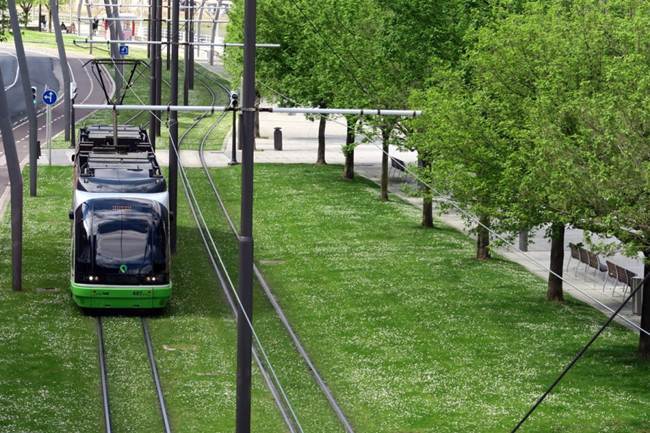

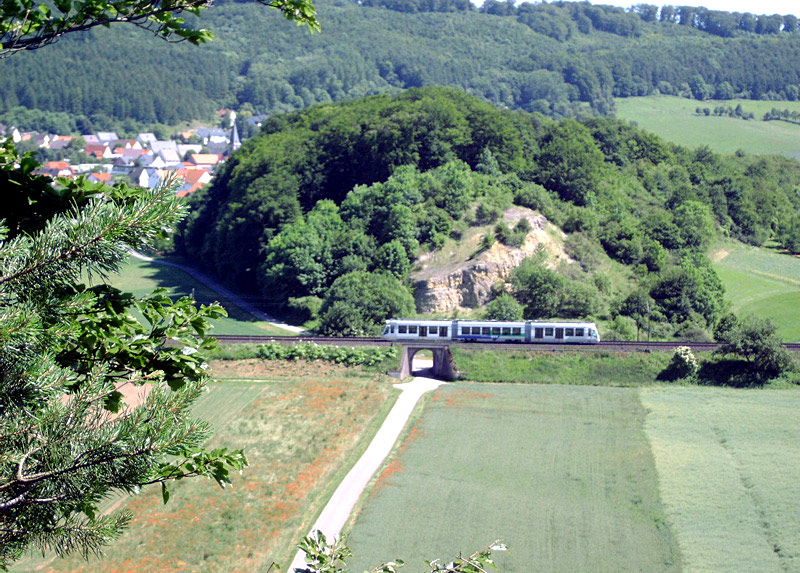
TramTrain and regional passenger train at station.


/https://www.thestar.com/content/dam/thestar/news/city_hall/2020/12/10/scarborough-rt-will-shut-down-before-subway-is-finished-mayor-says/scarborough_rt.jpg)





Recent Comments