TransLink’s ridership down and has a surplus
All the hype and hoopla about transit funding, reality has struck TransLink in the face like a banana cream pie; ridership has decline, yet there is a surplus or profit.
Oh there are lots of excuses like fewer people working weekdays or there has been a decrease in employment in metro Vancouver and even with 110,000 deep discounted U-Passes issued, ridership has declined.
Could the real reason for a decline in ridership is that the transit system is not user friendly? Anyone who has actually read a book on the subject of public transit soon learns that customer friendliness is the prime reason for people taking transit. If the system becomes user unfriendly (like forced transfers from bus to light metro or passengers duking it out on buses) the transit customer will opt for the car.
Sadly, TransLink treats the transit customer like cattle and mostly those who do not have a transit choice are forced to take transit.
The profit surplus, after years of TransLink pleading poverty, again shows that the transit authority is not honest with the public.
TransLink is run by accountants and career bureaucrats, overseen by politicians who want politically prestigious projects (read expensive) to win elections. The more money spent on light metro will only exacerbate the situation as it nothing more than doing the same thing over again hoping for different results.
Until there is regime change at TransLink transit will become more expensive with fewer people opting to take transit.
TransLink records 2013 budget surplus despite 4.9 million fewer passengers
The authority cited the 10-per-cent fare increase last year, fewer working weekdays in 2013, a decrease in B.C. employment and the general state of the economy as contributing factors in the two-per-cent ridership drop
TransLink reported its first surplus in five years Wednesday but the positive financial result came with news that total ridership last year fell by 4.9 million passengers. The transit authority said 233.9 million revenue passengers used TransLink services last year, down from 238.8 million in 2012 and the first year-over-year decline since a transit strike caused ridership to fall in 2001.
Photograph by: Arlen Redekop Arlen Redekop, Vancouver Sun
VANCOUVER — TransLink reported its first surplus in five years Wednesday but the positive financial result came with news that total ridership last year fell by 4.9 million passengers.
The transit authority said 233.9 million revenue passengers used TransLink services last year, down from 238.8 million in 2012 and the first year-over-year decline since a transit strike caused ridership to fall in 2001.
TransLink said a 10-per-cent fare increase last year, fewer working weekdays in 2013 and the general state of the B.C. economy all contributed to the two-per-cent drop in ridership.
But chief financial officer Cathy McLay said itai??i??s too early to tell if the ridership decline is anything more than a one-year aberration.
ai???You have to put it in context because weai??i??re still above 2011 numbers (when ridership was 233.3 million),ai??? she said. ai???When you look at the significant ridership growth since the mid-2000s, I think those numbers still show solid growth.ai???
McLay said past fare increases have caused slight declines in ridership but those numbers have always bounced back. She stressed TransLink understands peopleai??i??s frustration with a system struggling to find the funding needed to meet the surging demand for transit services.
ai???When you keep getting that compounding ridership growth and no additional money to put services out, people are frustrated and I think TransLink would like nothing better than to be in a position to have the funding meet the demands of the people,ai??? McLay said
The province wants a referendum to be held on the issue of new TransLink funding and the mayorsai??i?? council of Metro Vancouver mayors expects to present a new funding plan next month, along with a list of transit priorities.
NDP transportation critic George Heyman attributed the reduced ridership to higher fares and declining service.
ai???As we have seen with BC Ferries, ridership is discouraged when you max out fares and donai??i??t meet the growing service demands,ai??? he said.
TransLink said revenues increased by $22.1 million last year to $1.443 billion while expenses fell by $24 million to $1.406 billion ai??i?? creating a $36.8-million surplus, its first surplus since a 2008 surplus of about $170 million.
Heyman feels the TransLink surplus came at the expense of better service.
ai???There has been a massive increase in HandyDart trip denials,ai??? he said in reference to the transit service for disabled persons. ai???Thatai??i??s because the demand has gone up with our aging population but the service has not improved.ai???
HandyDart users complained about declining service at TransLinkai??i??s annual meeting Wednesday, despite TransLinkai??i??s recent move to invest $1 million in a pilot project that will use cabs to transport people when HandyDart isnai??i??t available.
Heyman also noted a plan to increase bus service hours substantially last year had to be put on hold because of funding issues.
ai???We have a background of funding limbo and funding instability, with TransLink being told to share and cut,ai??? he said.
TransLink spent $80.6 million last year on capital costs related to the delayed Compass card project ai??i?? including $51.5 million for station infrastructure upgrades and $29.1 million for equipment and systems.
Administration costs increased by 15.5 per cent, or $3.8 million, to $28.2 million due to increased technology and marketing costs for the Compass projects, which involves the introduction of a reloadable electronic fare card.
TransLink vice-president of enterprise initiatives Mike Madill said the total Compass project budget remains at $194.2 million.
About 85,000 Compass cards have been distributed to TransLink customers so far and the transit authority hopes to introduce them to West Coast Express customers later this year, possibly by late summer.
ai???Weai??i??re taking it slow and following the best practices of other agencies who have put in similar systems,ai??? Madill said. ai???We want to make sure we get it right for our customers.ai???
Ai?? Copyright (c) The Vancouver Sun

For Donna – Part 2 – Debunking the SkyTrain myth. Rail for the Valley answers the UBC SkyTrain Lobby!
A repost from 2009!
What has changed from 2009 is that the cost of a Broadway to UBC subway (full build) would be over $4 billion. Cut and cover subway construction will be used because the Susan Heyes court case has now set the precedent that TransLink can build a cut-and cover subway without paying compensation to affected merchants and businesses; the only transit authority in North America and Europe can do so.
Because the present SkyTrain station platforms are 80 metres in length, the capacity of the present SkyTrain system is limited at about 15,000 persons per hour per direction. Thus, if the Broadway SkyTrain were to have a greater capacity than a surface operating LRT, all the station platforms along the EXPO and Millennium Lines would need to be enlarged at considerable cost. Doing so and including midlife refurbishments would cost at least $2 billion, making the cost of a Broadway subway nearer $6 billion!
Let us not forget that the Ottawa transit delegation found SkyTrain more expensive to build; more expensive to maintain and ultimately had less capacity than modern LRT. The arguments from the Subway lobby for a Broadway SkyTrain subway are not valid.
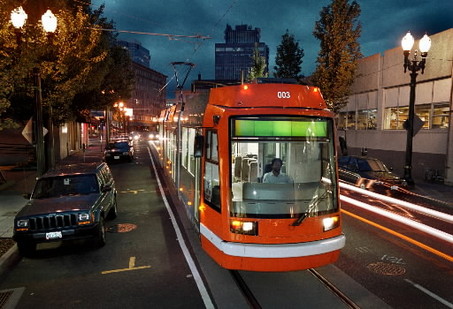
It was brought to Zweisystem’s attention yesterday that a blog site was established by the UBC SkyTrain Lobby, critiquing modern LRT.Ai?? Zweisystem responded,Ai?? posting corrections for the many myths, half truths and anti-LRT claptrap so often used by the SkyTrain lobby. The SkyTrain folks removed the comments and by doing so, fully admit that they are afraid of the truth. Zweisystem is not surprised as this is exactly how the SkyTrain lobby operates: repeat a lie so often that it soon becomes a fact. What is lost in the LRT/SkyTrain debate is that LRT has made SkyTrain light-metro obsolete decades ago, something the SkyTrain lobby fails to admit.
Why should Rail for the Valley supporters be concerned with a UBC SkyTrain? Simple, the $4 billion subway (RAV was to cost a mere $1.3 billion and now it’s direct cost may exceed $2.8 billion) will suck money away from all ‘rail’ projects for the Fraser Valley by spending hard earned tax dollars on another needless gold-plated rapid transit project for Vancouver. We must debunk the SkyTrain myth now.
There is no mention who the UBC SkyTrain lobby are and one wonders why they are so afraid of debate?.
The following is the website of the UBC SkyTrain lobby.
http://ubcskytrain.wordpress.com/22points/
The following is the 22 myths comment, with Zweisystem’s comments in Italics.
Debunking Myths: Our 22 Points
Twenty-two points created by our organization, debunking myths and inaccuracies:
==============
TIME IS MONEY
==============
LRT SUPPORTERS:
It’s okay to have longer travel times (which is what ground-level LRT will bring) in exchange for a community-friendly system.
Zweisystem responds: What is lost, is that a community friendly transit system attracts ridership, something that an unfriendly transit system does not do. Subways are very user unfriendly. Speed of a transit system itself doesn’t attract ridership (Hass Klau) but the time of the total commute (doorstep to doorstep), the overall ambiance and ease of use of a transit system that has proven to attract ridership, especially the motorist from the car.
(Zwei adds, journey times of 7 km or less are generally faster by tram than by subway)
FACT:
(1) SkyTrain will have 2-3 times more capacity and more than twice the speed of an ground level LRT line due to its private right-of-way. Speed is an important factor for the daily commuter, as shown by bus ridership statistics for the Broadway corridor: 99 B-Line (60,000 passengers per day); other Broadway bus routes (40,000 per-day) = total Broadway bus ridership is 100,000 passengers per day.
There is a reason why a large majority of Broadway transit commuters take the 99 B-Line: speed and convenience. The 99 B-Line is a rapid bus service, and it is at capacity in terms of the number of buses that can be put into service (according to TransLink, over 120 articulated buses were dedicated to the 99 B-Line in 2006; 10% of the entire TransLink bus fleet). Counting the 99 B-Line’s 60,000 daily riders alone, that is more than the ridership of Toronto’s streetcar lines.
Zweisystem responds: SkyTrain does not have 2 to 3 times more capacity than LRT as SkyTrain’s potential capacity is about the same as modern light rail (Gerald Fox). This myth was created by the discredited Delcan and ND Lea studies of the early 90’s, which arbitrarily claimed that SkyTrain had more capacity than LRT, without any study backing this assertion. Modern LRT/tram, operating on-street/at-grade, can handle over 20,000 persons per hour per direction (LRTA).
(Zwei adds, it is generally accepted that LRT has the edge over SkyTrain in the capacity debate)
The claim that the B-Line carries more than Toronto’s streetcars is pure bunkum. Maybe on a route by route basis, the Broadway buses carry more riders than on some streetcar lines, but not the network!
(2) The 12-km SkyTrain extension from VCC/Clarke Station to UBC via the Broadway corridor will take between 15-20-minutes travel time from terminus to terminus. Stations will be located at Finning, Main/Kingsway, Cambie (vital interchange station with Canada Line), Oak (hospital precinct), Granville, Arbutus, Macdonald, Alma, Sasamat/West Point Grey Village, and UBC transit interchange. All of these stations parallel the existing 99 B-Line service. A SkyTrain would be mainly tunneled, and with its own private right-of-way would be allowed to reach speeds of 80 km/h.
A ground-level LRT line would begin from Commercial/Broadway Station, and would take a travel time of between 30-45-minutes from terminus to terminus. It would have the same stations as the above mentioned SkyTrain with an additional four to six stations. Its higher travel time, on par with the existing 99 B-Line bus service, is a result of the line running through city streets instead of its own private right-of-way; as it runs in city streets, it must abide local traffic laws and speed limit of 50 kms/h. This will no doubt affect the extension’s reliability as a real alternative to the car: peak-hour traffic, road congestion, traffic accidents, etc.
In addition, commuters will be given a one-train ride with SkyTrain: no transfer will be needed, saving significant time. It also offers higher train frequencies and flexible schedule adjustments. On the contrary, LRT tends to have less frequent schedules due to the expense of having drivers and it would require a time-costly transfer from the region’s main transit network: SkyTrain (as it would simply be an extension of the Millennium Line). Such a pointless transfer would also affect ridership.
Zweisystem responds: A light rail/tram line operating on a reserved rights-of-way, with equal number of stops, would have travel times comparable to a SkyTrain light-metro. In Germany, trams operating in mixed traffic (with autos) are allowed to travel 10 kph faster than posted auto speeds and if tram/LRT operates on a reserved rights-way (a rights-of-way used exclusively for a tram), could operate at higher speeds quite safely. The authors of the blog conveniently forget that a transfer would have to be made to the proposed UBC SkyTrain from the Expo Line, thus the transfer argument is moot.
One, also questions the validity of recent light rail studies and asks, “were they done by qualified experts in LRT”. To date not one company with a proven expertise in the construction and operation of modern light rail have ever been allowed into the study process. It is also important to know that the various owners of the proprietary SkyTrain light-metro system have never allowed it to compete against modern LRT!
(3) SkyTrain is the region’s main transit network. Such a network should be high in speed, capacity, reliability, and frequency. Metro Vancouver axed a highway expansion plan in the 1970’s in favour of building a competent transit network: we must build a competent transit backbone that makes up for our lack in road capacity.
Zweisystem responds: Many cities around the world happily operate metro with light rail and the argument is again silly. What is not mentioned is that SkyTrain is a proprietary light metro, a mode long made obsolete by modern light rail. Building with SkyTrain today, is like trying to buy a new Edsel, because “I already have one”. Who buys SkyTrain?
(4) For such a costly expense, ground-level LRT will be a minor upgrade from the existing 99 B-Line bus service. The 99 B-Line is overflowing with riders, it needs something far greater than that to take its place. LRT is a short-term solution and will simply be a 99 B-Line with steel wheels. On the other hand, SkyTrain will provide a long-term solution for the corridor’s transit needs.
Zweisystem responds: Light Rail will be more expensive to build than upgrading the B-Line service, about 30% more, but it would be much cheaper to operate than buses. One modern light Rail vehicle, with one driver is as efficient as 6 to 8 buses, with 6 to 8 bus drivers and one needs to hire three or more people per bus or tram to drive, maintain and manage them. Do the math, cities that operate LRT have done so. Even operating in mixed traffic, with no reserved rights-of-ways or signal priority, modern trams are about 10% faster than buses. SkyTrain on the other hand, costs a lot more to operate, almost twice as much as Calgary’s LRT C-Train, which also carries more customers daily! The higher operating costs of SkyTrain and other proprietary light-metros were well understood by the early 1990’s and helped in the demise of the mode.
(5) Frequent trolley service will still exist, given the importance of local service along the Broadway corridor. It will complement the SkyTrain service.
Zweisystem responds: Why, after spending up to $4 billion on a subway, would TransLink want to operate trolley buses as well, driving up operating costs of the route; even on Cambie St., the electric trolley buses are now replaced by diesel buses. Modern LRT is built because it is cheaper to operate than buses on a transit route, when ridership exceeds 2,000 pphpd. With LRT operating on-street, with stops every 500 to 600 metres, there would be no need for buses on Broadway.
(Zwei adds, the cost per revenue passenger could be as much as half on the Broadway corridor by operating with LRT instead of a subway.)
(6) A 2000 study by the City of Vancouver concluded that an LRT line, with 16 stations from Commercial to UBC along the Broadway corridor, would rake in 140,000 daily riders. However, a SkyTrain extension from VCC/Clarke to Arbutus combined with a rapid bus service from Arbutus to UBC would bring in 150,000 daily riders.
Zweisystem responds: Based on what figures? Subways are notoriously poor in attracting new ridership and that, combined with high operating and maintenance costs, subways are avoided, unless traffic flows are over 500,000 passengers a day. It was predicted in 1980, that SkyTrain would be carrying over 20,000 pphpd, in the peak hour, by the year 2000; presently it is carrying half this number.
Note that the study was completed before the U-Pass was implemented, before record high gas prices, and before the green shift took priority. Following the 2002 implementation of the U-Pass, transit ridership at UBC increased significantly: in 2002 daily ridership was at 29,700 but by 2004 it was 50,000; a 68% increase in ridership in just two years because of the U-Pass! Transit ridership still increased significantly in the years after.
Zweisystem responds: Funny how a bus route, Broadway, operating at capacity can attract 68% more customers. The argument is moot because a LRT line could easily handle 250,000 or more passengers a day.
The study also does not account for the improved transit services since, especially the new Canada Line that will be opening in September 2009.
Taking account that the study was completed nearly ten years ago, and with all the changes to the region since then, ridership for a SkyTrain extension to UBC could rake in more than 200,000 passengers per day.
For comparison’s sake, the Expo Line (29-kms) currently has a daily ridership of 185,000; Millennium Line (20-kms) at 75,000; and the projected daily ridership for the Canada Line (19-kms) and Evergreen Line (11-kms) is at 100,000 and 80,000.
Zweisystem responds: SkyTrain, unlike other transit systems around the world, has never had an independent audit of ridership, so the figures presented are questionable; that being said TransLink admits that 80% of SkyTrain’s ridership first take a bus to the light metro and as buses are poor in attracting new ridership, one questions this 200,000 a day figure. But again the argument is moot, because LRT can easily handle such loads!
As there is no independent audit of SkyTrain’s ridership, the numbers are questionable, also Expo Line riders are double counted on the Millennium Line and visa versa. Ridership projections for the Evergreen line and RAV Canada line are speculative at best.
====================================
ROUTE AND CONSTRUCTION METHODOLOGY: LRT
====================================
LRT SUPPORTERS:
Building light rail is fast and painless, unlike building SkyTrain; light rail won’t require digging up the road, while SkyTrain will. Businesses will not be affected. With light rail, parking spaces will not be lost both during the construction process and after construction is complete. LRT can be built on West 4th Avenue, instead of Broadway. LRT will not require tunneling. LRT will cost only a fraction of what SkyTrain would cost.
FACT:
(7) If light rail were the chosen technology for the extension, a trunk sewer underneath Broadway will require a costly removal and relocation. Thus, it will require digging up the entire street, like a large trench, and will be time consuming.
Zweisystem responds: The sewer trunk is built in the gutter lane, why? Because the old streetcars operated in the median lanes! The argument is thus lost.
(8) In addition to removing the Broadway trunk sewer, ground level light rail construction will require the closure of several lanes and all on-street parking lanes. Traffic will be reduced to two-lanes, similarly to Cambie Canada Line construction.
Zweisystem responds: Modern LRT construction would require street closures on a block by block basis and only for a short period of time, no different when the city tears up roads for utility maintenance.
(9) All in all, with light rail Broadway merchants will still be significantly affected by construction for about 2 years. In comparison, most of Cambie has been closed for about the same period for Canada Line construction. Light rail construction is far painless as claimed. It should also be noted that the construction timeline for an LRT line in the middle of a road should not be confused with the construction timeline for an LRT or streetcar line with its already existing private right-of-way.
Zweisystem responds: More fear mongering as Broadway would be closed on a block by block basis as track laying progressed. Street construction would be completed in about one years time or less.
(10) As Broadway is a narrow street, a ground-level light rail system would result in the permanent removal of the majority of the on-street parking spaces that Broadway merchants hold onto so dearly. Nearly all of Broadway will also be reduced to a two-lane road (one lane in each direction) due to the massive amount of spacing needed for ground level light-rail; a major east-west road artery in the city will be abolished.
Zweisystem responds: Such nonsense, there will no loss of on-street parking, unless the city of Vancouver wishes it, what will happen is that one traffic lane, in each direction, will have capacity increased from a bout 1,600 pphpd to over 20,000 pphpd, with LRT.Ai?? Traffic on Broadway will be reduced by 1 lane in each direction; this is known as traffic calming.
(11) Any mass transit extension would need to be located along the Broadway corridor. West 4th Avenue would not work as it would skip the main employment hubs along Broadway, thus reducing potential ridership significantly.
The Broadway corridor catches 16th Avenue to 4th Avenue; more people live along the upper corridor rather than 4th Avenue
Zweisystem responds: What is “mass transit”? We are dealing with light-rail and light metro and there are pros and cons about each mode. For the cost of a SkyTrain subway to UBC, one could build a 4th Ave. LRT; a Broadway LRT; 41st Ave. LRT, for a combined capacity of over 60,000 pphpd, plus at least 2 North south LRT lines in Vancouver.
(12) LRT would likely require significant tunneling due to the steep grades on the hill west of Alma Street. LRT trains will be unable to climb the hill on such a steep slope.
Zweisystem responds: Not true. The industry standard for LRT climbing grades is 8%; in Sheffield England the maximum grade is 10% and in Lisbon, their trams climb 13.8% grades. The old streetcars climbed the Alma grades and modern LRT can do the same as well.
(13) It is a myth that $2.8-billion could build you 200-kms of light rail. Such a claim would likely mean the routes for these 200-kms of light rail lines already have pre-existing rail right-of-ways: we know that certainly does not exist in Vancouver, especially not for the Broadway mass transit extension.
Zweisystem responds: In Spain, new LRT is being built for under $8 million/km. and in Helsinki, on-street tram construction, including the electrical overhead was about $5 million/km. The $2.8 billion for 200 km. of LRT is very realistic. What the SkyTrain lobby is scared of is that $2.8 billion will buy you less than 28 km. of elevated SkyTrain or less than 9 km. of subway.
Proponents also falsely advocate this claim by cherry-picking the best features of LRT, all of which come with a high price. The real cost of 200-kms of real LRT in the region would likely be at least $12-billion.
Zweisystem responds: More invention and uninformed assertions, showing a complete ignorance of modern light rail.
=======================================
ROUTE AND CONSTRUCTION METHODOLOGY: SkyTrain
=====================================
LRT SUPPORTERS:
SkyTrain construction along the Broadway corridor will devastate local businesses just like Canada Line construction. SkyTrain is also expensive to build and operate.
FACT:
(14) The SkyTrain extension would likely occur under 10th Avenue (and NOT on Broadway), one block/60-metres south of Broadway. Station entrances will still be located on Broadway.
(15) Such an extension under 10th Avenue, bored or cut and cover, would significantly reduce the impact on local businesses.
(16) With the large $2.8-billion budget, a vital long-term investment into the regions infrastructure, it is likely that planners are planning for a bored tunnel design rather than cut and cover to avert most of the mistakes on Cambie.
Zweisystem responds: $2.8 billion will not buy much of a subway. If the 19 km. RAV/Canada line 50% subway may cost somewhere in the neighborhood of $2.8 billion a Broadway subway will cost a lot more.
(17) With an underground system, built on 10th Avenue and likely a bored tunnel, businesses will not be as affected (compared to a ground-level LRT line or a Cambie-style cut and cover tunnel).
Zweisystem responds: if a bored tunnel is used, properties adjacent to the subway may settle because the surrounding ground will be disturbed. Without costly pre-engineering work, the true cost of subway construction is a guesstimate at best.
(18) Local businesses stand to benefit significantly from the additional foot traffic within SkyTrain station precincts.
Zweisystem responds: Not so, as subways have proven poor in attracting business to local merchants. Modern LRT has a proven record in increasing business by about 10% along routes where LRT runs. Passengers in subways do not see surface businesses.
(19) SkyTrain may cost billions to build, but this is a long-term investment into our regions infrastructure: an investment that could last up to a century. On the contrary, LRT with its limited capacity and speed is a short-term investment.
Zweisystem responds: Completely untrue. Subways lack operational flexibility and require most customers to use other transport to get to the subway. To date, SkyTrain has yet to match LRT’s capacity and speeds! Lack of stations may provide a faster service, but at the same time deter ridership. Many LRT lines operate on well maintained infrastructure that is over 100 years old; subway on the other hand require constant and expensive maintenance as London’s TUBE and Toronto’s subways have well proven.
(20) SkyTrain, with its driverless automation, is cheaper to operate annually compared to driver systems such as LRT. In addition, there are capital cost savings and efficiencies from using the same maintenance yard/facilities, operations centre, and train rolling stock.
Zweisystem responds: Actually it is the other way around, automated transit systems cost a lot more to operate than LRT. Calgary’s C-Train LRT costs less than half per annum to operate than SkyTrain and it carries more passengers as well! in 2006, the cost of wages for drivers was $6 million. SkyTrain doesn’t have drivers, rather attendants and SkyTrain police, which cost more than drivers for Calgary’s LRT system.
As SkyTrain light-metro cars cost more to purchase than equivalent LRT cars, the last statement loses much of its validity. Also, with SkyTrain, there is only one supplier ofAi?? one style of car: Bombardier Inc.; With LRT there are many suppliers and styles of cars to choose from and all are able to operate in conjunction with each other, something that RAV/Canada line and SkyTrain cars can’t do.
============================
A REGIONAL CORRIDOR
===============================
BUILD NOTHING & LRT SUPPORTERS:
There is not enough ridership to support a rapid transit rail line along the Broadway corridor. Any rapid transit rail lines real purpose would be to solely serve the University of British Columbia.
FACT:
(21) Central Broadway/Cambie Uptown is the second largest employment centre in the entire region after Vancouver City Centre. According to a 1996 census, there were 40,000 jobs in the area and half of these people live outside of Vancouver making the district a regional centre. We can only assume that the number of jobs in the area has grown significantly since 13 years ago and will continue to grow. In addition, the Broadway corridor is one of the most densely populated areas outside of Downtown Vancouver.
Zweisystem responds: By building LRT down Broadway, it would protect both residents and businesses from escalating taxes to pay for a gold-plated subway project and the need to massively increase density along the route to feed the metro, while at the same time provide high quality transportation to the area.
Central Broadway is also part of the Metropolitan Core, part of Downtown Vancouver; a focus area for population and employment growth.
All of the above only serves to support ridership. And as mentioned above, there are already 100,000 daily bus riders along the Broadway corridor making it the busiest bus corridor in the entire region.
(22) The University of British Columbia is one of the largest employment centres in the entire region. With over 50,000 students and faculty, it will only continue to grow. In addition, the university is developing plans to build new dense residential neighborhoods – this will only serve to support ridership.
As already mentioned above, transit ridership at the university was at 50,000 in 2004 we can only assume it will be much more today. It will only grow with additional and improved services.
Zweisystem responds: LRT would be able to service all of UBC and with the inherent flexibility of the mode, could provide a minor LRT network on campus. Also there is the possibility of LRT carrying freight to UBC, as done in other European cities, taking commercial vehicles off city streets. The ridership forecasts certainly point to a light rail solution for UBC and not an expensive subway.
Dead Parrot Sketch Part 2

In all my years advocating for better transit in the Vancouver metro region, I have never heard an excuse for not building with LRT, that is as silly as this. “An European style lawned tram rights-of-way will kill birds.” How low will the SkyTrain lobby stoop to?
Don’t believe me?
A story in the Tyee on-line newspaper has a HUB (cycle lobby) type decrying LRT and lawned R-o-W’s as bird killers.
http://thetyee.ca/Mediacheck/2014/05/26/Greenest-City-Must-Dos/
A person using the moniker ‘positively4thstreet’ claims;
“I wouldn’t like to mix inviting greenspaces with transportation. It’s also wasteful…someone has to mow all that grass. The light rail itself is fine but not mixed with grass…that will attract grazing animals like geese. And we are on the Pacific Flyway so as well as our own we get hundreds of thousands of snow geese migrating and looking for rest stops and grazing places.”
In another post the same person replies to my comment;
You are hopeless. I AM TALKING ABOUT GRASS ATTRACTING GEESE AND THE CATASTROPHIC ACCIDENTS THAT CAN CAUSE. DID YOU HEAR OF FLIGHT 1549 IN NYC IN 2009???
TRUE..THEIR GOOSE MAY BE COOKED BUT SO MIGHT SOME HUMANS ON A TRAIN IF THEY GO THROUGH THAT WINDSHIELD LIKE THEY DO THROUGH PLANE WINDSHIELDS AND CAR WINDSHIELDS………………………………..”
I have yet to hear of a catastrophic accident between a tram and a bird and probably it has happened, but really to claim that a tram’s lawned R-o-W is a danger to birds is, I think, a wild goose chase.
For Donna……….
Zwei must apologize, but with the end of school and many other commitments, but I will repost some interesting items about LRT and Broadway in the near future. For now I will add some European flavour, spiced with modern light rail.
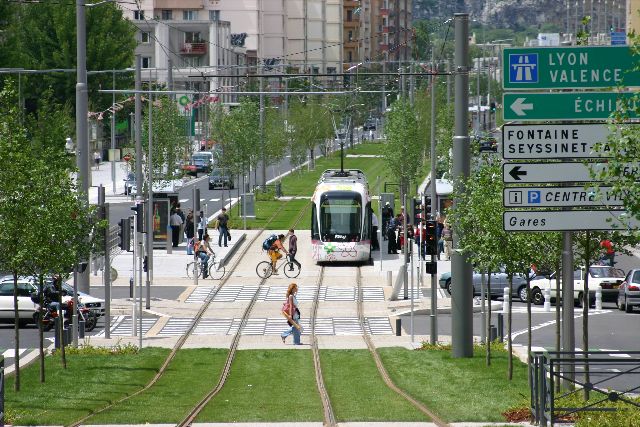
In Grenoble, lawned rights-of-ways are the norm, even on former arterial roads.
 Stations are simple yet very functional for the transit customer, with a lot of easy access for all.
 In Gent, trams ply the narrow streets, quite safely, with throngs of pedestrians around.
 In Amsterdam, the dutch love their trams as they are a very safe and convenient way of travel.
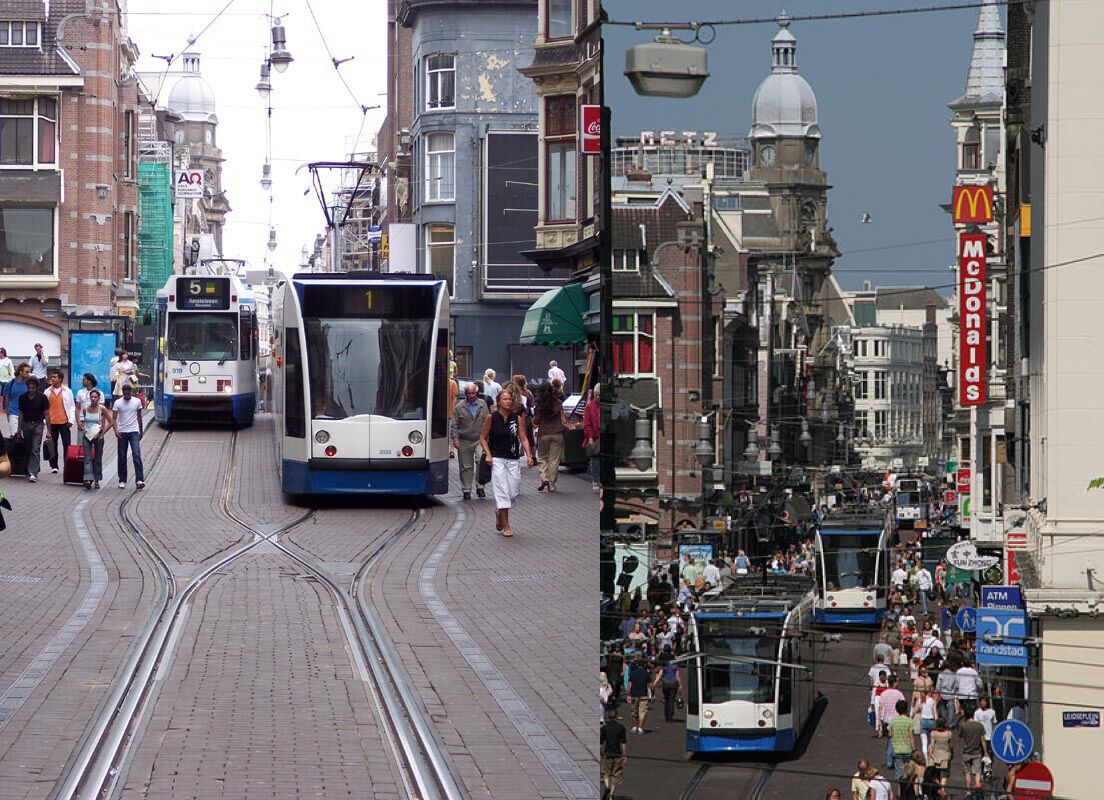 Modern light rail, fits in, operates quite safely in mixed traffic and is extremely affordable.
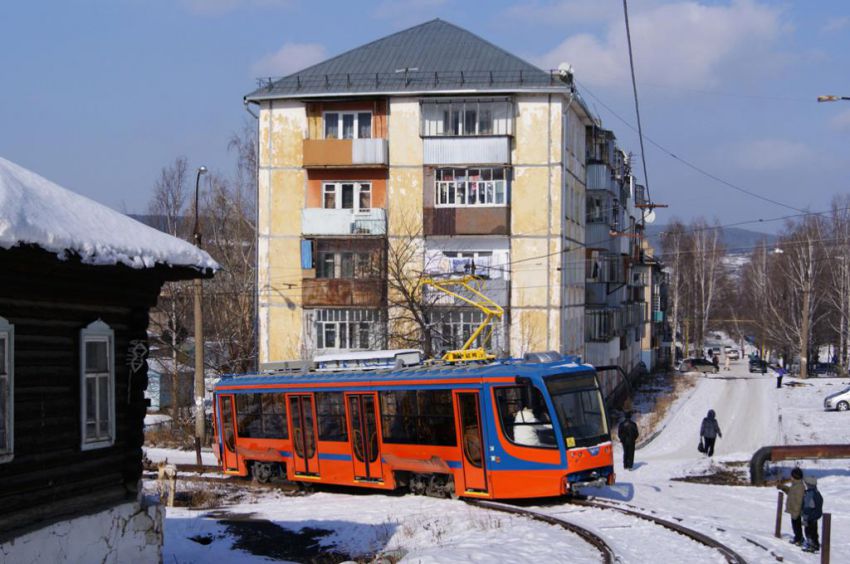
Russian Tram Test Track In Paranimo
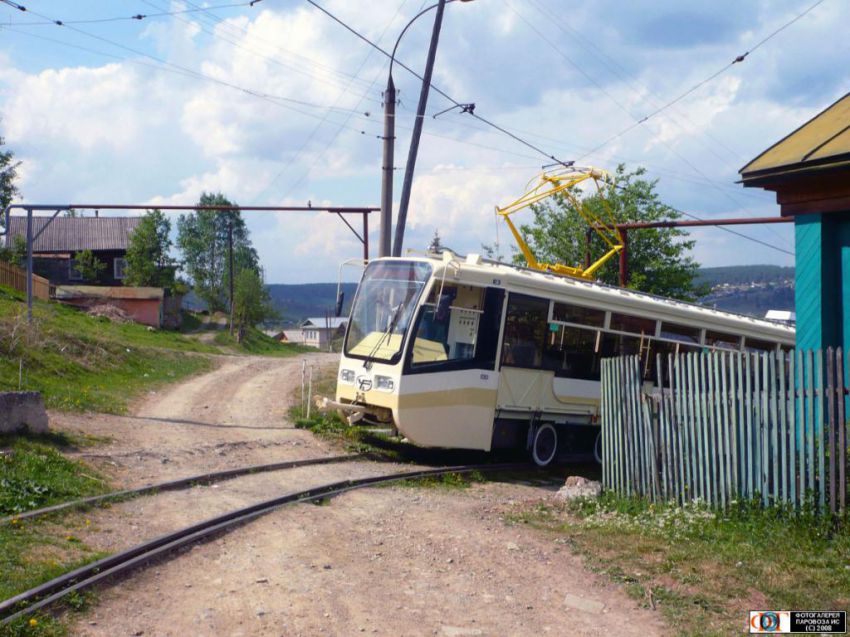 A tram climbing a 16% grade on the Paranino test track.
Paranino ai??i?? a small village not far from Chelyabinsk (which got famous for its recent picturesque meteorite sky show). Itai??i??s a regular village with farmers, cows or goats crossing the streets, nice nature etc. But what makes it so special? Since early 1900s it is a home of a factory that makesai??i?? trams. And when they make trams they need a handy spot for trams to get thru tests etc. For this they need a full scale tram railroad which can give the newly built trams all possible challenges ai??i?? uphill climbs, hard curves and so on. For this they have built such a track right thru the small village. Now, on a daily basis the small typical Russian settlement gets the ultra new (and old as well) trams cruising around daily. And the good guys tram builders didnai??i??t forget the needs of locals so they offer them free rides as well so the tram trail is a fully functional metro rail but deep deep in the woods. Here are some more photos:
http://englishrussia.com/2014/02/15/metro-rail-tram-system-for-a-tiny-village-in-siberia/
Ottawa’s Confederation Line Catches The Canada Line Disease
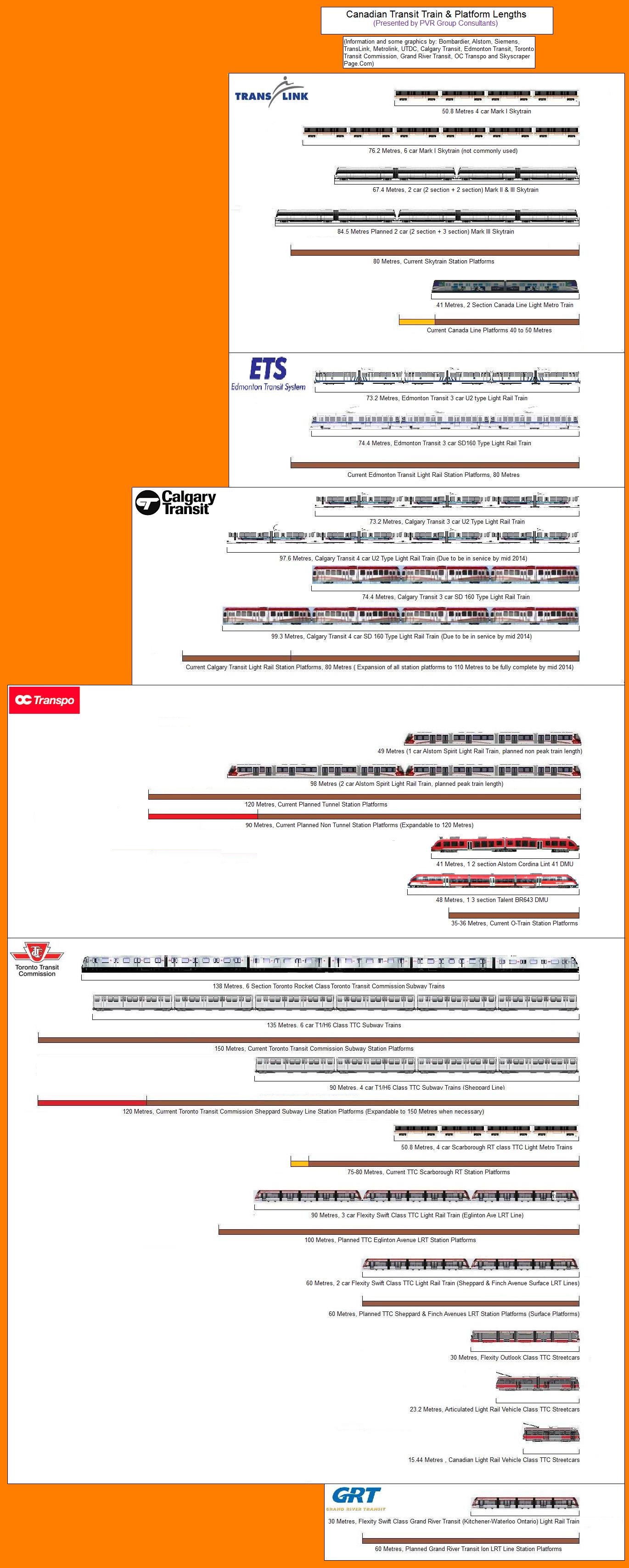
LRT stations on the Confederation Line will be shrinking from 150 to 120 meters in the Tunnel section and 120 to 90 meters on the surface stations. They will still be upgradeable to 120 meters if necessary. The reason given was budgetary pressure from the $2.1 billion hard limit and the inclusion of the huge pedestrian bridge at the Trembley Rd. Station and the work to allow buses from Gatineau to use the former CPR Prince of Wales Railway bridge (currently unused and owned by the City of Ottawa) to cross the Ottawa River and access the Bayview LRT Station. Trains will still be able to use the bridge, it will have cycling and pedestrian walkways as well.
At the Trembley Rd. LRT station a much needed pedestrian bridge is now being included in the project linking Ottawa’s VIA Rail Train Station as well as the Ottawa Baseball Park (formally Jetform Park and the former homeAi??of the Triple AAA Ottawa Lynx Baseball Team). The Stadium and LRT/VIA Rail Station Complex are separated by a 8-10 lane Expressway the Highway 417 (locally known as the Queensway). The ballpark complex located on Coventry Rd. also has many local stores and aAi??hotel connected to it.
On theAi??Confederation Line 2Ai??car train operation will still continue at the surface stations during the peak periods even though the trains now exceed the length of the platform (the trains have not shrunk yet), aAi??similar condition to the current O-Train. The Train just stops in a way that, all the boarding doors are still all on the platformAi??and the ends of the train goes beyond the platform at each end. This will reduce the ultimate capacity range of the line from 25,000-29,000 pphpd to 24,000 -26,000Ai??pphpd, using my personal capacity modeling software. The new limitations still make it way better than the Skytrain as they have adopted a operational plan that will allow for more new trains to be added earlier due to earlier implementation of Automatic Train Control by 2031 instead of after 2031 and a minimum of 6 new trains ordered 6-12 months after opening of the line in 2018.
Thank you Havacow for the report.
So the Confederation Line has caught the Canada Line disease and the scope of the project is being reduced, but unlike the Canada Line, which saw its station platforms shrink to 40 metres to 50 metres, the confederation Lines platforms are shrinking to a respectical90 metres, which is 10 metres longer than the present Expo Line station platforms. The Confederation Line will still be able to handle 98 metre long two car coupled sets and without the cumbersome selective door opening kit that TransLink is going to use to operate five car, 84.5 metre long sets of MK. 2 vehicles.
If automatic train control is used on the Confederation Line, it will no longer be considered LRT, but as a light metro. One wonders by 2031 would there be a need for ATC as we know it, rather would more modern signalling applications be used.
The French and Germans are toying with on board ATC, where the tram controls its own operation and keeps time itself without the need for a central control room. Drivers would be kept to monitor both tram operation and revenue collection. All sounds like science fiction today, but so did cell phones 30 years ago.

TramTrain in action
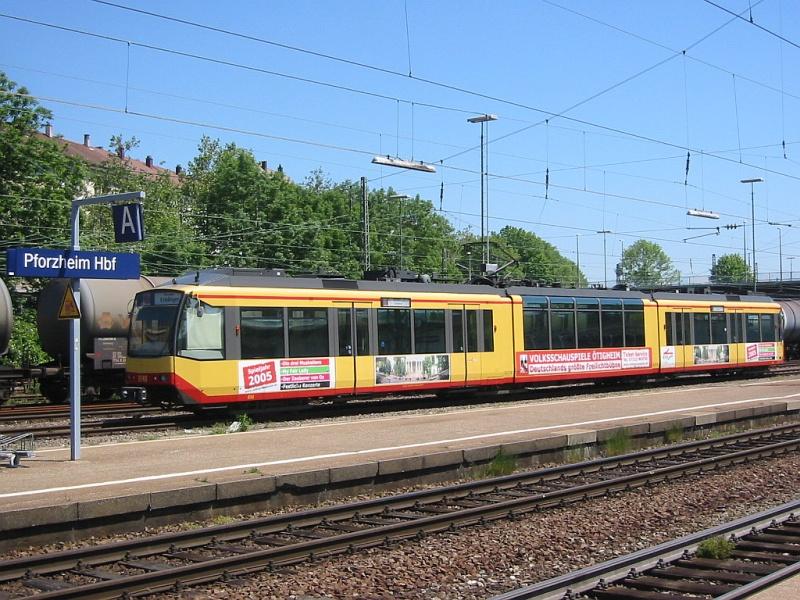
Probably the best visual that explains TramTrain around!
Steam, passenger, freight, and trams all using the same line.
Ersingen heavy / light rail contrasts
Arbutus Corridor Stuff
The following is an “letter to the editor” in Friday’s province and I must give credit to Mr. Chris Cullen for his sensible views.
Zwei says; “Bulls-eye Mr. Cullen”, you have deduced the Arbutus question most logically!
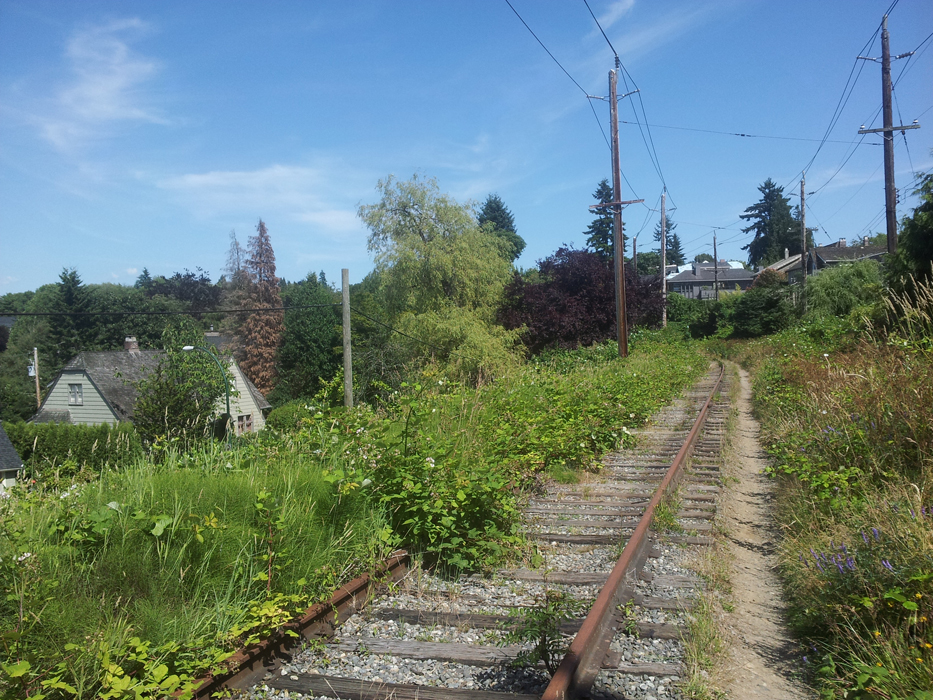
Rail is green
I am amused by all the concern over the Arbutus ai???green wayai??? potentially being reactivated for freight-rail use.
The Canadian Pacific Railwayai??i??s intent with their information letters is almost certainly to bluff and wake up the westside Vancouver ai???crA?me de la crA?meai??? NIMBY police. The resulting cries of protest to spur city hall to come up with the money to buy the corridor is the obvious intent.
Molson was the last shipper on the line and would likely be the reason for its reactivation. In a city that professes to be the ai???greenestai??? in the world, I would assume that there would be at least one person aware that rail is by far the most efficient and ai???greenai??? mode of transport. Such a switch would remove a sizable number of trucks from the roads every day.
So letai??i??s stop with the alarmist garbage about evil, fire-breathing freight train out to destroy everyoneai??i??s quality of life (and property values) along the Arbutus corridor. The trains were there as long as anyone can recall; why has everyone assumed they would never be back?
This is almost certainly a bluff. However, if it turns out not to be, all the better, as far as I am concerned. Did it occur to anyone that having freight in the mix (only once a day) could help the argument and control costs to retain the line for some sort of public transport?
A heritage streetcar or light rail could be accommodated. Itai??i??s done in many places.
Having the tracks torn up and replaced with yet another mountain of condominiums is not in the public interest. Anyone losing sleep or crusading about the issue needs to give their head a shake.
Chris Cullen, North Vancouver
Broadway on the Radio
On News 1130 today.
Light rail advocate argues against Broadway subway option.
A Broadway subway is all about subsidizing Vision(less) backers and supporters, who have invested heavily assembling lands at potential subway stations, not about moving people efficiently or affordably.

Light rail advocate argues against Broadway subway option
The mayor of Vancouver thinks an underground system would be better
VANCOUVER (NEWS1130) ai??i?? The fight for the future of transit service along the Broadway corridor is heating up.
The mayor of Vancouver has spoken out in favour of a subway ai??i?? but one advocate is pushing some NDP MLAs to support light rail instead.
Local light rail advocate Donald Johnston says ridership is only about a third of what it would need to be to justify a subway.
He adds if itai??i??s built, it would need to be subsidized, and would take money away from other projects like schools, hospitals, and transit south of the Fraser.
ai???I think the Metro mayors are naively following goosestep with Gregor Robertsonai??i??s demand for a subway along Broadway. Thereai??i??s no justification for it,ai??? Johnston says.
He argues supports and span wires for LRT are already in place from when streetcars ran along Broadway six decades ago.
Two traffic lanes would be lost if LRT went in.
Johnston says the cost to build LRT could be a tenth of the cost of building a subway ai??i?? and ai??i?? he says capacity would be higher.
He says SkyTrain is at capacity now because the stations are small. ai???If you want to increase capacity for a subway, that means youai??i??re going have to rebuild every SkyTrain station along the route. Thatai??i??s going be several billions of dollars.ai???
Johnston thinks there would be pushback for the loss of two lanes.
ai???Sure, youai??i??re going to lose auto space. But, hasnai??i??t the City of Vancouver done that with bike lanes? The Burrard Bridge? Why are they lighting their hair on fire about light rail on Broadway? Theyai??i??ve already done it for bicycles. Light rail is far more important, better transit along Broadwayai??i??s far more important than a bike lane,ai??? Johnston says.
Heai??i??s sent letters to Vancouver MLA, David Eby, and NDP leader, John Horgan.
Vancouverai??i??s mayor has said a subway is a priority but it isnai??i??t known how it would be funded.
Trams attract more passengers than buses
The following from Ed Tennyson, who is the foremost transit expert and historian in the USA, is a reply to a news story that Seattle suburban residents like the LRT but do not particularly like buses very much.
Buses, for what ever reason, just do not attract much new ridership and BRT, which in most cases refers to a tarted up express bus, suffers from the same malaise. As one transit expert in the UK told Zwei; “A bus is bus, just is a bus.”

THERE Ai??IS SOLID LOGIC BEHIND THE OPPOSITION TO BUSES:
Ai??Ai??First, there is the Transportation Research Board Special Report# 1221 of 1989 that reported that Light Rail most often attracted 35%to 43% more riders than buses when conversions were made,usuallyAi??from rail to bus but occasionally from Bus to rail back then.Ai??Ai??The TRB Report suggested that reasons included the certain routeconfirmed by the tracks. To many modern people all buses look alike,Router numbers Ai??mean little to most of them and they fear ending upfar from where they intended to go. Rational, maybe not but real.Ai??Ai??Second, my brother’s best friend Ai??could not Ai??ride buses as the exhaustmadeAi??him sea sick. Ai??Other people could stand the smell but did not likeit.Ai??Ai?? Thirdly, APTA’s Annual FACT BOOK reported that from1948 to 1975,asAi??buses replaced most Ai??Street Car lines, bus ridership dropped 72%The end of gasoline rationing had something to Ai??do with it maybehalf the loss, but from 1953 to 1972, the Light Rail Line in New-arkAi??grew as Public Service buses lost huge volumes of riders,. Ai?? Ai?? Ai?? Ai?? Ai?? Ai?? Ai?? Ai?? Ai?? Ai?? Ai?? Ai?? Ai?? .Ai??Ai??The Street Cars on Market Street in San Francisco lost no ridersafter maybe 1953, until 1972 when Market Street was shut downto build BART. Years later when Street Cars were restored, theyattracted more passengers than ever.Ai??Ai?? Fourth, they built the downtown Seattle Bus Subway with Bredaall-serviceAi??vehicles that broke down a lot and cost too much .Ai??Ai?? Fifth, Seattle had too much experience with “good” busAi??service.The Ai?? 2011 FTA National Transportation Data Base reported BusRapid Transit in Seattle cost 96 cents per passenger-mile tomaintain and operate. Seattle Light Rail that year was new andcost $ 1.08 per passenger-mile but with full operation in 2012 withcosts well below bus service. Motorists fear BRT will get some ofSeattle’s jammed street space Ai??but at least some Light Rail will getits own newAi??space.Ai??Ai?? Sixth, Seattle is strong for Clean Air. Ai??They do not think buses willhelp much with that. Light Rail will. Ai??The National Transit Data BasesaysAi??buses get only 32 passenger-miles per gallon Ai??but Light Railgets in Ai??between 40 and 50 depending on how high their load factorsare.Ai??Ai?? Ai??Since Light Rail does not use oil, the textbook conversion rate is13.5 kilowatt hours Ai??is equal to one gallon of dieselAi??fuel. Ai??That costsabout five cents per passenger-mile by LRT Ai??but 11 cents by dieselbusAi??Ai?? Seventh, back about 1962, I think it was, Seattle bus Ai??managementasked for money to scrap the trolley-buses and replace them withmodernAi??flexible diesels. The Professional Engineers of King Countyorganized a strong political pitch to keep the faster on hills and leastcostly trolleyAi??coaches. Voters went for the cleaner, less costly trolleybuses, butAi??did not expand them much, just renewed them. Ai??Busmanagement claimed cost per bus-mile was less than cost per trolleycoach mile which was true, but trolley coaches got the slowest hillyroutes and the shorter routes close to downtown so were slower.The Professional Engineers showed that Bus drivers are paid bythe hour, not the mile Ai??and make more stops per mile. so hourlycosts,Ai??not mileage cost should be used. That favored trolleycoaches. Ai??They went through that same exercise about twoyearsAi??ago and trolley coaches won again.



Recent Comments