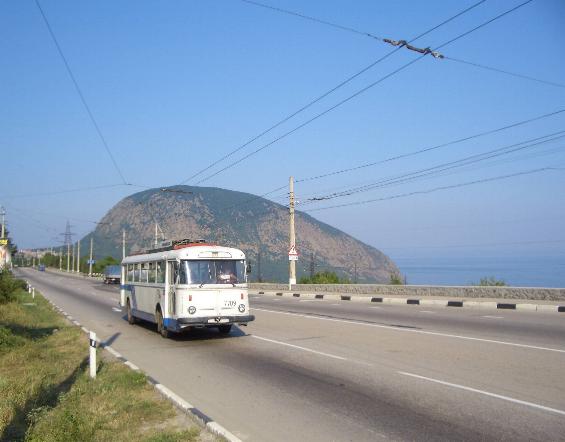
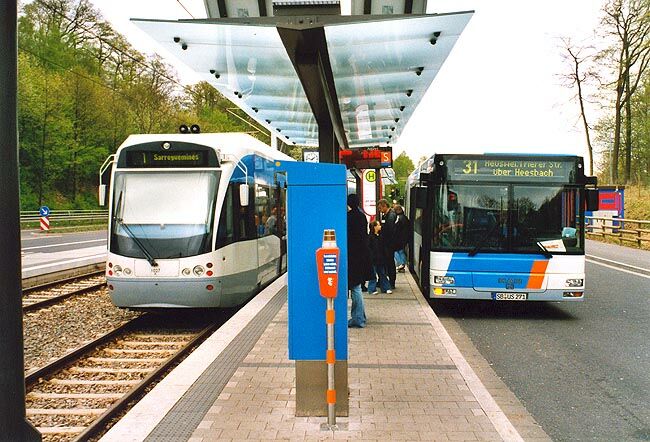
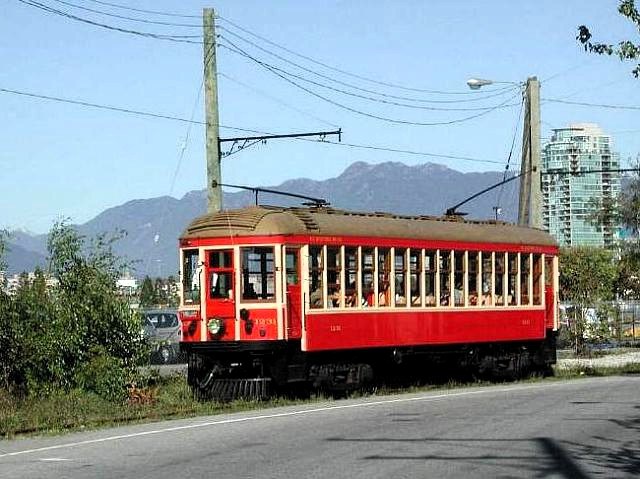
5 light rail projects to watch this year

Which light rail Ai??projects should we be watching this year? Here are just 5 of the many projects developing around the world.

They are at different stages and may have different reasons you should keep an eye on them, for example, to find out who will land major contracts or what will happen when it comes to construction and land development.

http://tinyurl.com/nsy7vms

Total Rail – Investment & Development in Rail for operators, investors & developers

www.totalrail.org

Traffic Flows -What The Broadway Subway Boys & Girls Do No Want Us To Know

Mr. Havecow is a transit professional from Eastern Canada, who has studied our transit system and of course SkyTrain. His findings certainly point to the fact that the public have been inundated with porkies, big and small, from TransLink , The City of Vancouver, and other retread politicians and academics who are clinging to the SkyTrain subway dream. Until there is both honesty and clarity by TransLink and the city of Vancouver, we must assume that claims that would support a SkyTrain subway are dubious in the extreme.

“Remember, these big numbers for passenger flows that are being in my opinion, carelessly bandied about by people who want a subway are boardings not trips.”

Over to you Mr. Haveacow.

Many thanks to those whom answered my questions. Using the 2012 ridership for the bus routes that were provided to be by Translink then converting their boardings numbers into actually trips, as well as using the basic Logit Toronto B model for the calculation of flows and the CUTA Model for the calculation of various bits of info used in figuring out transit capacities, various job distributions and weightings, I came up with the following numbers about the Broadway Corridor.

Keeping in mind that, numbers from any mathematical model must be verified with on sight observations and the formula ranges adjusted and recalculated over a period of years to be considered fully true. Also that, I donai??i??t live in Vancouver so, observations and recalculations to match observed views has to be done by Translink, they have the staff and time, plus no one was paying me to do this for them so the week it took to crunch these numbers is my time lost (however anyone wishing to throw a donation my way should know that it will be gladly accepted by me and the bank that holds my mortgage).

The Broadway Corridor averages 56652-64153 trips per week day. The maximum daily trips number given with all of the variable inputs favoring transit was 75710 trips per day. Using the mean trips per day range, 27.8% of all trips in the corridor come from passengers transferring from surface routes. 65.2% of all trips are generated from transfers from either the Canada or Expo Rapid Transit Lines and roughly 7% comes from within the corridor.

Most likely because of the University, the PM peak period has a 2-10% greater travel flow than the AM flow. This is usually reversed for most North American cities. Remember that this is just for this corridor not the whole Vancouver Area so the normal transit trip distribution could still be true.

The distribution of trip origins and destinations is very muddled in this corridor due to the distribution of large trip generators like City Hall, Rapid Transit Lines, VCC, UBC, Vancouver General Hospital Campus (including the cancer centre), the density and distribution of commercial properties and the residential properties. Again I would like to thank Doug from Translink for his data sets in this regard.

Overall as was observed by Rico, a range of 28-42% of trip origins and destinations were west of Arbutus with a median value around 34.3% mainly due to the university campus. The information provided by Translink also showed that, the seat/standing room turnover rate peaks east of Arbutus, then sharply declines the closer you get to UBC. This means that the majority of pass ups by buses should peak the closer you get to UBC because fewer people are giving up their seat or standing room on the buses.

The data from Translink also showed an interesting thing about the functional capacity of the bus routes. I have argued before that anyone can with enough info, calculate the maximum capacity of a transit vehicle. Whatai??i??s really needed is how close does the service get to its capacity before the majority of passengers refuse to get on, look for other transport alternatives or delay their trip in some way to avoid peak travel times. I have been working on a model with primarily one other person that, given some standard imputs will predict this activity. What is shocking to me that income had very little effect on this as well as age. We seem to like are consistent travel patterns and are very reluctant to change them once we find something we are comfortable with. What is interesting about this corridor is that, on average once transit vehicle occupancy gets to about 75-83% of stated capacity, people traveling in this corridor start to find other choices. For an area like Vancouver that relative to other cities has an average range of 82-88% of capacity tolerance, which is high, this is very low level of crowding. It maybe due to the large amount of bags and packs that university students tend to have to carry on a daily basis but, that is a only a guess.

The amount of service in the peak periods varies in this corridor from 15 to 22 transit vehicles per hour per direction due mainly to the Trolley Bus network running buses on part of the corridor then going in other directions at various points. Due to that last fact the maximum passengers per hour per direction flow has a wide variance. As mentioned before the flows are slightly higher in the PM peak period (which is unusual) but still close. When transfers from other surface routes are considered the median range across the corridor varies from 1935-3705 trips per direction per hour. The maximum peaks were 4539 trips/hour/direction in the PM peak from Arbutus to Granville and 4705 between Main and Fraser during the PM peak hour. At no point did the flow exceed 5000 trips/hour/directions, on a standard work day. I thank all the people who helped me in this endeavor, there were many.

Oh yes, the flow diagrams showed that bunching of vehicles is quite common in this corridor which can give the impression of a greater number of vehicles in service than is actually true. Plus the nature of trolley buses being tied to their lines and having only a limited ability to by pass other vehicles contributes to the bunching. However, I have seen them move around smaller vehicles in heavy traffic in Vancouver as well as Edmonton and Toronto (when they had them). It all depends on operator confidence and pole length used.

Followed by this little nugget…….

One also must be careful about using future demand numbers as a reason for rail rapid transit. What my modelling showed was that the peak hour numbers are manageable by BRT or LRT lines and that a below grade light subway/metro is currently overkill. What needs to be addressed IMHO is the non peak crowding which can be handled by either more standard bus services or a conversion to a real BRT/LRT system on this corridor. Remember, these big numbers for passenger flows that are being in my opinion, carelessly bandied about by people who want a subway are boardings not trips. When you convert them into actual passenger trips the numbers become up to 40% smaller. I have seen people on this website and others claim that Broadway will garner up to 200,000 passenger trips a day by 2030, this is a ridiculous claim considering that, right now the entire system only gets 723,547 passenger trips a day (1,176,500 boardings a day). If Broadway currently accounts for less than 10% of the systems daily total then they are predicting a huge increase for the entire system by 2030. Now it is a busy corridor there is no denying it, but certainly not really ready for a very expensive below grade light subway/metro line. Even the Evergreen Line is only predicted to have 55194 boardings a day (17,000,000 a year) by 2021, thatai??i??s about 35,000 passenger trips a day. Considering the financial pressure both capital and operating expenses, that Translink is currently under, aAi?? 2-3 billion dollar line on a corridor that even when everything favors transit at most gets 75,000 passenger trips a day, but averages 56-64,000 a day is at best, not advisable at the moment. Perhaps a lower cost system like LRT or a real BRT line (not the current BRT lite system) is what is really needed in this corridor.

Tracks to the Cities

Light Rail for Liveable Cities

A UITP POSITION PAPER

http://www.uitp.org/sites/default/files/cck-focus-papers-files/01%20LIGHT%20RAIL%20FOR%20LIVEABLE%20CITIES.pdf

In countries where tramways had survived the massive closures of the 50ai??i??s and 60ai??i??s,

e.g. Germany, Switzerland, Belgium, many remaining systems have been modernised

and upgraded and may now be called ai???light rail systemsai???.

In many other countries, where tramways had disappeared from the streets,

completely new systems have been developed since the mid-70ai??i??s. This was the case

in North America, in the Asia-Pacific area and in a few European countries such as

the United Kingdom and France.

As a result, light rail systems can now be found on all continents. There are now over

400 light rail transit and tramway systems, in 50 countries. In addition, over 100 light

rail systems are being planned worldwide.

Economic Benefits for the Wellington Region

http://www.wellingtonlightrail.org.nz/index.php/economic-benefits

A successful city is one that works well for its citizens, businesses and visitors. That means having excellent public transport as the preferred means of getting into and across the central city. For the Wellington region, using light rail in the tram-train mode is the way to provide an integrated high quality public transport network.

Cities and regions that have adopted light rail have gained economic benefits. Typically, the international experience has been that following the introduction of light rail there was a significant positive economic impact on jobs and business revenues. In addition, efficient public transportation is a recognised method of improving productivity and enhancing access to employment opportunities.

Modern light rail systems now operate in hundreds of cities worldwide and have generally proved to be a catalyst for improving local public transport networks. Light rail has proven that it can encourage development growth in areas better serviced by public transport and compliment land use and tourism policies.

For this reason, internationally, it is often the business community that is at the forefront of encouraging the adoption of light rail. Overseas experience indicates that properties that benefit from improved access because of proximity to a light rail system increase in value.

Positive benefit-cost ratio to adopting Light Rail

The major impediment to adopting light rail is the initial capital investment butAi?? if Wellington were to adopt light rail there would be a positive benefitai??i??cost ratio. The principal economic returns from adopting light rail would be:

  • Reduced congestions costs. Road congestion now imposes huge costs. These costs are faced by motorists directly but also by taxpayers who bear the cost of funding ever more roading infrastructure.Ai?? By relieving congestion pressures and eliminating the need for roading projects, such as the Basin Reserve Flyover, light rail would effectively fund itself!

  • Maximising the effectiveness of the existing rail network. Tram-trains would allow the full potential of the investment already made in the suburban rail network to be realised. This investment amounts to many hundreds of millions of dollars. The electrification and double tracking to Waikanae and the new Matangi Units would be even more valuable if greater rail use were encouraged by extending the reach of the rail network through tram-trains.

  • Reduced numbers of buses. Typically, a light rail is the equivalent of 4-5 buses

Light Rail Transit in Hamilton: Health, Environmental and Economic Impact Analysis

http://www.hamilton.ca/NR/rdonlyres/62464D50-B62B-49A7-974B-71679B69FC06/0/RR2E_A7_HealthEnvironandEconImpactAnalysis.pdf

Hamiltonai??i??s historical roots as an electric, industrial and transportation-oriented city provide it with a high potential for rapid transit, especially when combined with its growing population, developing economy, redeveloping downtown core and its plans for sustainable growth. This paper explores the health, environmental, social and economic impacts of light rail transit, a component of the City of Hamiltonai??i??s rapid transit initiative. It performs a comparative analysis with other major North American cities that have successfully implemented this form of mass transit. The analysis concentrates on three main areas: urban development and land values, health and environmental impact and socioeconomic factors. The results of the research on light rail transit (LRT) and its possible benefits indicate overwhelming support for the economic, health, environmental and social benefits of LRT, especially when compared to other forms of transit, including rapid bus and local transit schemes. According to the results, LRT in a medium sized, growing city such as Hamilton should be considered a viable and desirable transit option; a catalyst for transit oriented, high density, mixed use development; an economically sound investment opportunity, providing a return on investment to property owners, businesses and the municipality; and a catalyst for social change, improving the health, environment and connectivity of the community.

Light rail achieves local and national objectives

http://www.bettertransport.org.uk/files/Light-rail-inquiry-Oct09.pdf

In Delivering A Sustainable Transport System, the Department for Transport explains that it aims to be modally neutral and to encourage policy which focuses on achieving the Governmentai??i??s objectives; supporting economic growth; tackling climate change; contributing to better safety, security and health, promoting equality of opportunity and improving quality of life. It is clear that light rail could play a vital role in achieving these objectives, for the following reasons:

ai??? Trams improve the image of a city and contribute to economic regeneration.Ai??A new tram is a visible, permanent way of showing that an area is being invested in for the future. It attracts businesses and tourists, and helps people access jobs and services. When KPMG was advising GMPTE on the Greater Manchester funding package, they ranked schemes against regeneration and jobs, and on this basis high density public transport such as Metrolink extensions came out best

ai??? Trams reduce congestion in city centres by providing people with a quick, reliable, high-quality alternative to the car. They can reduce road traffic by up to 14%

ai??? Trams help tackle climate change. Travelling by tram produces only a third of the CO2 produced from travelling by car

ai??? Trams improve local air quality because they run on electricity so donai??i??t produce any pollution at the point of use. They are very safe and quiet, and they make cities nicer places to be

ai??? Trams are very popular and encourage people to leave their cars behind. The number of people using trams has increased by 52% since 1999. On average, one in five peak hour passengers on UK trams previously travelled by car. At the weekends, half of the tram passengers used to travel by car. At least 22 million car journeys a year no longer occur in the UK because of trams. This means that trams are an effective way of cutting carbon emissions and congestion

Subway cost per mile nearly 9 times higher than for light rail, says study

Recent study results of subway-LRT investment costs posted on the Light Rail Now (LRN) site provide a sobering reality check on the cost issue.

http://austinrailnow.wordpress.com/2014/02/15/subway-cost-per-mile-nearly-9-times-higher-than-for-light-rail-says-study/

Projects examined were an assortment of “recent urban rail projects (all from the 2000s), either completed or well under construction and fully budgeted.” The report lists 24 subway and 13 LRT projects included in the analysis (in the USA and worldwide).
LRN’s study found median investment cost to be nearly 9 times higher for subway construction projects than for in-street LRT.

“Basically, for a given amount of available funding, you can construct 7 to 9 times as much surface LRT as subway. Put another way: For available resources, you can have a far more comprehensive
rail system with surface LRT, many times the size of a system relying on subway construction.”

For years, Austinai??i??s civic leaders and official urban rail planners have been trying to figure out how to raise more than $500 million in local and federal funding for a new-start surface urban rail project ai??i?? 5-6 miles of light rail transit (LRT) running in relatively lower-cost surface alignments. Suddenly, at least some official interest has turned to ai??i??.building a subway instead?

This seems to be influenced mainly by two factors:

ai??? An aversion or reluctance to shift urban public thoroughfare space away from apparently precious motor vehicle traffic and re-allocate it to public transit (rail in this case), and

ai??? Insistent claims by several subway proponents (disputed by professionals and advocates of LRT) that subway construction costs are nearly the same as, or only slightly more than, surface LRT.

Projects examined were an assortment of ai???recent urban rail projects (all from the 2000s), either completed or well under construction and fully budgeted.ai??? The report lists 24 subway and 13 LRT projects included in the analysis.

ai??? Only ai???full subway projects (entirely or nearly totally underground)ai??? were examined in the study, including subway portions of LRT projects.

ai??? Only surface LRT projects exclusively, or nearly totally, in street alignments were included (ai???to compare the most difficult, highest-cost type of surface construction with subway constructionai???).

Summarizing the study results, LRN underscores the huge cost disparity between subway and in-street LRT construction, and the implications for a long-term rail expansion policy:

ai??i??for recent U.S. projects, subway construction has a median cost nearly seven times that of in-street LRT construction. Worldwide, the differential is nearly 9:1. And thats only comparing in-street LRT construction, not accounting for the possibility of, say, transitioning into an available railway alignment outside the city center, with far lower installation cost.

What this means is that, even if your community can somehow afford the initial financial commitment (even with federal assistance), expansion of your system will be severely attenuated. Basically, for a given amount of available funding, you can construct 7 to 9 times as much surface LRT as subway. Put another way: For available resources, you can have a far more comprehensive rail system with surface LRT, many times the size of a system relying on subway construction.

The Affordable Tram, a Template for Surrey?

A few posts back, Zwei looked at the affordable tram for Vancouver connecting UBC with BCIT, so now let us see how the affordable streetcar would do in Surrey.

What should be of extreme interest is the low cost for the proposed Dundee tram compared to the sky high costs for light rail from TransLink!

The example of the 13.5 km Portland streetcar is of great interest as the costs break down as thus:

  • Rail, electrical and street workAi?? …….. USD$35.1m – CAD$38.94m
  • Maintenance facility …………………… USD$4m – CAD$4.43
  • Trams (5 +s pares) ……………………… USD$11.3m – CAD$12.53
  • Utility works (only in swept path) …. USD$3.8m – CAD$4.21
  • MiscellaneousAi?? ………………………….. USD$0.4m – CAD$0.44

Total………………………………………………….USD$54.6m – CAD$60.5(approximate)

LR Dundee Circulator Dec 13 v 28 (2)

If we look at a 28.5Ai?? km Surrey Centre to Guilford and to the Number 1 Hwy; Surrey Centre to Newton; and Surrey Centre to Langley Centre, tram or streetcar, we could build an economy tram/streetcar line far cheaper than what TransLink proposes. As with all transit projects, the simpler the better.

The following are adjusted costs for an economy LRT operation from Surrey Centre to Guilford and to the Number 1 Hwy; Surrey Centre to Newton; and Surrey Centre to Langley Centre. Total distance for the three lines 28.5 km.

Unlike Vancouver, there is no existing infrastructure from former streetcar service and would be ‘greenfields’ construction, which means more expensive. Median operation on all routes, with a major viaduct (shared with road traffic?) over the Langley By-Pass and the Superport Railway

Signalling: Line of sight, except for for a block signal system from 164th to 188th Streets.

Start up capacity: 5 minute headways (12 trips per hour) – approx. 3,000 pphpd. Capacity can be increased by adding by using longer trams or adding more trams.

  • Rail, electrical and street work: Approximately CAD$450m
  • Maintenance facility (2): Approximately $35million, based on fleet size.
  • Trams: 35 modular trams and spares with a design capacity of 250 persons: Appropriately $150m
  • Utility works (only in swept path): $30m
  • Bridge or combined overpass $75 million
  • Miscellaneous: $110m

Total cost ………………………………………………………… CAD$850 million.

Not only is $850 million for the economy LRT far cheaper than what TransLink proposes ($2.1 billion), there is enough money from the Surrey LRT budget left over to build the ‘full build’ Rail for the Valley/Leewood TramTrain, enabling direct service from the Surrey light rail network to go to downtown Vancouver and or Abbotsford and Chilliwack, still at a cheaper cost than what Translink proposes for three LRT lines in Surrey!

LRT South of the Fraser

A pleasant surprise in the Delta Optimist, Zwei’s home town paper, a light rail friendly article. Though I hate the term Light Rapid Transit, because I believe it is used deliberately to misinform people.

The comment by Delta-Richmond East MP Kerry-Lynne Findlay, the minister of national revenue; “the fund is aimed at projects that have regional as well as national significance, and in many cases would encourage greater involvement of the private sector through P3 partnerships.” is interesting as it could mean the Leewood/RftV TramTrain from Vancouver to Chilliwack could get federal support as it certainly have regional significance and the project could be very P-3 friendly, especially when the Southern Railway of BC will have to be very closely consulted with for the project.

What is important is that LRT is now included in the lexicon of South Fraser politics and politicians and that is a very big leap forward.


http://tinyurl.com/mpkvuue
“Light rapid transit not just a dreamMunicipal officials see a future that includes light rail

Sandor Gyarmati
Delta Optimist February 14, 2014

Light rapid transit to Delta remains nothing more than wishful thinking, but that doesn’t mean federal money won’t eventually be made available for such a project.

The Conservative government this week tabled its latest federal budget, which contains some specific transportation infrastructure projects, works mainly earmarked for Eastern Canada.

A bigger pot of money for transportation infrastructure was announced a year ago, however that funding requires agreements and further details.

It’s all part of the Economic Action Plan 2013, which pledges major dollars for public transportation infrastructure, including the $53 billion New Building Canada Plan.

That plan would see the building of roads, bridges, subways, commuter rail and other public infrastructure in cooperation with provinces, territories and municipalities over 10 years.

Delta-Richmond East MP Kerry-Lynne Findlay, the minister of national revenue, told the Optimist the fund is aimed at projects that have regional as well as national significance, and in many cases would encourage greater involvement of the private sector through P3 partnerships.

Surrey has sought federal funding for light rapid transit, but it’s competing with Vancouver’s bid for a subway along the Broadway corridor. Both projects would cost billions.

Another project that could end up competing for the same dollars is the bridge to replace the George Massey Tunnel.

Should ground-level rail transportation come to Surrey, it wouldn’t be a stretch to have a connection into North Delta.

Delta engineering director Stephen Lan said during the North Delta Area Plan process the future of Scott Road was examined.

A cross-section was identified that could provide sufficient width for a rapid transit lane, possibly light rail.

A vocal advocate for light rail south of the Fraser River, Coun. Bruce McDonald believes extending it from Surrey to North Delta makes sense.

As far as bringing light rail into South Delta, McDonald said that’s also feasible. It’s also something that will make even more sense as many more people will live and work south of the Fraser.

“Surrey is talking about running a light rail transit right out the King George Boulevard, so we’re not talking about long distances here. Let’s talk about how we could connect.

“The bottom line is once you get the spine put in place, then you work on getting the ribs,” he said. “South Delta would likely be one of the ribs.”

McDonald said it also makes sense to also have light rapid transit added to the future George Massey Tunnel replacement bridge, where it would stop in Ladner with connections elsewhere.


TransLink, Act 5

Alas, poor TransLink, I knew it Ken.

As the Vancouver Sun article alludes to the fact that, we paid a lot of money for vanity rapid transit projects and that my friends is why TransLink is in the financial glue it finds itself in today.

Zwei has known this for a long time and only now, those former champions of SkyTrain, rapid transit and subways are recognizing this?

Alas TransLink, your time has come and gone.

Evolution of a transit authority

High hopes at founding in 1999 have turned into a riddle of costs, ridership and political tensionsAi??

By Kelly Sinoski AND Rob Shaw, Vancouver SunFebruary 14, 2014

Former Vancouver councillor George Puil was so confident TransLink was the best system for Metro Vancouver 15 years ago that even after knee surgery, he hobbled around on crutches to every mayor and council to sell the idea.

The plan, under then-NDP premier Glen Clark, was simple: the unelected BC Transit board would be replaced with local politicians who had both the power to raise taxes for transportation and the accountability to face voters if those taxes werenai??i??t wanted.

The 12-member board was responsible for everything from buses and trains to roads and bridges. It got its funding from the fare box and other taxes, and also had a sustainable funding source: a $75 vehicle levy approved by the province, with revenue to go to TransLink.

ai???I went to every municipality to get them to agree and they did,ai??? said Puil, a former TransLink chairman who met with transportation officials across North America to develop the model. ai???I thought we had it right.ai???

But TransLink was troubled from the start. The NDP government reneged on the controversial vehicle levy in 2001, leaving the system cash-starved from the beginning, and municipalities have battled successive governments that opted to build their own costly pet mega-projects like the Canada Line or Millennium Line over cheaper transit like light rail.

This left municipalities with only a handful of unpolitically unpopular ways to generate funds for transit: by raising fares, property taxes and gas taxes.

The problems persisted long after the NDP was voted out in 2001 and the B.C. Liberals took over. Successive governments have continued to reject the vehicle levy, and the Liberals are ordering a public referendum before any new funding sources can go ahead.

The Liberals, claiming the TransLink board was dysfunctional, restructured it in 2007 and instituted an unelected board. TransLink is now on the cusp of another overhaul this spring.

ai???Iai??i??m disappointed,ai??? Puil said.

Clark, B.C.ai??i??s premier from 1996 to 1999, acknowledges the transportation authority didnai??i??t quite work out the way he imagined.

The idea was to bring more accountability to TransLink by giving the elected members of the Greater Vancouver Regional District Ai??ai??i?? now Metro Vancouver ai??i?? the ability to appoint mayors and councillors to the TransLink board.

But this proved troublesome. Transportation decisions ai??i?? such as how much money would be spent on transit and roads ai??i?? Ai??had to first pass the hodgepodge of politicians on the TransLink board, but could then be overruled by a second vote by the GVRD, which had veto power on tax and fee increases. Although the NDP set aside three seats on the board for provincial appointees, the Liberals never placed anyone on the TransLink board.ai???Iai??i??d be the first to admit it was flawed in one sense,ai??? Clark told The Vancouver Sun in a recent interview. ai???It still retained the fundamental problem, which was only indirect accountability for their actions.ai???

Money was at the heart of the problem.

Provincial politicians argue that when TransLink was created, the province exempted the regional government from having to pay 40 per cent of local hospital projects on the understanding they would use the property taxes to fund transit projects. But from the start, mayors have been reluctant to raise property taxes for fear of a backlash from tax-weary voters.

ai???I again underestimated the territoriality, the turf protecting, that went on,ai??? Clark said. ai???They donai??i??t want to raise the money for big projects. They could theoretically do it, but itai??i??s very hard for them to raise that kind of capital. So it ends up them kind of running the bus system.

ai???And the big-picture stuff, everybody has competing demands. The province has, historically, including when I was there, including when Gordon Campbell was there, including when Bill Bennett was there, simply intervened, paid the money, set the priority and turned it over to them.ai???

That repeated intervention from Victoria is a sore spot among local mayors who feel they get overruled whenever the province wants to push a project.

Tensions came to a head in 2004, a pivotal year for the transportation authority, which was pursuing big-city dreams of light rail cars zinging between Vancouver and Richmond and Burnaby and Coquitlam.

Still reeling from the former NDPai??i??s decision to build the $1.2-billion Millennium SkyTrain, which was losing $27 million per year, municipal politicians faced intense pressure from the Liberals to build the Canada Line ai??i?? rather than light rail to Coquitlam ai??i?? ahead of the 2010 Winter Olympics.

They voted twice to kill it, but it went through anyway.

Former Liberal transportation minister Kevin Falcon, who publicly chastised the mayors for trying to vote the Canada Line down, defended his decision, saying the Canada Line has been incredibly successful since opening day.

ai???At the end of the day the public really gets tired of the infighting and the parochialism and finger-pointing and they really want to see results,ai??? Falcon said. ai???Iai??i??m happy to let people criticize myself or government during that process, but I like to be able to look back and say, ai???You know what, we got those things launched and we got them built, whether it was the Canada Line or Evergreen Line.ai??i?? ai???

Ken Dobell, TransLinkai??i??s first CEO from 1998 to 2001, said if the province is putting in more than one-third of the money for a project, as it often does, then itai??i??s only fair that Victoria get a say in how the project is built, he said. He added that transit-related property tax levels in Metro are lower compared with Toronto or Montreal.A frustrated Falcon overhauled TransLink in 2007, taking substantial control away from local politicians and giving it to an unelected board of experts, who met in secret to come up with plans and priorities.

The mayorsai??i?? main role was downgraded to approve those plans and the additional taxes to pay for them. For instance, while TransLink is already allotted three per cent of Metroai??i??s property taxes for transit, the mayors would have to approve any further hikes to pay for transit infrastructure.

And from the start, they were loathe to boost property taxes any further.

ai???It seemed to me we needed to have a structure that would give the public more confidence that decisions would be made for the right reasons,ai??? Falcon said. ai???Itai??i??s not a perfect model for sure, and itai??i??s entirely appropriate the province now take a look at it and tweak it to see if they can improve upon that.ai???

The third version of TransLink, unveiled this month by B.C.ai??i??s current transportation minister, Todd Stone, flips Falconai??i??s version on its head. Nobody really knows yet what itai??i??s going to mean for the region, but it suggests a compromise, with mayors gaining more control over TransLinkai??i??s policies and priorities, and the board handling the budget and operations.North Vancouver District Mayor Richard Walton, chairman of the mayorsai??i?? council on regional transportation, is optimistic. Mayors now only have three tasks in their mandate: to appoint the commissioner and the TransLink board ai??i?? candidates are appointed by the province ai??i?? and approve large capital budgets.

ai???If thereai??i??s no money you canai??i??t approve a large capital budget,ai??? he said. ai???There hasnai??i??t been a financial model thatai??i??s worked. For them to turn around and say we didnai??i??t have a vision or continued to work to get one left us all speechless.ai???

Former Liberal transportation minister Blair Lekstrom argues both the mayors and Victoria have to take responsibility, but in the end, it all comes back to property taxes.

ai???At some point, and this is where I differed from many members on the mayors council, property taxes have to be part of that solution,ai??? said Lekstrom. ai???They were adamant theyai??i??d paid enough. But you canai??i??t reach out to the people of Tumbler Ridge or wherever to say contribute to Metro Vancouver transit.ai???

Metro Vancouver mayors agree that any funding sources should be local. They have pitched pleas to use the vehicle levy, regional carbon tax or tolls on local bridges ai??i?? rather than property taxes ai??i?? to raise cash for transit.

TransLink has seen unprecedented growth over the past decade, laying the groundwork in 2005 for more buses, SkyTrain cars and projects like the Canada Line, Coast Meridian Overpass, Central Valley Green Bicycle route and the Golden Ears Bridge.

Expenditures rose from $630.9 million in 2001 to $1.4 billion in 2012, according to TransLink figures, which have been converted to 2013 dollars. But that growth came in fits and starts, bolstered in part by increases in property and gas taxes to ensure projects ai??i?? once started ai??i?? were built.

TransLink, which had started to see its cash flow shrink in 2009, was dipping into its reserves three years later to pay for several system expansions. These included not only the long-awaited Evergreen Line, linking Burnaby and Coquitlam, but politically motivated projects such as a rapid bus lane along the new Port Mann Bridge and a Compass and fare gate system, after municipal politicians refused to raise property taxes any further.

TransLink CEO Ian Jarvis acknowledges the transportation authority has its work cut out, especially with another million people coming to Metro Vancouver by 2040. Last year, bus routes were already being shifted across the region, with service hours cut in areas like Port Coquitlam and added to busier routes along Vancouverai??i??s Broadway where thousands of people are passed up each day.

And itai??i??s not just transit TransLink has to worry about: it is also responsible for several bridges, including the Pattullo and Knight Street, HandyDart and 2,400 kilometres of roads.

ai???We have adequate funding to cover the services that are there today,ai??? said Jarvis, who has been with TransLink since its inception, previously as chief financial officer. ai???The challenge is what is the appropriate level of investment we need to bite off next and whatai??i??s a fair and equitable way to pay for that?ai???Local mayors have repeatedly called for a road pricing strategy to pay for transit. This could include the vehicle levy, tolls on every bridge or a fee per distance travelled.

Puil, who championed the first vehicle levy, is still pushing the move as a better alternative to raising fares.

ai???You have to have some form of road tax,ai??? he said. ai???I think the municipalities have to be strong enough and they have to step in and say ai???this is our business. You canai??i??t make decisions for us.ai??i?? ai???

But Clark, now a high-level executive in Jim Pattisonai??i??s business empire, maintains it would be a tough sell, noting voters need to see a direct connection between the tax and service, and a vehicle levy needs at least some level of popularity to survive.

The province should have known a vehicle levy would be unpopular, Dobell said. But by never allowing TransLink to implement the measure, it took away one of their main revenue sources.

North Vancouverai??i??s Walton, who met with Stone Friday, said it appears the mayors and province are finally making headway. Itai??i??s the first time in five years they have been at the table together, he said, a period that has seen public feuding with Victoria suggesting the mayors arenai??i??t doing anything to resolve the funding issues.

ai???Those kinds of comments are personally vindictive and donai??i??t do anything to encourage people to work together,ai??? Walton said.

Puil argues mayors have to be involved in the system, noting in the early days there was unanimity around the board. ai???We never wanted SkyTrain,ai??? he said. ai???The main problem is the lack of money, and the capital projects they take on are huge. The capital expenditure for SkyTrain is far in excess of what it would have been for light rail.ai???

Ken Cameron, a former planning manager with Metro Vancouver, agreed things seemed to be on track before the Canada Line kerfuffle.

Since then, he said, provincial politicians blindsided by the ai???dream of having their own trainai??? seem to have forgotten the original intention of TransLink: to move goods and people more efficiently.

Both Millennium Line and Canada Line were heavily motivated by politics, he said, noting neither has seen the high-density that was expected to be coupled with transit routes. Although Canada Line has drawn the ridership, highrise development is only now going in along Cambie ai??i?? four years after the trains started rolling to the airport.

It may be different for the new Evergreen Line, which took so long that Coquitlam and Port Moody had developed high density town centres around it, but it depends on whether people are willing to get out of their cars and take it in 2016.

ai???If I had my way I wouldnai??i??t build another inch of rapid transit in this region until we have a better idea of where weai??i??re growing,ai??? Cameron said. ai???What we should be doing is the least costly solution to achieve the outcome that we want. What we seem to be losing track of is that we should be trying to move people and goods efficiently in the region and yet we have these vanity projects that are costing a lot of money.ai???

ksinoski@vancouversun.com

rshaw@vancouversun.com

The Greer Report & Rapid Transit


Reedited, but the message is the same.

K

OverAi??14 years ago the Greer Report, done by Greer Consulting Services, issued a scathing report on the Broadway/Lougheed Rapid Transit Projects, later to be know as the SkyTrain Millennium Line. The report found:

  • cost comparisons appear to have been contrived to favour SkyTrain over LRT
  • no ridership (demand) analysis was reported to justify the high capacity system
  • air quality and transportation benefits are unsubstantiated
  • accelerated construction advantages of SkyTrain were clearly unrealistic
  • risks associated with the SkyTrain car manufacture have not been assessed.

Fast forward to 2013, has anything changed?

Nada, nope, not a chance!

The same argumentsAi??have beenAi??used by TransLink for the Evergreen line.

How can TransLink be trusted with any honest rapid transit planning, especially when they want hundreds of millions more in taxpayers money to pay for ai???pie-in-the-skyai??i?? Broadway SkyTrain subway planning based on contrived planning and phony studies? The Canada line is just a symptom of a major problem: TransLink refuses to plan for affordable light-rail and instead invents statistics to suit their in-house light-metro planning. The 100,000 passengers a day, quoted by Liberal politicians, needed so the Canada line will operate subsidy free is ai???stuff-and-nonsenseai??i?? as TransLink has absolutely no mechanism in place to apportion fares between SkyTrain, Canada line, Seabus, and the regular buses. TransLink doesnai??i??t know what percentage of fares are full fares, concession fares, and the deeply discounted U-Pass, nor do they have a formula for allocating fares between bus, Seabus and metro.

Fast forward to 2014: TransLink claims the Canada Line is carrying in excess of 135,000 passengers a day, yet TransLink is still paying about $90 million annually to the operating consortium!

Wasn’t the Canada Line promised to pay for itself when ridership exceed, 100,000 a day?

No? Well, that was the inference by the BC Liberal party, on top of the claim that the Canada Line would take over 200,000 car trips off the road, each and every day.

Certainly nothing has changed much at TransLink as American transit expert, Gerald Fox, stated in a Feb.2008 letter regarding the Evergreen line:

ai???I found several instances where the analysis had made assumptions that were inaccurate, or had been manipulated to make the case for SkyTrain. If the underlying assumptions are inaccurate, the conclusions may be so too.ai??? And adding: ai??? It is interesting how TransLink has used this cunning method of manipulating analysis to justify SkyTrain in corridor after corridor, and has thus succeeded in keeping its proprietary rail system expanding. In the US, all new transit projects that seek federal support are now subjected to scrutiny by a panel of transit peers, selected and monitored by the federal government, to ensure that projects are analyzed honestly, and the taxpayersai??i?? interests are protected. No SkyTrain project has ever passed this scrutiny in the US.ai???

Metro politicians take note, TransLink are taking you and your taxpayers on a wild ride, ai???around, around, TransLink goes; whereAi??the money trainAi??will stop nobody knows!ai???

For the full Greer Report

http://www.bcgreen.com/~samuel/green/GREER_Rep-SkyTrain_April_12_1999.pdf

Gerald Foxai??i??s letter

http://railforthevalley.wordpress.com/2008/12/26/can-translinks-business-cases-be-trusted/

The Emperor has no Clothes and no Transit – A Repost From March 27, 2011

Vancouver is at first glance a beautiful city. It is surrounded by sweeping vistas and a dramatic skyline.

The climate is moderate butAi??spend some time here and scratch the surface and it becomes far less attractive. It is a city that is divided politically; it is parochial, narrow minded and shallow. The people are characterless, flaky and disingenuous. Vancouver is the scam capital of North America, a skill set for which the local population is particularly adept.

http://www.railforthevalley.com/wp-content/uploads/2011/03/The-Emperor-has-no-clothes.jpg

There are times when I am certain that Vancouver is something straight out of Conradai??i??s Heart of Darkness.

It is a cold place, people in the same business do not interact of share information they do not network or help each other. There is an almost a Darwinian or Hobbesian social culture ai??i?? Vancouver is an empty void.

The political environment is polarized and doctrinaire. The left adheres to ideas that are at least a generation out of date. Vancouverites think that Naomi Klein is an intellectual when in reality she is a very silly charlatan. To Vancouverites the secret is a serious work of self help. The right is equally foolish in the banality of their free market ideology.

You donai??i??t meet people of substance here. You meet flakes. The press is dominated by yellow journalism. Rarely if ever have I read a real piece of investigative journalism. You do not meet people who form their opinions based upon facts. When you encounter Vancouverites and engage them in the discussion of social issues the argument usually become circular and they end of talking only about themselves. There is a kind of deep insecurity that comes from profound feeling of self loathing that is hard wired into the political culture here. Narcissism is the dominate religion and worshipping at the Temple of Mammon ai??i?? real estate speculation isAi??the Holy Grail.

People here (generally speaking of course) are stuck up, materialistic yuppies. The downtown scene used to have decent variety, now itai??i??s full of ai???cookie-cutterai??? clubs and bars that cater to Armani clones.
Go east of here, or especially south of here, and youai??i??ll find friendlier people that arenai??i??t so consumed with cliques and materialism.
If one hails from Harare, Timbuktu, Tripoli, or Darfur then yes, Vancouver appears pretty good, but ai???the most liveable city on Earthai????

Not only is this pretentious, itai??i??s just plain wrong.

No where is the contrast more apparent, than in Coquitlam and Port Moody; cities like Surrey, Delta and Langley, South of the Fraser River andAi??east along the Valley to Abbotsford and Chilliwack.

Politicians, planners, decision makers, wealthy Vancouver suburbanites and the `movers & shakersai??i?? contemptuously dismiss the communities beyond downtown as the boondocks; the disdain for the citizens of the Greater Vancouver Regional Districtand the Fraser Valley is illustrated in the attitude of the Ministry of Transportation and Infrastructure, BC Transit and Ai??TransLink, to public transport in these areas.

The Emperor has no Clothes and no Transit.

In December 2010;

the FRASER VALLEY TRANSIT STUDY http://www.th.gov.bc.ca/FraserValleyTransit/publications.htm

was released and condemned the communities of the Fraser Valley Regional District to a life of perpetuity with no more than a second-rate bus service as an alternative to the private car.

TheAi??Rail for the Valley movement has long campaigned against this inequity:

Whereai??i??s The Transit?

http://www.railforthevalley.com/latest-news/zweisystem/wheres-the-transit/

Transit Planning In Metro Vancouver ai??i?? Where Have We Gone Wrong?

http://www.railforthevalley.com/latest-news/zweisystem/transit-planning-in-metro-vancouver-where-have-we-gone-wrong/

Added costs for the Canada Line ai??i?? Has The Taxpayer Assumed Risk?

http://www.railforthevalley.com/latest-news/zweisystem/added-costs-for-the-canada-line-has-the-taxpayer-assumed-risk/

The truth is now beginning to be realised by the wider community;Ai??The Globe & Mail published the two following articles on March 25 & 26th.

Transit a hit-and-miss affair in B.C.ai??i??s Lower Mainland

http://www.theglobeandmail.com/news/national/toronto/transit-a-hit-and-miss-affair-in-bcs-lower-mainland/article1957867/page2/

Transit problems across Canada prompt calls for politicians to address issue

http://www.theglobeandmail.com/news/national/toronto/transit-problems-across-canada-prompt-calls-for-politicians-to-address-issue/article1957897/page2/

We can only hope that the National Election called on the 2nd May and the endAi??to the ten years of ineptitude, inequality, corruptionAi??& nepotism in Gordon Campbellai??i??s BC Liberal administration will improve the outlook; we can but hope and wish.

One should have some basis for comparison before showering such hyperbole on the overpriced, congested, and conceited squalor that is the most liveable city in the world. If any city (or province) is presumptuous enough to put ai???the best place on Earthai??? on its license plates; itai??i??d better well be the case, becauseAi??itai??i??s citizens donai??i??tAi??uphold the credibility.

Vancouver is a poor-manai??i??s version of Seattle that, ironically, costs five times at much. Unlike Seattle, however, Vancouver has a dearth of friendly (and English-speaking) people, good music, and reasonably-priced beer. The self-satisfied smugness Vancouverites have toward their neighbour city to the south (or any metropolis, for that matter) stems from an amalgamation of an inferiority complex coupled with an identity crisis. Canada is like the U.S. in every way, except not quite as good. Nowhere is this exemplified more than in Vancouver.


The ULI Land Developers Want A Subway – Surprise, Surprise, Surprise

From a group that claimed it would not talk about mode, the the Urban Land Institute, backs a subway and says “avoid light rail”.

Zwei knew from the beginning this was nothing more than an elaborate set up to support Vancouver’s demand for a subway and to further support the almost discredited policy of ‘densification – Vancouver style‘, which is putting massive highrises on rezoned land for future SkyTrain stations, which ensures very healthy profits for mostly friends of the government. The ULI, sells this Lysenkoist drivel like a medicine man, selling ‘snake oil‘ to the local rubes.

Definition of Lysenkoism: metaphorically describes the manipulation or distortion of the scientific process as a way to reach a predetermined conclusion as dictated by an ideological bias, often related to social or political objectives.

In the real world, it takes several transit specialist, many months to plan for transit mode and to see if a very expensive subway is warranted; the ULI did it in five days and several luncheons later, but then the ULI are not transit experts and the the result was well planned prior to the ‘investigation’.

The ULI were not even expert enough to see that the short (80 metre) SkyTrain stations would have less capacity than a modern LRT. Short SkyTrain station platforms equals lower capacity when compare to LRT systems in Calgary and Ottawa.

The ULI rates a very high and well deserved 5 on the BS meter.


American group says bus route to UBC a ‘failureai??i??

Urban Land Institute recommends underground subway, paid in part by employers along line

By Jeff Lee, Vancouver Sun February 6, 2014

The Urban Land Institute backs the City of Vancouverai??i??s preference for an underground subway from Commercial Drive to UBC. (File photo.)

Photograph by: ian lindsay, Vancouver Sun

An international panel of land use experts injected themselves into the hot debate over a proposed Broadway transit line Thursday, saying TransLinkai??i??s current bus route to the University of B.C. is so inadequate that the system ai???is essentially at failureai??? and the only realistic alternative is a new high-capacity line bored underground.

The Urban Land Institute, a Washington D.C.-based group, said Vancouver also needs to avoid making other citiesai??i?? mistakes by trying to pay for expensive expansions by linking land use and density to the form of transportation. Putting highrise developments at every station isnai??i??t a good idea, they said.

ai???You guys do high rises very nicely. But you are sort of drunk on high rises. You donai??i??t need towers everywhere,ai??? said Dick Reynolds, the chairman of a ULI ai???governorai??i??s advisory panel,ai??? which spent three days examining the Broadway route.

ai???Just donai??i??t get caught up in the idea that if you pick an expensive transit system for a whole lot of good reasons, youai??i??ve got to upzone everything.ai???

Reynolds and four other land use experts issued an interim report Thursday that backs up Vancouverai??i??s preference for a bored tunnel between Commercial Drive and UBC. They met with city officials, TransLink and neighbourhood groups. A full report will be issued in two months.

Among the early conclusions the panel offered were that:

ai??? TransLink should avoid light rail technology or a subway built by cut-and-cover method.

ai??? UBC, the Vancouver Coastal Health Authority and other major employers along the line need to help pay for the system.

ai??? Transit should not drive zoning; existing commercial zones should be filled out first.

ai??? The city has lots of unfilled commercial density east of Burrard Street that can generate jobs.

ai??? The city should largely leave low-density neighbourhoods to the west alone.

With more than a million people and 600,000 jobs expected to move into Vancouver by 2041, the Broadway corridor will continue to cement its status as one of the major job generators in the region, Reynolds said.

ai???It is our sense that the subway alternative does offer sufficient incremental value to warrant being the long-term solution,ai??? Reynolds said. ai???It would only work if construction could be done financially and physically by boring rather than cut-and-cover. Weai??i??ve lived through areas that have been cut-and-cover and we understand the impacts.ai???

Reynolds said TransLink, the city and the province need to build relations with neighbourhoods that are clearly wary of the proposed line, in part because of the disruption they witnessed during construction of the Canada Line.

ai???We had a clear sense that there are some pretty good disconnects that exist here,ai??? he said. ai???Unfortunately disconnects therefore lead to a lack of trust and confidence.ai???

TransLink has made no decision about when it will build a new line or what kind of technology will be used. Tamim Raad, the director of strategic planning, said TransLink is developing a regional transportation strategic plan of all necessary projects, against which the Broadway corridor will be measured. There is no indication when Broadway construction would begin, he said.

TransLink recently issued a high-level look at the corridor that examined three technologies; light rail, rapid transit (SkyTrain) and a hybrid concept. While no technology was chosen, TransLink thinks a light rail line from Commercial to UBC is workable, Raad said.

Vancouver Coun. Geoff Meggs said the ULIai??i??s findings supported the cityai??i??s view.

ai???I was really gratified their conclusions were fundamentally the same as our technical evaluations by our engineers, which is that given the growth that Vancouver is going to have to absorb, the bored tunnel subway is the best answer,ai??? he said. ai???Not just for handling the growth but to protect the neighbourhoods along the route that would suffer really serious disruption with light rail.ai???

Former premier and Vancouver mayor Michael Harcourt, who attended the ULIai??i??s briefing, said he is not convinced TransLink will change from its position of wanting an above-ground system, despite the panelai??i??s findings.

ai???I have a disconnect with TransLink. They have this thing about wanting to go at surface and I think they are out to lunch,ai??? he said. ai???Itai??i??s just dumb, dumb, dumb. You are going to be moving the equivalent of the Expo line, 200,000 people a day. You canai??i??t do that on a surface street car.ai???

jefflee@vancouversun.com

Follow me: @SunCivicLee

My blog: vancouversun.com/jefflee