Vancouver’s Streetcar (Tram) Planning – TransLink Boldly Plans For The 1940’s

Recent comments on various transit blogs, by representatives of TransLink only confirm that TransLink does not wish to build with light rail and their current LRT/streetcar/tram planning for Vancouver is woefully dated.
It has been mentioned several times in the past month that a 2010 news item from Karlsruhe Germany, that the main tram line through the city was being relocated in a subway because of the success of the regional TramTrain network the main route through the city of Karlsruhe, was seeing 45 second headways.
45 second headways equals 90 trams per hour and with the Karlsruhe three section articulated trams and TramTrain having a capacity of about 250 persons; the capacity offered by LRT on this route about 22,500 persons per hour per direction. Except of course, many trams and TramTrains operate in coupled sets during peak hours, thus the peak hour capacity of this simple tram line was in excess of 40,000 pphpd!
“Not true“, moan the venerable ‘trolley-jolly’ crowd, lost in their dreams of PCC heaven; “impossible” drone TransLink’s planners, “can’t be done“. Yet evidence demonstrates that not only is this possible, it happens every business day!
The Karlsruhe tram/subway story shows demonstrates two very important items:
- LRT/streetcars/LRT can carry large volumes of customers when needed.
- The threshold for building a very expensive subway, is much higher than TransLink’s guesstimate of 5,000 pphpd, or the more universally accepted 15,000 pphpd, rather the threshold for putting transit in a subway is probably in the 30,000 pphpd. range!
As modern light rail and its variants, including streetcars and TramTrainAi??continue to evolve, TransLink remains deaf, blind and mute about modern light rail and wastes the taxpayers money telling tall tales about streetcars, that lost their relevance in the 1940’s.
Is TransLink relevant?
Should TransLink be in the planning game at all?
Atlanta & Cincinnati Streetcars
http://designinghealthycommunities.org/atlanta-getting-new-streetcar-line/
U.S. Transportation Secretary Ray LaHood, Atlanta Mayor Kasim Reed and local officials have kickedAi??off construction of a new 2.6-mile streetcar line that will run through the heart of Atlantaai??i??s business, tourism, and convention corridor, bringing jobs and new development to the city and reflecting President Obamaai??i??s blueprint for an America thatai??i??s built to last.
http://atlanta.curbed.com/archives/categories/downtown.php
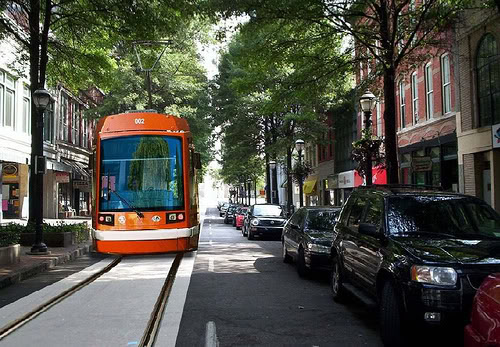
ai???President Obama called on us to rebuild America by putting people back to work on transportation projects that are built to last, like Atlantaai??i??s modern streetcar line,ai??? said Secretary LaHood. ai???All across America, there is work to be done on projects like this.Ai?? Now is the time to connect people who need work with the work we need to do to improve our nationai??i??s transit centers, highways, railways, airports and ports.ai???
Secretary LaHoodai??i??s visit follows President Obamaai??i??s State of the Union address, in which he called for using funds saved from winding down the wars in Iraq and Afghanistan to pay down the debt and fund a six-year transportation bill that would clear the way for nation-building here in the United States.
The Atlanta streetcar will traverse an economically distressed area of downtown, serving as a catalyst for millions of dollars in new residential, official, and retail development. It also reconnects the eastern and western sides of the city that have been divided by two interstate highways for half a century. The streetcar will eventually serve about 7,000 people who live within a quarter-mile of the route, as well as more than five million tourists and convention-goers.Ai?? Operated by MARTA (Metropolitan Rapid Transit Authority), it will include 12 stops with access to major attractions like the Dr. Martin Luther King Jr. National Historic Site and the historic Auburn Avenue corridor, which is the birthplace of the Civil Rights movement. The line will also connect with MARTAai??i??s heavy rail and bus systems and city bicycle routes.
The streetcar project heeds President Obamaai??i??s call for a new era for American energy, fueled by homegrown and alternative energy sources, and because the streetcar will be powered by electricity, it will produce zero emissions. Throughout construction of the line, the City of Atlanta, MARTA, and all other stakeholders will use sustainable building materials, recycled materials, and renewable energy sources to make the system as ai???greenai??? as possible. And overall, locally expanding transit options will help reduce vehicle miles traveled, which lessens our dependence on oil and reduces emissions.
ai???The Atlanta streetcar project is creating American jobs, using American-made materials,ai??? said Federal Transit Administrator Peter Rogoff. ai???Itai??i??s a great reflection of the Presidentai??i??s support for American manufacturing and for giving everyone a fair shot at success by investing in the infrastructure our country needs right now.ai???
Secretary LaHood travelled to Atlanta in October, 2010, to announce $47.6 million for the streetcar project through the Departmentai??i??s second round of TIGER (Transportation Investment Generating Economic Recovery) grants. It was the largest of the capital TIGER II grants awarded in 2010. The project is a cooperative effort by the City of Atlanta, the Atlanta Downtown Improvement District (ADID) and MARTA. The City and ADID funded the balance of the project.
_________________________________________________________________________________________
The city of Cincinnati plans to break ground Feb. 17 on the $110 million-plus streetcar, the controversial project that has dominated local political discourse for years and that still faces at least one lingering obstacle that could delay it or raise its cost.
Mayor Mark Mallory, determined to move forward on a project that City Hall hopes will galvanize inner-city redevelopment, announced plans for the groundbreaking during a special City Council meeting Friday at which two council critics of the streetcar reiterated concerns about its expense and other factors.

In Toronto, a Major Victory for Light Rail
It was an $8.4 billion question that had simmered all year, but finally boiled over this week at Toronto City Hall during a no-holds-barred debate that may well determine the future of city’s transit expansion.*
http://www.theatlanticcities.com/commute/2012/02/toronto-major-victory-light-rail/1202/

For years, Toronto struggled to modernize and expand its transit system, which now carries about 500 million riders annually, making the Toronto Transit Commission one of North Americaai??i??s most heavily used networks. In 2007, the cityai??i??s former mayor David Miller and the Ontario government did a multi-billion dollar deal that would see the construction of an extensive light-rail network serving the cityai??i??s post-war suburbs.
But the current mayor, Rob Ford, ran on a subway-building platform in 2010. He vowed to kill Millerai??i??s LRT plan because, he told voters, it would take up valuable road space and exacerbate traffic congestion. Upon taking office, Ford declared that Millerai??i??s LRT strategy was “dead.”
`Meanwhile’ in Toronto, the Fight for Transit City Continues
The Transport Politic http://www.thetransportpolitic.com/2012/01/31/in-toronto-the-fight-for-transit-city-continues/Ai??
LRT victory in Toronto
Victory in Toronto as Mayor’s all subway plan defeated by council
Toronto’s Mayor Ford lost anti-light rail battle
“Ford loses council transit battle TTC chair’s proposal revises portions of Transit City plan”
http://www.cbc.ca/news/canada/toronto/story/2012/02/08/toronto-transit-debate-city-hall.html
Toronto Mayor Rob Ford has lost his battle in the City Council to save his all-subway vision for future rail transit. Instead, the council voted 26-17 for Toronto Transit Commission [TTC] chair Karen Stintz’s plan for three light rail lines including subway-surface operation for Eglinton LRT.

AAi??great clip of the Mayor’s “contrite” reaction and the response when he calls Council’s vote “irrelevant”:http://www.youtube.com/watch?v=5Eh2dBlarX4&feature=youtu.be
Mayor Rob Ford and TTC chair Karen Stintz are in favour of two distinctly different transit development plans, which councillors are debating Wednesday.TTC chair Karen Stintz said the proposal she brought forward was amended to keep some of the mayor’s concerns in mind.
Mayor Rob Ford was unsuccessful in a bid to delay a vote on the transit proposal brought forward by TTC chair Karen Stintz.
Toronto transit face-off
http://www.cbc.ca/video/#/News/TV_Shows/The_National/1233408557/ID=2194437547
Toronto Transit Commission chair Karen Stintz’s transit proposal has been accepted by council, derailing Mayor Rob Ford’s plan to keep the Eglinton Crosstown LRT almost entirely underground.
A deeply divided council debated the two competing visions during a special meeting held at City Hall on Wednesday, with Stintz’s plan passing 26-17.
Stintz’s proposal calls for a light-rail line on Finch Avenue West, while moving ahead with the Eglinton Crosstown LRT development, but keeping its eastern stretch above ground.
Her proposal puts the Sheppard LRT off the table for now, while an advisory
panel reviews options for transit there.
Asked whether Ford will be able to support the proposal, Stintz said it had been amended to keep some of the mayor’s concerns in mind.
“What we’ve done is we’ve taken Sheppard out of the package,” Stintz told reporters Wednesday, after introducing her proposal.
“So the package will now read that light-rail will be built for Eglinton, Finch and the [Scarborough] RT replacement. But what we’re going to do is defer Sheppard off for further study.”
Earlier in the debate, Ford tried and failed to delay a vote on Stintz’s proposal.
His motion, which sought to have an expert panel review the options for extending the Eglinton line east of Laird Drive, was voted down 24-19.
Ford’s $8.4-billion plan to put an Eglinton line underground also included funding to replace the Scarborough RT with light rail, which is the same approach that would be taken under Stintz’s proposal.
That proposal includes elements from the Transit City plan developed under former mayor David Miller.
The transit debate gets underway at City Hall. The transit debate gets underway at City Hall. (Jeff Semple/CBC)
Ford had declared Transit City “over” after he became mayor, later striking a deal with the province to put the Eglinton line underground.
Coun. Josh Matlow said during the debate that Ford had repeatedly turned down compromises that could have averted the meeting that Stintz forced Wednesday, using a petition that was backed by 23 other councillors.
“We have gone to the mayor several times to propose compromises that he could frankly claim victory on,” Matlow said Wednesday.
But Matlow said in each case, the mayor “has not been willing” to accept a compromise option.
Mammoliti says plan rams LRT `down our throats’
Coun. Giorgio Mammoliti told reporters Wednesday that he opposes the proposal brought forward by Stintz because it will eliminate the possibility of a putting a subway along Finch Avenue.
“We don’t want an LRT along Finch Avenue, we want a subway. Don’t ram it down our throats,” Mammoliti said.
The prior Transit City plan called for a new light-rail on Finch. When Ford scrapped that plan, there were plans to enhance bus service, with an eye to upgrading to rapid transit at an unspecified date.
Scarborough councillors want Eglinton below grade Several Scarborough councillors, including Norm Kelly, have gone on record supporting the mayor’s plan to keep the Eglinton line underground.
“When you have the money, do it right,” Kelly said.
“And doing it right means that when you get the money, you build underground
transit.”
Ford wanted to extend the Sheppard subway, but had not determined how the project would be funded.
Stintz’s opposition to the mayor’s vision for the Eglinton line has put her at odds with Ford and some of his allies.
Coun. Doug Ford, the mayor’s brother, recently said it was “a betrayal” for Stintz to back an opposing plan.
The Toronto Star in an editorial is hailing the City Council’s vote to dump Mayor Rob Ford’s all-subway vision for future rail transit and instead accept a light rail plan offered by Councillor Karen Stintz:
http://www.thestar.com/article/\
1128320–all-aboard-for-light-rail-in-toronto
“All aboard for light rail in Toronto”
(Wednesday, Feb. 8, 2012)
TTC chair Karen Stintz deserves credit for leading the way in the transit
breakthrough at city council on Feb. 8.
BERNARD WEIL/Toronto Star
Toronto’s transit future has been dramatically switched to a better track with the defeat of Mayor Rob Ford’s rash plan to build impractical subways.
City council’s decision Wednesday is more than just a landmark reversal for the Ford administration it provides a definitive verdict from the city of Toronto on how it intends to proceed. And it wants to ride into the future on light rail lines while further studying the practicality of a Sheppard subway extension.
Premier Dalton McGuinty and Metrolinx, the province’s transit coordinating agency, now have the clear direction from the city that they had requested.
So there’s no further reason for Queen’s Park to stall or dither in deciding how the province should now spend the $8.4 billion it has allocated for new Toronto transit.
To his shame, Councillor Giorgio Mammoliti urged Ontario to ignore city council’s majority vote and base provincial funding on polls indicating that people like subways. Councillor Doug Ford said much the same thing. It’s an absurd contention. Why have elections at all? What not just govern by polls alone? That’s not how democracy works.
And that’s what this decision is ultimately about. A little over a year ago, Toronto had a fully-funded, council-backed plan to extend a network of light rail lines across this city. That thoroughly studied, widely discussed plan was unilaterally declared “dead” by Ford on taking office.
He replaced it with a different vision one that involved spending almost the entire $8.4 billion on burying one light rail line and expecting the private sector to pay for a Sheppard subway. Ford’s only rationale: “People want subways.” Regrettably, the province went along with that flawed vision, but it still required city council support.
Well, council spoke on Wednesday, and it loudly advocated a return to light rail. A majority wisely realized that this approach offered the fastest transit, for the most people, for the best price. Toronto Transit Commission chair Karen Stintz deserves credit for leading the way in this breakthrough.
Normally a Ford supporter, she put the city’s transit needs ahead of hewing to the administration’s ill-judged official line.
Some subway advocates in the Ford administration are vowing to fight on,
against light rail lines, despite council’s clear verdict. That would be a mistake. At some point, the bickering over Toronto’s transit future needs to end. And that point is now.
It’s safer to travel in groups

Saturday’s smile.
Advertising for transit in Europe and very funny too!
http://www.youtube.com/v/gBnvGS4u3F0?hl=en
http://www.youtube.com/v/mgCIKGIYJ1A?hl=en
http://www.youtube.com/v/LuVPnW0s3Vo?hl=en
A day in gridlocked Richmond

Zwei had business to conduct in Richmond yesterday and it was my first time I have driven around the municipality in many years. Yes, ‘Zwei‘ ventures to Landsdown Mall to rescue his wife from TransLink when she works late in Vancouver several times a week, but that is late at night and traffic is light.
The first thing I noticed in Richmond is that everyone drives, and bus passengers are either students (most with $1 a day U-Passes) and the elderly. The roads are choked with cars and parking is both expensive and scarce. Even Richmond Centre Mall’s parking lot was almost filled by noon. During breaks in meetings,Ai??I ventured to two Canada Line stations to observe passenger flows and like the buses, ridership wasAi??mostly students (with $1 a day U-Passes) and the elderly.
It seems the RAV/Canada Line has not attracted the motorist from the car and the metro just doesn’t serve the needs of Richmond’s transit customers, except if one holds a cheap ticket or if one is going to downtown Vancouver. What is very noticeable is a small land boom near the RAV/Canada Line as assembled properties are being turned into highrise (well ten stories or so) apartments and condos.Ai?? If the Canada Line’s object was to aide land speculators and developers, it has succeeded, but as a transit mode, the Canada Line has failed miserably.
What is so sad is the the Canada Line highlights TransLink’s failure in transit planning, that after spending over $2.5 billion for the world’s only mini-heavy-rail metro, it has done little to alleviate traffic congestion and gridlock in Richmond, in fact with all the new housing being built near the Canada line, it seems the metro has exacerbated traffic congestion!
Except, for the very few who are lucky enough to live near a Canada Line station, the best transit option is to drive and drive Richmond residents do and in large numbers, with the Canada Line metro and the rest of the transit system being reserved mainly for the students, the elderly, and the poor.
TransLink and the Canada Line – The real story – Part 2
It even gets better!
More from the email I received Monday and what a bombshell! If the following is to believed and I believe very strongly it is true, TransLink is doing a very poor, yet very expensive job in moving transit customers. This why TransLink and the provincial government are deathly afraid of an independent audit by BC’s Auditor General, John Doyle, for he will highlight waste in TransLink andAi??I believe waste is endemic in the TransLink bureaucracy.
Here is another way TransLink arbitrarily increases ridership on paper without really increasing ridership and ‘Zwei’ calls thisAi??vehicle capacity creep or VCC.
VCC is when TransLink increases SkyTrain/Canada Line vehicle capacity on paper then uses the increased capacity to inflate ridership claims. TransLink uses passenger counts on transit vehicles as part of its ridership counting formula, withAi??a full bus or metro car counted at its maximum TransLink rated passenger capacity.
The MK 1 SkyTrain car was first rated having a capacity of 70 persons when used in Toronto but was increased to 75 personsAi??for use in Vancouver and again increased by 5 to 80 persons in the 90’s. This means an increase of 10 persons per car or 40 persons per 4 car train,Ai??with anAi??on paper ridership calculations inflating ridership by thousands a day. Success with MK 1 VCC, TransLink rated the MK 2 cars at 130 persons, yet the MK 2 are only a third longer and slightly wider than a MK 1 car and were originally rated having a capacity of 110 persons.
This means TransLink has inflated ridership (on paper) in peak hours by about 80 persons per MK 2 train and 40 personsAi??per MK 1 trains andAi??with trains traveling at less than 120 second headways TransLink’s boffinsAi??are inflating ridership by well over 10,000 persons per day with VCC!
TransLink is pulling the same trick with the RAV/Canada Line, where the ROTEM EMU’s are rated internationally with a capacity of 163 persons, yet TransLink claims each vehicle has a capacity of 200 persons.
Could it be that TransLink is inflating mini-metro ridership by 5% to 10% hiding what a very poor job they are doing moving people? Could it be that TransLink used VCC to convince politicians to build more SkyTrain?
What is desperately needed is a complete independent audit of TransLink and its operating practices, but of course, Christie Clark and Ida Chong are desperately trying to thwart any oversight of this runaway bureaucracy, for fear of exposing decades of incompetence, exacerbated byAi??BC Liberal interference in the past decade.
Ai??
Dear Province Editor and Reporter, Susan Lazaruk,
TransLink doesnai??i??t like to report on transit incidents.Ai?? This comment to an article on transit in the Georgia Straight caught my attention:
Stuart Richards
Fri, 2012-01-13, Eve, problem is people are shooting “projectiles” at SkyTrains:
http://www.theprovince.com/news/Transit+police+investigating+projectiles…
TransLink isn’t calling themAi??bullets, just yet, it might give transit a bad name.
My daughter’s friend was assaulted on a SkyTrain car. Soon after, I bought my daughter aAi??car and told her never to take transit late at night. She hasn’t.
When I found out that TransLink keeps most crimes quiet to build up transit use, I was disgusted. Give TransLink more money? You have to beAi??kidding. Those SkyTrain cars are coffins suspended 10 m above ground andAi??there isnai??i??t anything that anyone can do if some nut boardsai??i?? fire theAi??retards at TransLink and start building LRT lines with drivers to screenAi??for creeps.
http://www.straight.com/article-582931/vancouver/tax-rich-transit-economist-says
Is there any update on the projectiles (bullets) which caused panic on the SkyTrain operated by TransLink on January 11, 2012?Ai?? Sam Cooper with The Province wrote an excellent article about it (heai??i??ll likely be banned from any more transit articles in the future after TransLink reads it).Ai?? Here are links for the story on the projectile incident and a few other recent incidents which donai??i??t make it on the TransLink annual report (TransLink might start listing transit incidents in its annual reports):
http://www.vancouverite.com/2010/05/14/skytrain-area-sex-attack-prompts-police-warning/
http://cnews.canoe.ca/CNEWS/Crime/2011/03/23/17733521.html
http://www.cbc.ca/news/canada/british-columbia/story/2007/04/17/bc-skytrain-attack.html
http://www.vancouverobserver.com/blogs/policeblotter/2011/05/30/sword-swiping-man-arrested-skytrain
http://bc.rcmp.ca/ViewPage.action?siteNodeId=230&languageId=1&contentId=18454
I find the whole spectacle of TransLink Commissioner, Martin Crilly, acting as transit watchdog, to investigate TransLink on the proposed 12.5% transit fare increase, comical.Ai?? Even though Martin Crilly is appointed by the Mayorsai??i?? Council, many mayors on the Mayorsai??i?? Council are loyal to TransLink and Martin Crilly isnai??i??t impartial on transit matters.Ai?? Martin Crilly has strong ties with TransLink and appears on the TransLink website:
http://www.translink.ca/en/About-Us/TransLink-Governance-and-Board/Commissioner.aspx
Martin Crilly is paying consultants up to $80,000 to compare transit costs in Metro Vancouver to transit costs in other cities.Ai?? It doesnai??i??t seem reasonable for Martin to hire consultants for help.Ai?? Canai??i??t Martin do the job?Ai?? If he canai??i??t; how did he manage to land the job of TransLink Commissioner?Ai?? Anyone who isnai??i??t totally clueless can tell you that TransLink through the hand picked stooges being paid by Martin Crilly will recommend exactly what TransLink wants recommended:
http://www.theprovince.com/Commuters+facing+cent+hike+transit+fares/5978327/story.html
Here is my free and objective third party evaluation of transit by TransLink:Ai?? the fare comparison of $2.75 quoted by The Province for transit in Calgary leaves out one important detail.Ai?? Calgary Transit only has one fare zone and $2.75 is the average transit fare for all zones by Calgary Transit ($3 by Edmonton Transit for all zones on February 1, 2012); whereas, the average and non-weighted transit fare for all zones by TransLink is $3.75 and will be approximately $4.17 in Metro Vancouver if TransLink raises transit fares in January 2013:
http://www.calgarytransit.com/html/fares.html
http://www.edmonton.ca/transportation/ets/fares/types-of-fares.aspx
http://www.theprovince.com/Editorial+time+transit+users+more/5981584/story.html
On average, TransLink after the transit fare increase will charge 52% more for transit than Calgary Transit charges.Ai?? Is it still time for transit users to pay more in Metro Vancouver or is it time to question the wisdom behind the formation of TransLink?Ai?? Bureaucrats at TransLink roughly cost taxpayers an extra $100 million annually for very low level thinking and planning (including public consultations intended to persuade the attendees to go along with whatever the plan by TransLink is).
In Edmonton, transportation engineers and staff do what TransLink does and very much more (free from the political interference leading to unethical conduct which is all too common at TransLink with TransLink taking its orders from the ruling provincial government which condones TransLink bending municipal by-laws to operate loud and noxious diesel buses on trolley bus routes with impunity, for example).Ai?? Office and administrative costs for Edmonton Transit are part of the City of Edmonton overhead.Ai?? There isnai??i??t a palace housing numerous and costly transit bureaucrats pushing paper and getting in the way in Edmonton.Ai?? In Metro Vancouver, on the other hand, TransLink is building a new palace in New Westminster to ai???expandai??? office space for its bureaucrats.
You might be thinking, well that is fine, TransLink provides better transit than Edmonton Transit or Calgary Transit.Ai?? Wrong.Ai?? TransLink is one of the lowest ranking transit organizations in the world (worst three or bottom 13% of transit organizations ranked on page 11 of the Scorecard on Prosperity – 2011):
http://www.bot.com/Content/NavigationMenu/Policy/Scorecard/Scorecard_2011_Final.pdf
Transit Costs
Senior transit operators in Edmonton and Metro Vancouver are paid essentially the same hourly wage, $29.19/hour and $29.20/hour, respectively.Ai?? Therefore, it should cost TransLink and Edmonton Transit approximately the same to put someone onto transit, right?Ai?? Wrong, it costs TransLink much more than Edmonton Transit to provide transit.
In 2009 for the 189 million annual ridership, it cost TransLink $3,637 to put someone onto transit for one year ($943 million operating budget / 259 thousand transit users based on a ridership of two daily trips on average per transit user).Ai?? In 2009 for the 68.5 million annual ridership, it cost Edmonton Transit $2,216 to put someone onto transit for one year ($208 million operating budget / 94 thousand transit users based on a ridership of two daily trips on average per transit user).
Edmonton Transit operates in a longer and harsher winter climate than TransLink in Metro Vancouver.Ai?? As a result, Edmonton Transit has higher operating costs than TransLink in mild Metro Vancouver.Ai?? Despite this, it costs TransLink 39% more ($1,421 annually) than it costs Edmonton Transit to put someone onto transit (without factoring in the added cost for the long and harsh winter climate in Edmonton).Ai?? In other words, almost $4 out of $10 spent by TransLink is not being used to provide transit.Ai?? Bureaucrats at TransLink have merely fabricated a costly transit economy to give themselves cushy jobs for big money.Ai?? Transit users and taxpayers are paying for it.
Transit Ridership
TransLink has been going on and on about moving so many people in Metro Vancouver and has been making a fuss about all its ridership records, year after year, as if TransLink is doing such an outstanding and unique job.Ai?? Every added person on transit is a ridership record by definition and any city with a growing population is going to continually break ridership records for transit use.Ai?? If TransLink canai??i??t brag about anything other than more people on transit owing to the exploding population here, TransLink is in deep trouble.Ai?? Per-capita, transit in Edmonton moved 12% of the population on average in 2009 based on weekday, weekend and holiday transit use.Ai?? Transit use in Edmonton increased by 19% from 2006 to 2009:
http://www.edmonton.ca/transportation/ets/about_ets/ets-statistics.aspx
As a percentage of the population served, TransLink moves fewer people than Edmonton Transit.Ai?? Per-capita, TransLink moved 11% of the population on average in 2009 based on weekday, weekend and holiday transit use.Ai?? Transit use in Metro Vancouver increased by 14% from 2006 to 2009 (less than in Edmonton over the same period):
http://www.theprovince.com/sports/More+people+transit+many+evade+fare/5870384/story.html
http://www.vancouversun.com/business/TransLink+track+another+ridership+record/5876827/story.html
While the population has risen sharply in Metro Vancouver, in Edmonton, the population growth has been much less dramatic (about two-thirds as much as the population growth in Metro Vancouver).Ai?? Consequently, the transit increase of 19% by Edmonton Transit from 2006 to 2009 is phenomenal compared with the disappointing transit increase of 14% (largely induced by population growth) from 2006 to 2009 by TransLink.
Moreover, to achieve its relatively meager ridership records considering population growth, TransLink has cheated.Ai?? TransLink has lured many post secondary students, who would normally be walking or cycling, onto transit with the U-Pass program targeting students at post secondary institutions and discounting the monthly transit pass for qualifying students by two-thirds to four-fifths:
http://www.translink.ca/en/Fares-and-Passes/Student-Passes/U-Pass.aspx
http://www.translink.ca/en/Fares-and-Passes/Monthly-Pass.aspx
Unlike working commuters who are too pooped to change into their party outfits after work, students with their transit passes and their high energy are ready to boogey on Friday and Saturday nights. TransLink takes advantage of this to bolster its ridership figures by running its buses longer and harder until almost 4 am for the partying students hitting the dance clubs.
Finally, in Edmonton and in Metro Vancouver about 62% of the population drives.Ai?? TransLink isnai??i??t removing many vehicle drivers from the roads to increase ridership with transit.Ai?? Almost all transit spending by TransLink is being used to accommodate the growing population here.Ai?? TransLink has performed poorly for the money spent on transit and deserves no accolades in the media.Ai?? If it werenai??i??t for TransLink spreading propaganda to portray a false reality of its greatness in Metro Vancouver and if reporters didnai??i??t rely on TransLink for twisted and misleading propaganda, many people would see TransLink for what it truly is in Metro Vancouver:Ai?? an abject failure created by individuals who are benefiting from it.
Fare Evasion
TransLink blames fare evasion for its rising costs.Ai?? It estimates the 2010 fare losses to be $5.3 million (0.5% of TransLinkai??i??s $1 billion operating budget in 2010).
http://www.theprovince.com/news/Skyrocketing+fare+evaders+cost+TransLink+millions/5788036/story.html
Retail stores experience anywhere from 1% to 8% in shrinkage or losses. Losses from fare evasion are the natural consequence of the SkyTrain network operating without transit operators to keep the dishonest ai??i?? honest.Ai?? Neither electronic fare cards nor fare gates will stop fare evasion, completely. If TransLink is keen to eliminate losses from fare evaders, streetcar transit or LRT with a vigilant driver would arguably do more than fare cards or gates (which can be compromised) to mitigate fare evasion.
Losses from fare evasion at 0.5% of TransLinkai??i??s operating budget are too small to be the cause of the ongoing financial distress at TransLink and not worth mentioning ai??i?? except to divert attention away from bumbling bureaucrats spending too much on SkyTrain transit which doesnai??i??t even generate as much ridership (as a percentage of the population) as LRT in Edmonton.
Nevertheless, TransLink is committed to improving its financial performance by tackling fare evasion.Ai?? To reduce fare evasion, TransLink is spending $171 million on fare gates and smart cards costing up to $15 million annually to maintain (resulting in an outright loss of $171 million and another $9.7 million loss annually).Ai?? This makes perfect sense to the bureaucrats at TransLink.Ai?? Bureaucrats at TransLink are able to strut around like important and powerful people awarding lucrative contracts for not only fare cards and gates but also for the Evergreen Line, SkyTrain expansion, costing a modest $1.4 billion for 11 km of track if it is built on budget.Ai?? Then, the bureaucrats at TransLink simply pass the costs of their boondoggles onto transit users (fare increases) and vehicle drivers (gas taxes) who pay for it:
http://www.tc.gc.ca/eng/mediaroom/releases-2011-h062e-6400.htm
http://www.vancourier.com/transit+fare+card+cost+million/4032665/story.html
http://www.langleyadvance.com/news/TransLink/5520191/story.html
http://www.evergreenline.gov.bc.ca/
So, what is the proper course of action for Martin Crilly?Ai?? Unless Martin Crilly is working behind the scenes for TransLink, Martin Crilly must do the following to turn transit around in Metro Vancouver:
Replace SkyTrain transit with streetcar transit (avoids tunnel) for the future Evergreen Line (saving $1 billion)
Sub-lease the TransLink palace in New Westminster and use theAi??Ai?? money to fund transit improvements
Dismiss the bumbling bureaucrats at TransLink (saving aboutAi??$100 million annually)
Roll back transit fares to an average of $3 or less for allAi??zones
Increase transit during peak hours to alleviateAi??overcrowding
Disallow the unethical use of unwelcome diesel buses onAi??trolley bus routes
Dissolve TransLink and establish a moratorium on SkyTrainAi??routes
Replace TransLink with the Mayorsai??i?? Council to set prioritiesAi??for transit in Metro VancouverTransLink relies on blatant lies and half truths to keep many in Metro Vancouver thoroughly confused and misinformed.Ai?? Under the pretence of working to reduce traffic gridlock, air pollution and transit costs (more than slight exaggerations), bureaucrats at TransLink have raised transit fares excessively and imposed transit taxes unfairly.
TransLink advertises abundantly and unnecessarily in the media with money from transit users and taxpayers to buy goodwill from reporters covering transit.Ai?? TransLink must be the only transit organization in Canada to employ a Director of Communication (euphemism for Director of Propaganda) whose duty it is to control the media and to spoon feed reporters with articles extolling the false merits of TransLink transit.
TransLink Commissioner, Martin Crilly is to investigate whether the fare increase by TransLink is in order?Ai?? How about the Premier investigate Martin Crilly and TransLink to determine whether they are in order?Ai?? TransLink is already charging far too much for transit.Ai?? If Edmonton Transit operated transit rather than TransLink in Metro Vancouver, transit fares would be 39% lower and ridership would be 5% higher.
Regards,
Eric
Reference links:
http://www.translink.ca/en/About-Us/Corporate-Overview/Annual-Reports.aspx
http://www.metrovancouver.org/about/statistics/Pages/KeyFacts.aspx
http://www.edmonton.ca/transportation/Annual_Collision_Report_2010.pdf
http://www.coastmountainbus.com/careers/bus_operator/pay_benefits.asp
http://www.edmonton.ca/transportation/ets/compare-positions.aspx
http://www40.statcan.ca/l01/cst01/econ46a-eng.htm
http://www.themilwaukeestreetcar.com/
http://ubyssey.ca/news/point-grey-and-kits-residents-rally-against-a-ubc-skytrain-line/
http://www2.canada.com/theprovince/news/story.html?id=233ef411-9b1a-4260-8160-029ad7176f41
http://railforthevalley.wordpress.com/page/12/
http://www.facebook.com/group.php?gid=3327190136#!/group.php?gid=3327190136&v=wall
http://www.kitsilano.ca/2011/01/31/kits-point-residents-fight-to-preserve-view-corridors/
Useful links:
http://www.rockantenne.de/webplayer/?playchannel=alternative
http://www.bbc.co.uk/news/world-europe-12218729
http://www.radioshaker.com/radio-stations/rock/alternative/radio-k__rock-hd2.html
TransLink and the Canada Line – The real story
The following was emailed to me last night and contains some explosive comments about TransLink and the RAV/Canada Line.
Rand Chatterjee is one of the very few people who took the time to research the cost of the RAV/Canada Line and he clearly understands the nuances of the P-3 contract and the negative impact on the taxpayer.
Zwei has been onto the TransLink/Canada Line game since its inception and it is very good to see other people now very interested at the goings on at TransLink, especially the financial aspects of the organization. Not all is what it seems to be and it looks like TransLink’s hoopla is nothing more than a smokescreen to hide the real story, that TransLink is slowly being bankrupted by the three (soon to be four) mini-metro lines.
Jennifer et al,
The essence of my original email was that TransLink is spending well beyond its means and isnai??i??t providing adequate transit while it is using insignificant fare evasion losses and exaggerated ridership records as red herrings.Ai?? Here is a very insightful comment from The Georgia Straight about TransLink bamboozling and swindling taxpayers in order for TransLinkai??i??s private partners to profit:
RandAi??Ai??Ai??Chatterjee
The big, untold reason for the failure to begin the Evergreen Line construction in earnest and actuallyAi?? sign a contract is the Canada Line, aka RAV.
Translink’s newestAi??Ai??”gas tax” increase brings its take at the pump to over double what it wasAi?? just ten years ago, up to now 17 cents per litre. This is the largest part of the reason why gas prices in the Metro Vancouver area are the highestAi??in Canada, and by a lot. The latest 2-cent rise was supposed to fully fundAi??the Evergreen Line, and this indeed was exactly the justification for theAi?? increase. But, yet, nothing is happening. Why not?
A recent FOI uncovered that the Canada Line is sucking over $120 million out ofAi??Translink every year. Its actual operating costs are roughly a tenth ofAi??Ai??this amount. The rest, about $100 million, are what are termedAi??”performance payments,” which the provincial government stipulated would be turned over every year to repay the contractor for its financialAi??participation in the P3 (public-private-partnership) that was the RAVAi??Ai??project. According to bank records, the RAV partners borrowed no more thanAi??Ai??$600 million to complete the line. The amount may been less than $500Ai??million, the gap between the authorized $1.5 billion paid by theAi??government and the claimed $2 billion cost of the project.
GivenAi??the 30-year concession duration of this P3 RAV project, we can thus expect the presumed $500 million private sector contribution will be repaid atAi?? least 5 times over…that is if that $100 million per year does notAi??increase. It has been going up by nearly $10 million every year since the first year of payments in 2009.
If we deflate just a $100 millionAi??annual revenue stream to determine a net present value of this P3 public debt, we are still looking at a doubling of the supposed RAV price tagAi??from $2 billion to $4 billion in today’s dollars. In nominal dollars, weAi??will be paying well over $4.5 billion. If you want to look at it in termsAi??Ai??of an interest rate, the taxpayer is paying the RAV Line “investors” overAi??Ai??Ai??Ai??Ai??Ai?? 20% interest, per year and compounded. Some deal!
The cost of theAi??Evergreen Line is supposed to be roughly $1.2 billion, but it is clear whyAi??this recent gas tax and likely another one soon enough, and additionalAi??property taxes, and other governmental contributions will be needed first just to pay for RAV, and the likelihood of ever funding the Evergreen LineAi?? is decreasing every year as a mountain of P3 debt continues to crushAi??Ai??Translink, and the taxpayer.
If you are waiting for a bus, whoseAi??service was reduced, and don’t have enough money for the now moreAi??expensive fare, this is why. It’s pure graft. Most everyone at Translink, especially the senior executives, drive to work. They knowAi??better.
Read everything Eric Doherty writes. You’ll learn a lotAi??about Transit policy, and how much better BC’s should be.
On the TransLink website, TransLink boasts that the RAV Line moved 104,682 people on average in May 2010.Ai?? Moreover, TransLink CEO, Ian Jarvis seems to be stoking this misconception:
http://www.news1130.com/news/local/article/86201–canada-line-could-be-paid-off-sooner-than-expected
Unfortunately, TransLink CEO, Ian Jarvis is not telling the truth.Ai?? Perhaps Ian Jarvis is merely too inept.Ai?? Maybe he is too removed from the reality of transit to know that almost every person on transit makes two trips daily ai??i?? otherwise almost everyone would never return home at night.
According to TransLink ridership-data, based on two trips daily per person on average, the true number of people carried by the RAV Line is about 39,985 people on average (see attachment).Ai?? Patrons moved on the RAV Line is the basis for the true economics of the RAV Line and not some fictional tally of imagined paying riders by TransLink.Ai?? Based on each person paying $1,000 annually (overly conservative and optimistic) to ride the RAV Line (undeservingly renamed to the Canada Line to win over the hearts of patriotic Canadians), the RAV Line generates at most $40 million annually.
Because many people on the RAV Line are transfers from buses or concession riders (U-Pass students) paying little to use it, the RAV Line must surely generate no more than a few million dollars in revenue annually, if that.Ai?? After TransLink pays for the control room operators, electrical power consumption, RAV Line security, frequent break downs… RAV Line maintenance – the RAV Line has to be losing money for the $2 billion spent by TransLink.
Thanks to TransLink publishing false information on transit use, Colliers-International is now proclaiming the RAV Line as a resounding success moving 100,000 people daily in 2010:
http://www.colliers-international.com/vancouver/MarineGateway/MG_Brochure.pdf
This is incredible as TransLink only moves about 300,000 people daily on a good day in all of Metro Vancouver.Ai?? I expect a full retraction and apology displayed prominently on the front page of every newspaper in Metro Vancouver (paid by TransLink CEO, Ian Jarvis, and not by taxpayers) as TransLink is misrepresenting the number of people on transit and it is tantamount to fraud with legal ramifications.Ai?? He will run the retraction and apology by February 15, 2012 or risk legal consequences.
TransLink plans to spend $1.4 billion to repeat the RAV Line fiasco with the Evergreen Line even though TransLink canai??i??t afford to operate trolley buses on trolley bus routes and canai??i??t afford enough buses at peak hours to avoid overcrowding on buses.Ai?? This foolish and audacious ai???moving forward planai??? is not ai???on trackai??? as TransLink contends.
TransLink is not relevant when it has to ai???sell the Evergreen Lineai??? based on job creation during construction.Ai?? Is TransLink a make work program for friends of TransLink or a transit organization for transit users?Ai?? TransLink is corrupt.Ai?? TransLink canai??i??t finance the Evergreen Line unless it continues to sacrifice conventional transit service to spend on its silly SkyTrain schemes for its private partners to profit.Ai?? I trust that the mayors (copied) will quickly withdraw their support for the Evergreen Line to protect taxpayers from higher taxes and to protect transit users from not only poorer transit service but also higher transit fares.
Regards,
Eric
http://www.rockantenne.de/webplayer/?playchannel=alternative
Review of Light Rail/Tramway costs
A Federal Parliamentry Review of Light Rail/Tramway/Transit costs must be carried out!Ai??
Both Fang & Zwei have posted articles in the past weeks on the high costs of Canadian LightAi??Rail, Tramway & Transit schemes. Vancouver, TorontoAi??and Waterloo.
Design, Utility relocation, Financing vehicles (ie P3) Project management, Construction management, Land purchase and now theAi??concern that Ai??Canadian LRT is being built, not to economically carry transit customers, rather to promote land speculation and land development. This is the main reason that SkyTrain and the Canada Line have been built as metros, it is perceived that metro will give the biggest bang for the developers buck and the real reason the Rob Ford wants subways instead of LRT in Toronto.Ai?? In theAi?? Autumn of 2011 aAi?? review ofAi?? light rail costs was Ai??published in Britain
http://www.railwaygazette.com/nc/news/single-view/view/review-of-uk-light-rail-costs-published.html
A Department for Transport report into the high costs of light rail projects in the UK was published on September 20. ‘Green Light for Light Rail’ was commissioned by Transport Minister Norman Baker with the aim of identifying the key cost drivers and what can be done to make light rail more cost-effective and thus more attractive to promoters.
The report draws on work by the National Audit Office, Commons Transport Committee and All-Party Parliamentary Light Rail Group, and evidence from industry lobby group UKTram and project promoters. While some reasons for high costs apply to UK infrastructure projects in general, a number of tram-specific problems are identified.
There is a tendency to ‘over-design’ because promoters lack internal expertise to select designs which minimise lifecycle costs, or are unable to withstand pressure from consultants and politicians for prestige projects. The lack of specialist tram engineers results in an over-reliance on heavy rail expertise and ‘unnecessarily cautious’ approaches.
The report says UKTram should assist with sharing expertise through a procurement ‘centre of excellence’. The adoption of Germany VDV technical standards is proposed, and is supported by the Office of Rail Regulation. Pooling of maintenance facilities and spares could also save money, with joint ownership of heavy equipment.
The report says further work is required to address utility relocation costs, and DfT is to commence consultation on this subject. At present promoters pay 92Ai??5% of the costs, but UKTram says light rail’s share should be reduced to 82% to match road projects. Finding ways of avoiding the perceived need to move utilities would help, possibly by tolerating disruption to light rail services when utility work is required.
DfT is to convene a light rail summit to discuss implantation of the report’s findings.
‘In the past light rail systems have been seen as expensive and an unaffordable option for local authorities to pursue’, said Baker. ‘I initiated this review so we can get to the nub of the problem. I now urge all parts of the light rail sector to work together on implementing these recommendations and I look forward to working with them towards these exciting opportunities.’
-
The report recommends that promoters study the ‘no-frills’ tram project in BesanAi??on, France.
How is BesanAi??on Building a Tramway at ai??i??16 million/kilometer?
http://www.thetransportpolitic.com/2010/10/01/how-is-besancon-building-a-tramway-at-e16-millionkilometer/
Though MontrAi??al has significant Metro and tramway expansion plans, its next new transit line will come in the form of a bus rapid transit line down Boulevard Pie-IX on the east side of the city.Ai?? The city hopes that the creation of a ai???bus highwayai??? connecting into the suburban city of Laval would be able to attract about 70,000 daily users. The project, which includes the construction of new stations and dedicated lanes along the entire MontrAi??al side of the 15 kilometer corridor, would cost some C$305 million ai??i?? or about U.S. $32 million a mile.
MontrAi??alai??i??s new line will share many features of the Express Pie-IX, a bus line whose contra-flow bus movements were blamed for the deaths of several bikers and pedestrians and which was shut down in 2002 after carrying about 8,000 daily users.
The development of BRT in MontrAi??al isnai??i??t particularly remarkable outside of the fact that it is being done at a high price for what are primarily surface improvements. Yet compared to other recent rail projects in North America, the project looks downright cheap: Phoenixai??i??s first light rail segment cost about $70 million a mile; Seattleai??i??s broke the bank at $150 million. Subway projects are far more expensive.
How, then, is the eastern French city of BesanAi??on building a new tramway for the equivalent of just about $35 million a mile?*
Itai??i??s a question Americans should be asking themselves, since the costs of transit investments seem to be spiraling out of control even as the demand for alternative transportation options has increased and the funds to support them have diminished. BesanAi??on, a city of about 115,000 in a region of about twice that size, has managed to develop a project whose costs are acceptable ai??i?? ai???optimized,ai??? the local transit agency calls them ai??i?? even in a small metropolitan area.
Delivering a `No-Frills Tram’
http://www.caf.net/img/prensa/notprensa/20110505112705railway_gazette_april2011.pdf
BesanAi??on: Build it Right, Build it at a Fair Price
This French community isn’t very big, much smaller than Victoria, in fact (metro pop. appr. 220,000). The nearest big city to BesanAi??on is Geneva, Switzerland. But they’re building a 14.5 km tramway (almost as long as a James Bay/Western Communities tramway) for ai??i??228 million (that’s about $310 million Canadian).
The B-BOT Bring Back Our Trams blog which is centred on Victoria has a very authoritive web page on comparative Light Rail & Trams costs for Canada, Europe & the US http://www.b-bot.ca/tramwaycost.html
The strap line is What should a Tramway Cost and guess what from the following table -Ai??Canada, BC & particularly Victoria is twice the Cost $million/km of comparative European schemes.
Costs of At-Grade Tramways |
|---|
| City | Completion Year | Cost $million/km | Engineer |
|---|---|---|---|
|
Angers, France
|
2010
|
$27.7
|
Tractabel, Antwerp
|
|
Bergen,Norway
|
2010
|
$37.5
|
Nordic, Stockholm
|
|
Besancon, France
|
2015
|
$22.4
|
Ai?? |
|
Brest, France
|
2011
|
$35
|
Systra, Paris
|
|
Charlotte, NC
|
2007
|
US$$30
|
S&ME, Raleigh
|
|
Dallas TX
|
2010
|
US$40.2
|
STV consortium
|
|
Denver CO West Corr.
|
2013
|
US$36.3
|
Balfour Beatty
|
|
Dijon, France
|
2013
|
$26.8
|
GDF Suez, Paris
|
|
Florence, Italy
|
2010
|
$30.7
|
Hydea, Florence
|
|
Minneapolis
|
2004
|
$US37.3
|
LTK, Philadelphia
|
|
Mulhouse, Fr.
|
2006
|
$28.2
|
Systra
|
|
Norfolk, VA
|
2011
|
$US28.6
|
PB, New York
|
|
Phoenix
|
2008
|
$US43.5
|
HDR, Omaha
|
|
Portland
|
2009
|
$US43.35
|
Ai?? |
|
Salt Lake Mid-Jordan
|
2011
|
$US31.4
|
PGH Wong, SF
|
|
Salt Lake West Valley
|
2011
|
$US45.03
|
PGH Wong, SF
|
|
Tenerife, Spain
|
2007
|
$34.8
|
AEC, Bilbao
|
|
Tours, France
|
2013
|
$29.7
|
Systra
|
VICTORIA |
Ai?? |
$62…??? |
Ai?? |
|
Vitoria, Spain
|
2008
|
$22.4
|
AEC
|
|
Zaragoza, Spain
|
2011
|
$43.5
|
Traza
|


Whatai??i??s the Best Way To Get Users To Embrace Mass Transit?
Make it pleasant? Or make it efficient?
An article in Slate magazine
Make it pleasant? Or make it efficient?
by Tom Vanderbilt
A few months ago, at an urban mobility conference in Frankfurt, the British consultant Charles Leadbeater presented a sort of x-y matrix for thinking about how to manage and design cities. The chart was divided into quadrants of ai???systemai??? and ai???empathy,ai??? inspired by the psychologist Simon Baron-Cohenai??i??s work with Aspergerai??i??s patients, who in some cases are quite good at ai???systemizingai??? behavior (e.g., attention to detail, patterns, organization, etc.), but less adept at empathic human relationships.
Vanderbilt is reminded of Leadbeaterai??i??s system/empathy argument in reading Jarrett Walkerai??i??s new book, Human Transit. Walker, a Portland, Ore.-based transit planner who writes a popular blog of the same name, espouses a very ai???systemai???-oriented view of transit: He cares less what trains look likeai??i??or even that theyai??i??re trains to begin withai??i??than that they simply run on time (and take people where they want to go). He has been pitched as a sort of antagonist to another planner, Darrin Nordahl, whose 2009 book My Kind of Transit, argues that the ai???ride experienceai??? is crucial for getting Americans out of their cars and into public transit. Consider their opinions of San Franciscoai??i??s cable cars: Walker (ai???systemai???) thinks theyai??i??re neither efficient nor cost-effective (each car requires two employees) nor very important to getting San Franciscans around; Nordahl (ai???empathyai???) argues theyai??i??re a vital public space, an experience in themselves, part of what makes the city the city.



Recent Comments