US Light Rail News
News from Detroit, Denver and Minneapolis
Detroit:
The Republic, Columbus Indiana
City schedules neighborhood meeting on proposed $25 million light rail project in Detroit
http://www.therepublic.com/view/story/2e8de5cf80324a10a7ace0814c52098a/MI–Light-Rail-Detroit/
DETROIT ai??i?? City transportation officials are scheduled to meet with Detroit residents at Mount Olive Baptist Church to answer questions and give details about a proposed light rail project along Woodward Avenue.
http://www.woodwardlightrail.com/HomeNew.html
The meeting Thursday is to feature discussion of the rail’s three downtown options.
Project overview:
http://www.woodwardlightrail.com/ProjectOverview.html
Denver:
urbandesign Podcast
Union Station redevelopment round table discussion
http://urbandesignpodcast.com/podcasts/2011/podcast121.html
Denverai??i??s Union Station redevelopment will create a new gateway to Downtown Denver and the region and re-energize Denverai??i??s historic train station. As the hub of RTDai??i??s expanding transit system.
http://www.rtd-denver.com/lightRail_subHome.shtml
the $480 million project includes a new RTD light rail station, a new underground RTD regional bus terminal, and a new commuter rail station for RTD and Amtrak, along with several new signature public spaces. Hosted by Ken Schroeppel, creator of DenverUrbanism.com, our roundtable conversation about the Union Station project includes Anne Hayes, chair of Union Station Advocates, and Bill Mosher, ownerai??i??s representative for the Denver Union Station Project Authority.

Minneapolis:
Twin Cities Daily Planet
Central Corridor construction kicks off on University, Washington Avenues
As construction of the Central Corridor light rail train gets into full swing, many changes have already started to appear on Washington Avenue and University Avenue. Ai??As a University of Minnesota student, I come into contact with the construction daily. Ai??Some construction has caused sidewalk closures, forcing pedestrians to change their routes. Ai??Also, traffic has been squeezed into single lanes, making travel times longer.
Ai??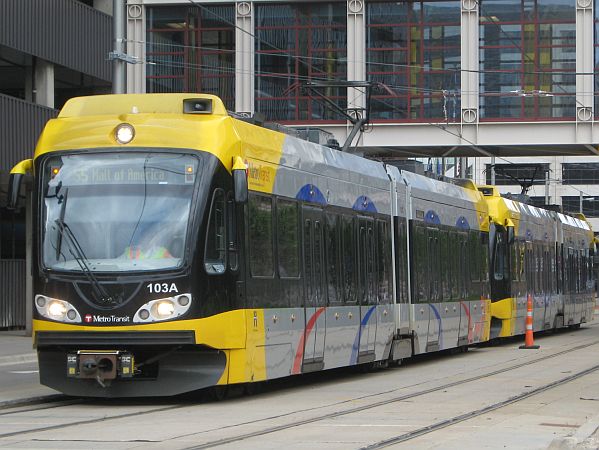
Comparing Light Rail, Bus and Subway Costs
Two reports on Canadian Light Rail systems
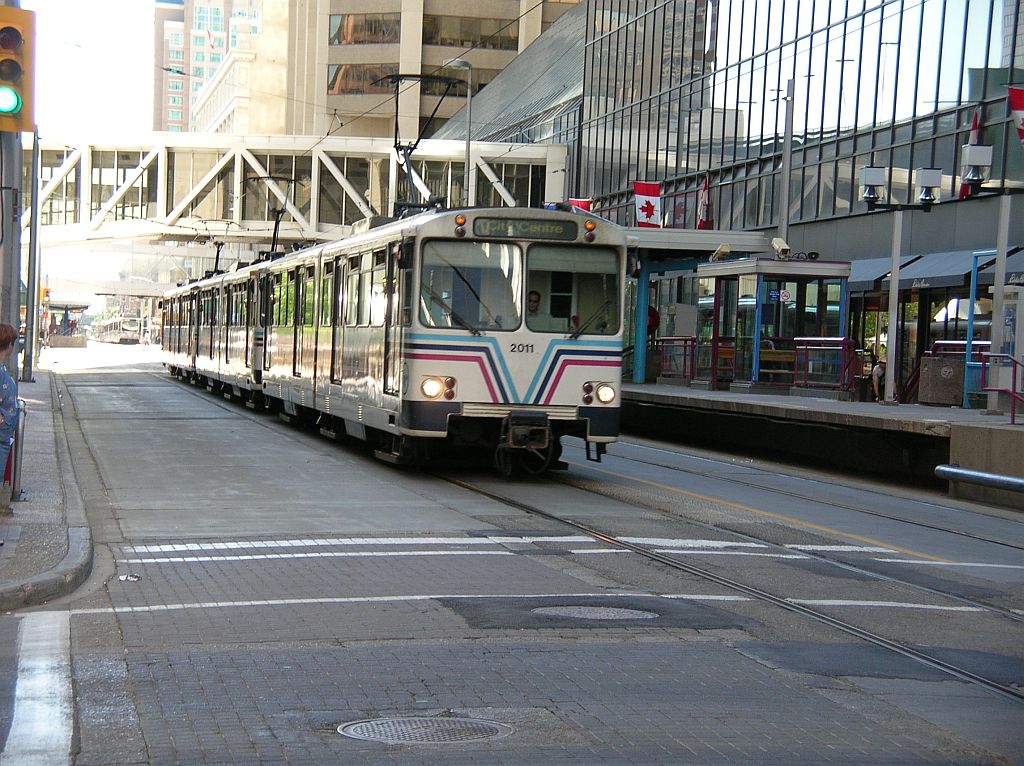
The following link is to a report published in 2006 by Calagary Transit
Light Rail Transit in Calgary
http://www.calgarytransit.com/pdf/Calgarys_LRT_1st_25Years_TRB_revised.pdf
Currently, the average hourly operating cost of LRT is approximately $163, including operating, maintenance and utility costs. With an average of 600 boarding passengers per revenue operating hour, the average cost per LRT passenger is only $0.27. In comparison, the average cost per bus passenger boarding is approximately $1.50, or almost six times the cost of carrying an LRT passenger."
The Authors are a Director, and the Manager Transit Planning, of Calgary Transit, the figures should be accepted as authentic, also note the data on safety and accidents
The second link, published in January 2011
by Cherise Burda and Graham Haines,
Making Tracks to Torontonians
http://pubs.pembina.org/reports/making-tracks-toronto.pdf
examines the costs and benefits of the subway extension proposed by Toronto Mayor Rob Ford in December 2010, compared to the light rail transit plan that is already underway with funding on the table.The subway extension would provide less service per dollar invested than the existing light rail rapid transit plan for Toronto, and wouldn't deliver transit service to the communities that need it most.

Calgary Light Rail- Safer Than Buses.

This interesting bit of information comes from Light Rail Transit in Calgary, The First 25 Years. Contrary to the LRT naysayers, Calgary's trams are safer than buses. What isn't shown is how many accidents were caused by auto drivers deliberately ignoring crossing gates and lights or red lights.
http://www.calgarytransit.com/pdf/Calgarys_LRT_1st_25Years_TRB_revised.pdf
Table 1 – Calgary Transit LRT and Bus Collisions and Passenger Accidents
1995 2005
Collisions per million km
Bus Collisions 23.0 17.8
LRT Collisions 11.3 10.3
Passenger Accidents per million
boardings
Bus Passenger Accidents 5.6 1.6
LRT Passenger Accidents . 0.40 0.06
Lessons Learned
1. Surface LRT operations can be safely and effectively integrated within city streets by using conventional traffic, pedestrian and railway controls.
2. LRT signal pre-emption in arterial streets provides reduced transit travel time without compromising roadway safety
3. LRT is safer than bus. On the basis of Calgary Transit’s experience, LRT vehicle collision and passenger accident rates are significantly lower than those for the bus system.
4. Systems fail – Manage failure. Design your LRT system with replacement in mind and embrace formal asset management principles as soon as possible. Five to ten year forecasts of resources necessary to ensure stable infrastructure are mandatory for good management of the system. Key maintenance people should be in place during the system design and construction stages. Numerous design and construction deficiencies can be avoided with this approach. In Calgary’s operating and weather environment, the need for major infrastructure replacement increased exponentially during the 20 to 25 year age window. Good ride quality and wear characteristics in the LRT environment demand track tolerances well beyond those in the typical mainline heavy rail environment. Track designers and constructors with bona fide LRT experience should be engaged in design and construction, wherever possible. Locate facing point switches and bi-directional interlocked signaling to facilitate maintenance and failure management.
Rebalancing Our Transportation Network: A Case Study
Hamilton, Ontario has for long been promoting a Light Rail system for the city, details of their campaign can be found on the Hamilton Light Rail web site:
http://hamiltonlightrail.com/index.html
Details of the economic case for Light Rail are:
http://hamiltonlightrail.com/article/an_economic_case_for_light_rail/index.html
Similarly to Rail for the Valley in BC, the Hamilton Light RailAi??promoters are citing examples of the European sucess of Light Rail, Tramways & Tram-Trains to support their case.
The Hamilton team, have regularly promoted the Grenoble Light Rail system in France as their aspiration for a rail based transit system, see;
http://hamiltonlightrail.com/article/grenoble_rebalances_its_transportation_system/index.html
Ai??and http://raisethehammer.org/article/477
The Grenoble Light Rail system consistentlyfeaturesAi??amongst the topAi??2 orAi??3 hits on this blog, so the Cardinal will include some details on the system.
The Grenoble tramway network is 35Ai??km long, and comprises four lines: lines A, B, C and D. Line A was opened in 1987, line B in 1990, line C entered into service on the 20 May 2006 and line D opened on the October 2007.
Railway Technology http://www.railway-technology.com/projects/grenoble/
Grenoble Light Rail map

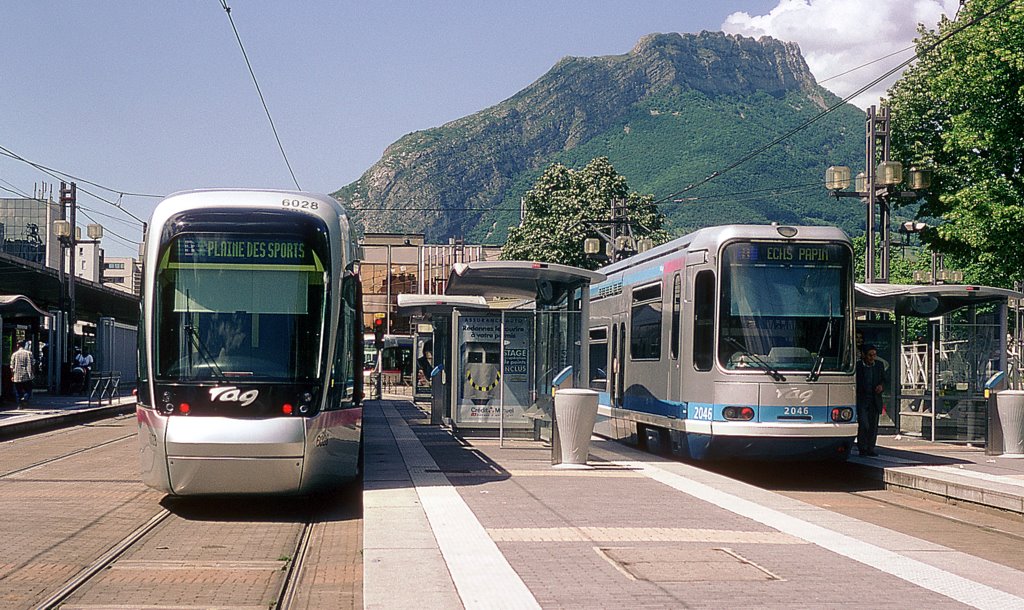
Grenoble Alstom TFS & Citadis LRV’s
First interconnected tram-train service!
On 12 December 2010, the first tram-train service in the French region of Alsace commenced. 5000 daily passengersAi??are be able to travel from Mulhouse to Thann on an innovative, ecomobile transport route.
read the article:
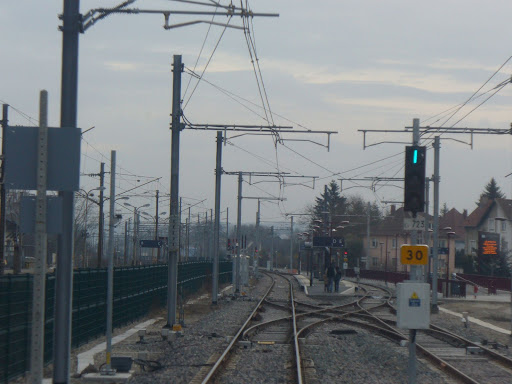
Photograhs of the track system, internal & external views of the Alstom Citadis Tram-Trains
Images courtesy of:
http://www.tc-alsace.eu/forums/viewtopic.php?f=6&t=87



Susan Heyes

It seems TransLink, in the guise of RAVCo; in the guise of the Canada Line P-3, is the only major subway cut-and-cover projects that did not plan for compensation to affected businesses. In three years of research, Zwei has failed to find a major transit scheme, let alone a cut-and cover subway projects, that didn't provide compensation to those businesses that could show a loss due to construction.
That the courts failed to notice this, or take this into account is unforgivable and it seems that the BC Court of Appeals made their decision before the case was brought before them.
For the David Berner interview with Susan Heyes:
http://pelalusa.blogspot.com/2011/03/susan-heyes-vs-canada-line.html
Generational divide on regionA?ai??i??ai???s light-rail plans?
In June 2010, The Province of Ontario committed $300 million towards the capital cost of constructing a rapid transit system in Waterloo Region.
http://rapidtransit.region.waterloo.on.ca/
- Approved a light rail transit (LRT) system from Waterloo to Cambridge as the Region’s long-term preferred rapid transit system;
- Recognized that a staged implementation would be required to ensure the best match of transit technology to ridership and intensification potential; and
- Approved the initial phase of the project which includes LRT from Conestoga Mall to Fairview Park Mall and adapted bus rapid transit from Fairview Park Mall to the Ainslie Street Terminal in Cambridge.
about the project:
http://rapidtransit.region.waterloo.on.ca/about-the-project.html
On March 4th, More than 280 people attended public consultations at the Albert McCormick Centre in Waterloo and at Regional Headquarters in Kitchener—the first in a series of information sessions leading to a June vote at regional council.
Report in the The Record.com 4 March 2011
http://www.therecord.com/news/local/article/496158–generational-divide-on-region-s-light-rail-plans
WATERLOO REGION — Young people who never cared about municipal affairs before and middle-aged property owners worried about tax increases came out by the hundreds Thursday night to have a say about light-rail transit.

TramTrain to Gloucester Estates & the Zoo

The following news item has peaked Zweisystem's interest, for the old interurban route passes just to the North of the Gloucester Industrial Estate and adding a tram stop would be quite easy and quite cheap to do. By doing so, a minibus service could be instituted to service not only the industrial estate, but the Greater Vancouver Zoo and on to Aldergrove proper.
Certainly TransLink would not object, because just in South Delta, TransLink operates three min-bus services that barely carry 20 persons a day, combined!
Here we have the "Law of Unintended Consequences" come into play. The proposed RftV/Leewood TramTrain would service new customer destinations, not even intended when the rail plan was first thought of. How many more Gloucester Estates or tourist spots could be serviced by the proposed TramTrain service?
Aldergrove Star February 24th
http://www.bclocalnews.com/surrey_area/aldergrovestar/news/116852148.html
“We are one of the larger employers in the park, and we want local people to get to this work environment,” said EV Logistics’s Dave Martin, “but a lot of them are first-time employees and they don’t have rides. We would be employing more people from Langley if we had transit.”
“There is a lot of anxiety, angst, and frustration,” said Green, who noted that approximately 181 companies operate in Gloucester, supplying jobs for thousands of people, and making significant contributions to TransLink.
“I am a firm believer in taxpayers receiving value for money, but in the case of Gloucester, they are paying $1.4 million a year to TransLink and receiving no transportation services in return.”
“Youth in Aldergrove would give their eyeteeth for these job opportunities,” Green said, adding that he knows of a young man who skateboards to work, and others who cycle over the freeway overpass, “which is a little scary.”
Lori Andrews from PFG Glass Industries said one applicant walked for two hours to get to a job interview, but she was unable to offer him the position, due to his lack of transportation.
TransLink’s Frankie Kirby made a presentation outlining a number of options available to Gloucester businesses, including the use of privately-funded shuttles, the creation of an online portal to encourage ride-sharing, and the formation of a Transportation Management Association (TMA), a partnership that would work to address local transportation concerns.
While participants at the meeting agreed to look into the creation of a ride-sharing portal and the formation of a TMA in the near future (a TMA as a sub-committee of the Aldergrove Busines Association is already in the works), many of the options presented are not feasible for many employees and the employers believe buses are the only solution.
Chris Steeger and Jody Henderson of the Greater Vancouver Zoo said they have been trying to get public transit to their facility for years. Although it brings in a quarter million visitors each year, the Aldergrove attraction is one of the only zoos in North America that does not receive bus service.
Township Councillor Charlie Fox, former principal of Aldergrove Community Secondary School, said TransLink should take advantage of the bus loop in Aldergrove and look at connecting the school, Gloucester, the zoo, and the new park and ride being built at 202 Street near Highway 1 to connect students to after-school jobs and bring families without cars out to the zoo.
Bruce Heslop, chair of the new Aldergrove Business Association, agreed, saying bus riders can get out to Aldergrove but there is a “missing link” to Gloucester.
“How many people do you need to justify a bus?” Heslop asked. “You tell us the number and we’ll tell you how many buses we can fill.”
For Pascal Cohen, who recently opened up Recyc-Mattresses in Gloucester, getting his 12 employees to work means renting a van for several hundred dollars a month and driving into Walnut Grove to pick them up and drop them off near a bus stop. The van trip takes 20 minutes each way, and if Cohen is away, he must pay two taxis to collect his workers.
During the information session, Township Councillor Kim Richter asked what the capital and operating costs of running a bus service were.
TransLink’s Ken Hardie later stated it is difficult to estimate the full cost required to provide an effective service, as Gloucester's employees live throughout Metro Vancouver and the Fraser Valley and many work shifts when the rest of the transit system isn't available. He said the minimum direct cost for hourly all-day service from a regional bus stop to Gloucester – assuming it is provided by a minibus – would be approximately $350,000 per year.
TransLink said it requires a lot more information about ridership needs before it can consider running a bus into Gloucester. A survey will be conducted to gather the information and Green hopes that data from all affected companies can be consolidated and a follow-up meeting could be held in about six weeks.
More transit, more traffic problems, says think tank. But is that really the problem?
Interesting study out of the USA, but unfortunately wrong conclusions will be made, especially by the roads lobby.
As for buses not attracting new customers, well duh, that little gem has been known for at least 30 years and if this were not so, we would not have been building new light rail lines in the first place!
The problem is simple, we build rail transit or rapid transit wrong in North America and the blame can be placed squarely on both the engineering and planing fraternities at major universities, which unlike Europe, do not offer university degrees in Urban Transportation. The one result is that the preconceived notion that speed trumps all when planning rail transit has dumbed down transit projects to such a point, that they are next to useless. In North America, transit planners plan and build railways, not tramways, with massive over engineering taking away any cost advantages when compared to other transit modes. In North America, we just do not plan for cheap transit!
The great philosophers stone for all rail transit projects is speed and the faster the commercial speed, the better the transit system is. But speed comes at a cost; fewer stations per route km., which makes the transit system less accessible and grade separation, which greatly increases the cost of a transit project. Fewer stations and small transit networks deter customers. The engineering types are very happy with this state of affairs, as they get ample work designing grossly over engineered bridges, viaducts and tunnels, and do not want to change their lucrative ways.
With a few exceptions, in North America, rail transit schemes are built to satisfy political & bureaucratic prestige and corporate pocketbooks, not to provide the transit customer with a viable transit alternative. In Europe, transit planners, many with university degrees in Urban Transportation, design and build rail transit to meet the transit customer's needs. In Europe the transit customer comes first.
As for the study, Zwei thinks better time would have been spent studying why North American transit projects cost more and attract fewer customers than their European cousins, but then the authors of the study do not want to find the truth, but just want to continue their puerile anti-transit temper tantrums and the roads lobby just love that!
Rail for the Valley engaged company with real transit experience, to design a 21st adaptation of light rail, the TramTrain, for the old BC electric interurban route from Vancouver to Chilliwack with the resulting study being all but shunned by TransLink and the transit fraternity in the Greater Vancouver area.
Why?
Simple, the RftV/Leewood report claims the impossible possible, that one can built light rail cheaply and of course we can't have that can we; the SkyTrain/metro lobby would lose a great deal of income.

From the Tyee
Seattle think-tank Sightline Institute has some bad news for city planners: investing more in public transit might not be the answer to reducing road congestion. Director of Programs Clark Williams-Derry posted on the institute's Daily Score blog last week a list of reasons he believes transit is not the solution to a city's traffic woes that we hoped it would be:
Transit advocates sometimes argue that bus or rail investments can help ease traffic, by getting people out of their cars.
Yet as far as I can tell, the evidence for this isn't so good.
This paper by researcher Antonio Bento and colleagues suggests that significant increases in bus service have essentially no effect on vehicle travel. Rail service increases do decrease vehicle travel, but by a surprisingly modest amount.
This paper by researchers from the University of Toronto found — unsurprisingly — that increases in road capacity were quickly matched by increases in traffic volumes. But it also found that increases in transit service had no effect on traffic volumes. In the authors' words: "these results fail to support the hypothesis that increase provision of public transit affects [vehicle miles traveled]."
And this study from a University of California-Davis found that higher residential densities and greater land use mix did decrease vehicle travel — but found no statistically significant link between better transit service and less driving
I'm sure that there's more literature on this issue, some of which finds stronger connections between transit and vehicle travel. But in general, based on what I've found I have to align myself with Anthony Brooks and transit planner Jarrett Walker, who both argue that transit investments have little impact on how much driving goes on in a crowded urban area. To quote Walker:
To my knowledge…no transit project or service has ever been the clear direct cause of a substantial drop in traffic congestion. So claiming that a project you favor will reduce congestion is unwise; the data just don't support that claim.
Transit is good for an awful lot of things. It helps move people to where they want to go; it gives people who prefer not to drive, or who can't drive, a decent transportation option for many trips. It can reduce a region's reliance on risky fossil fuels; and on and on. But for folks who hope that transit investments will offset the impacts of road expansions — well, sadly, I don't think the evidence lines up that way.
The study
Added costs for the Canada Line – Has The Taxpayer Assumed Risk?
It seems that TransLink’s costs are rising but what peaked Zweisysytem’s interest is that there has been a cost escalation of the Canada Line contract – what cost escalation? Isn’t the Canada Line supposed to be a P-3 project and that SNC Lavalin and not the taxpayerAi??assumed risk?
Now we know all the hype and hoopla in the mainstream media was all about, not only trying toAi??make the Canada Line a Legacy LineAi??for soon to be ex-Premier, Gordon Campbell, but hiding the fact that the Canada line is costing TransLink (the taxpayer) more. TransLink doesn’t give a figure for the cost escalation of the Canada Line, but hey, the Canada line is a Liberal project and all Liberal projects are given scant scrutiny by the media.
In BC, transit projects are given a free ride by the mainstream media, unless of course, it happens to be a fast ferry, built under the NDP’s watch, which the MSM drag out of Davey Jones Locker ad nauseam.
From the Surrey Leader
TransLink expects its transit costs will rise $55 million this year even though it plans no net increase in how much service it provides. Higher anticipated fuel costs and cost escalation of the Canada Line contract are among the reasons the transit budget will rise to $871.2 million in 2011. TransLink is planning for no increase in union or management wages, but has provided for a two per cent increase for general inflation. TransLink is assuming overall transit ridership will grow 6.1 per cent this year, which would continue the major bump in usage since the 2010 Olympics. TransLink’s 15-cent-a-litre gas and diesel tax is expected to generate $324 million this year. The authority will collect $279 million in property taxes this year. TransLink property tax rates rise an automatic two per cent each year for inflation without the need for approval of the region’s mayors council. The biggest single source of money will remain transit fares, estimated at $421 million for 2011.
For the full news item…..
http://www.bclocalnews.com/surrey_area/surreyleader/news/117075083.html



Recent Comments