Risky to bust up flow of gas tax to TransLink: Walton

Any move to split up the stream of funding to TransLink from its share of the federal gas tax could threaten the integrity of Metro Vancouver's transit system, warns the chair of the region's mayors council.
North Vancouver District Mayor Richard Walton was responding to suggestions from Delta council that it might want to break from TransLink and use Delta's share of the gas tax to run its own transit service.
"It wouldn't be very easily workable," he said. "That's something we'd have to talk about as a group. It would have significant implications for TransLink."
The federal budget handed down March 22 included a pledge the Conservative government will enshrine the gas tax transfer in law.
It's worth $123 million a year to TransLink – half of what Ottawa collects from the extra 10 cents in federal gasoline tax added to every litre of fuel sold in the Lower Mainland.
The arrangement whereby the money returned to this region is used by TransLink for regional transportation needs was agreed to years ago by the Metro Vancouver board and the Union of B.C. Municipalities.
"I think those funds should come directly to us," Delta Mayor Lois Jackson said.
"If we took the gas tax that's generated south of the river and put those funds into the things we need south of the river, would that give us a better opportunity to advance our options?"
Surrey council has also mulled the idea of striking off on its own to try to bring rapid transit expansion faster than TransLink.
"We know those kinds of challenges," Walton said. "The mayors at the most remote parts of Metro Vancouver question whether they're getting fair value from TransLink."
He said it makes more sense for those cities to pursue solutions directly with TransLink than to try to split up the mutually agreed pot of money that's a major part of the authority's budget.
The federal commitment to legislate the gas tax transfer had been requested by the mayors council.
The federal government in 2008 agreed to make the gas tax transfer permanent, but the pledge now to legislate the transfers is seen as a further strengthening of that commitment.
"We're all pleased about it," Walton said.
The change doesn't increase the amount of money TransLink can borrow for future transit expansion projects as it had already been counted as an assured revenue source.
Light Rail, Tram-Train & Tram news from Britain
Four further Light Rail/TramAi??announcements this week from Britain;
First UK tram-train plan on track for Sheffield
BBC 24th March
http://www.bbc.co.uk/news/uk-england-south-yorkshire-12844983
PlansAi??Ai??to make Sheffield the first city in the UK to get a state-of-the-art
“tram-train” service are on track after A?150,000 was granted to theAi??Ai??project.
The continental-style carriages, which operate on both tramAi??Ai??tracks and existing
railways, could run between Sheffield and RotherhamAi??Ai??from 2014.
The idea is to cut journey times and make it easier for people to get into city
centres, reducing car commutes.
The Department for Transport said the next stage of the project is under way.
Tram-trains are described as lighter, more energy efficient,Ai??Ai??with faster
acceleration and deceleration than conventional trains,Ai??Ai??making them greener and
potentially cutting down on the need forAi??Ai??maintenance works.’Exciting project’

Mayor announces shortlisted bidders for additional trams in Croydon
TfL Press release 24th March
http://www.tfl.gov.uk/corporate/media/newscentre/19601.aspx
Mayor of London Boris Johnson today announced the shortlisted bidders to supply Transport for London (TfL) with up to ten more trams, which will increase services on the Tramlink network.Ai??

The three bidders, City of Edinburgh/CAF, Stadler (Stadler Pankow GmBH) and Pesa (Pojazdy Szynowe PESA Bydgoszcz S.A.Holding) will now be invited to submit proposals to supply the additional trams which would increase the frequency of services on the busiest parts of the network between Therapia Lane, central Croydon and Elmers End.
Tram extension scheme given go-ahead by Government
Nottingham Evening Post 24th March
THE Government has today confirmed that Nottingham City Council has found enough savings for Phase 2 of the tram system to go ahead.
The plans were given the green light by the Government when Transport Minister Norman Baker today after enough savings were identified to make the project more affordable.
The two extensions are planned to go to Chilwell/Beeston and Clifton, linking directly into Line One at Nottingham Station.
Today’s decision will now allow Nottingham City Council to continue to the next stage of the funding approval process.

Ai??
Blackpool explores tram extensions
TransportXtra 25th March
http://www.transportxtra.com/magazines/local_transport_today/news/?id=26146
Ai??Blackpool Borough Council is exploring options to extend its tramway system.
Paul Grocott, Blackpoolai??i??s programme manager for the existing tramway upgrade, said the Fylde Coast transport project was examining how to integrate the tram with other transport infrastructure ai???in the town and beyondai???.
Options under investigation include extending the tram lines to serve Blackpool North railway station and Blackpool Airport, as well as the potential of tram-train technology to make use of the heavy rail lines out of either Blackpool North or Blackpool South railway stations.

Manchester Tram & Rail Link announcements
Manchester Metrolink starts Phase 3b
Railway Gazette 22 March 2011
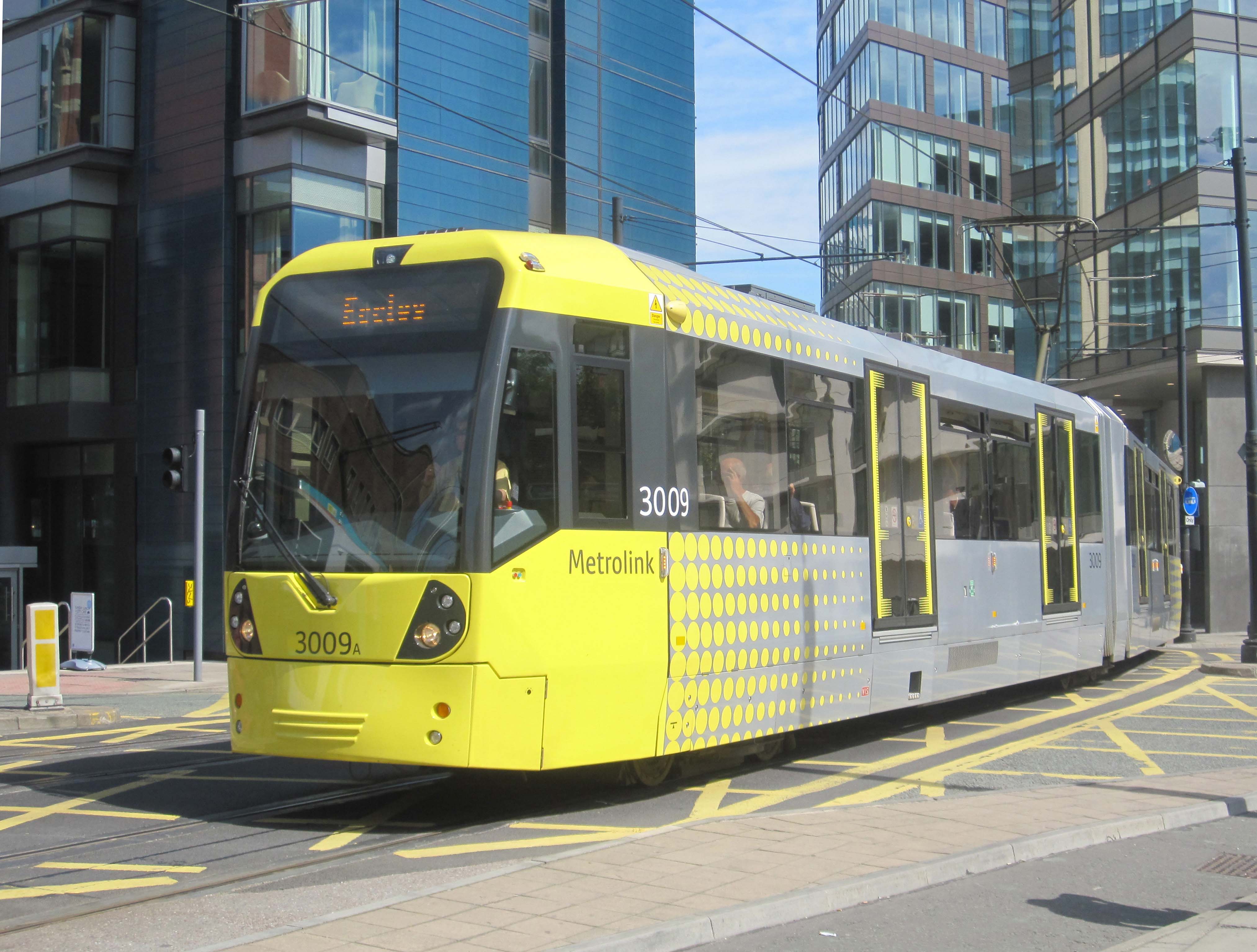
UK:ai??i??Construction work has started on a 3Ai??9Ai??km extension of the Manchester Metrolink light rail network from Droylsden to Ashton-under-Lyne, following a groundreaking ceremony held on March 8. This is the first of the projects included in Phase 3b of the network expansion programme to get underway.
The work is being undertaken by the M-Pact Thales consortium of Laing O’Rourke, GrantRail and Thales as an option on the existing contract for Phase 3a, which includes construction of a line to Droylsden from the existing terminus at Manchester Piccadilly.
The four-stop Ashton extension will open in winter 2014. It will run on-street to Audenshaw, and then follow a segregated alignment to reach a bus-tram interchange in Ashton town centre. There will be a park-and-ride site for more than 600 cars at Ashton Moss.
Manchester rail link welcomed as a ‘boost’ to region
Funding for a new rail link connecting Manchester’s main stations has been welcomed as a boost to the region.
BBC 23/03/2011
http://www.bbc.co.uk/news/uk-england-manchester-12831544
The rail link is part of a wider A?530m plan to improve rail services in and around the city.
Transport bosses said the news was a key step towards providing faster, more frequent trains from Manchester to Liverpool and Leeds.
The Chancellor’s announcement confirmed funding for a short stretch of line known as the Ordsall Curve in Salford.
The building of the curve would allow services to travel between Piccadilly and Victoria, reviving a former plan in the city for a “Picc-Vic” link.
The (AVG) Albtal-Verkehrs-Gesellschaft GmbH- KarlsruheA?ai??i??ai???s longest tramtrain route A?ai??i??ai??? S4
I am reprinting this post from last year due to a series of recent correspondence on the 210 km. TramTrain route. Those guys on the Skyscraper page really do a great disservice with regional transit with their extremely dated way of thinking. It is almost as TransLink sponsors the blog!
It must be remembered that the TramTrain route S-4 travels through the sparely populated Schwarzwald or Black forest region of Southern Germany. There are no musings about “not enough density” for the Karlsruhe TramTrain there!
The (AVG) Albtal-Verkehrs-Gesellschaft GmbH- Karlsruheai??i??s longest tramtrain route ai??i??Ai??S4
First published on Feb. 10 2010

The AVG’s longest run is now a 210km (130 mile) S4 service from Ai??hringen through central Karlsruhe to Achern, south-west of Baden-Baden. The TramTrain route uses DB mainlines, regional railway lines and on-street running in various cities.
The above map gives the various routes of Karlsruhe’s famous TramTrain network;Ai??largely in an area of comparable density and population of Vancouver and the Fraser Valley. This something to think about when planners and politicians claim: “There isn’t the density in the Fraser Valley to support ‘rail’ transit.”

An Open Letter To The New Minister of Transportation Blair Lekstrom
Dear Mr. Lekstrom;
Welcome to your new ministry, with its many challenges.
The Gateway project is one that will give a few headaches as it's a grossly overbuilt highway that will not carry much traffic. In BC, politicians love to build new highways because their political friends in the Road Builders Association and the trucking industry just love taxpayers money being spent on them. You will make many new friends, until, of course, stop building highways.
As minister of Transportation, you are responsible for that little gem TransLink and all what it entails. There is one problem that you will be soon forced to deal with and that is the $400 million funding gap for the forever promised Evergreen metro line. Regional mayors are tired of anteing up more money for the SkyTrain metro system and are balking at increasing property taxes to pay for gold plated metro schemes. The Evergreen Line must be built, because your new boss, Premier Christy Clark desperately wants to cut ribbons for the new line before the next political election. At the same time, South Fraser politicians are mulling over leaving TransLink because of their taxpayer's dollars are spent on other peoples transit projects. The Evergreen Line maybe the catalyst for a South Fraser rebellion, just in time for the next election. Gaining votes in the Tri-Cities maybe countered by losing many more votes south of the Fraser River.
Adding to the Evergreen Line woes, in 2008, American Transit expert, Gerald fox, shredded TransLink's Evergreen Line's business case. Mr. Fox stated; "I found several instances where the analysis had made assumptions that were inaccurate, or had been manipulated to make the case for SkyTrain. If the underlying assumptions are inaccurate, the conclusions may be so to". Fox later said; "TransLink has used this cunning method of manipulating analysis to justify SkyTrain in corridor and corridor and has succeeded in keeping the proprietary rail system expanding. In the US all new transit projects that seek federal support are now subject to scrutiny by a panel of transit peers, selected and monitored by the federal government, to ensure that the projects are analysed honestly, and the taxpayers" interests are protected. No SkyTrain project has ever passed this scrutiny in the US.".
Dealing with TransLink maybe dealing with a Pandora's Box of myth, bad planning, and deliberately misleading bureaucrats.
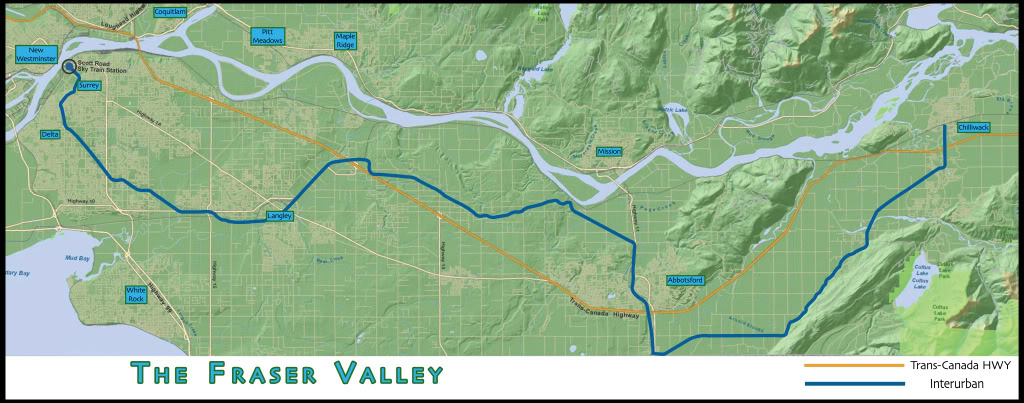
There is one South Fraser rail project that is now more than a pipe dream, the Rail for the Valley TramTrain or Interurban initiative for the old BC Electric route. Backed by the Leewood Projects Study, which shows that a TramTrain project is financially viable, the return of the interurban is seen by many South Fraser politicians as an economic and doable project. The "Full Build" RftV/Leewood TramTrain is 138 km. long, costing just under $1 billion and would service Vancouver, Richmond, as far as Rosedale, past Chillwack. Compare this to the 11 km. $1.4 billion Evergreen line and it is easy to see one gets a lot more bang for your buck with the RftV/Leewood TramTrain/Interurban report!
TransLink and the BC government also have their own, rather dated study, which focuses on a bus based transit system for South Fraser Communities. Other than the fact that buses do not attract the motorist from the car, there is no evidence that TransLink or the BC Transportation ministry clearly understand Bus Rapid Transit. To be truly BRT, a bus needs to be guided or operate on an independent rights-of-way, which in most cases costs only slightly less than a LRT solution, with many more drawbacks. There is clear evidence that the recent provincial government Valley transportation report was done, like a similar study for the E & N Railway, to downplay any rail transit solution for South Fraser municipalities. The RftV/Leewood Study makes a mockery of the provincial government's efforts.
It is how the Ministry of Transportation responds to the many important transportation issues South of the Fraser River, that will decide the fate of TransLink, where present municipal unhappiness with current transit taxation, planning and implementation will later translate into out right rebellion and a succession from TransLink, just in time for the next provincial election in 2013.
Then there is TransLink itself. This ponderous bureaucracy which forever wants more and more tax money, with no public oversight, TransLink has failed to offer a transit system that is both efficient and affordable. TransLink's bureaucrats have convinced themselves of the opposite, that their metro only policy is both affordable and efficient, leaving Vancouver and TransLink a sort laughing stock in international circles. Major changes must be made and soon.
The major problem with our transit system can be summed up with a comparison with Calgary's LRT system. To date, the 48.8 km Calgary's LRT system has cost the Alberta taxpayer just over $1 billion, yet carries over 252,000 customers daily. By comparison, Vancouver's 68.7 km SkyTrain carries a claimed ridership of over 380,000 customers (it must be noted, that unlike Calgary' LRT, there is no independent audit of ridership on SkyTrain and without turnstiles, TransLink's numbers are suspect), a day yet TransLink's metro system has cost the taxpayer over $8 billion to date!
A complete reappraisal of our regional transit system is a must, but if the new Minister of Transportation, like the many before him, puts his head, like the proverbial Ostrich, in the sand and ignore the many problems plaguing TransLink, a Liberal mayor from Surrey may lead the charge of South Fraser municipalities abandoning the sinking ship TransLink.
Comments From The Sandhouse

An AVG TramTrain, from Karlsruhe, on a rail tour on the Swiss mainline.
The Sandhouse is the journal of the Canadian Railroad Historical Association, Pacific Coast Division. In Vol 35, No. 4, Issue 140 – Winter 2010/11, is a summary of the Rail for the Valley/Leewood report and the BC government's effort, with some important observations.
It must be pointed out that the CRHA types are mainline railway people and not up to date with light rail, TramTrain or the concept of the track sharing philosophy, in fact many of them would shudder at the thought of having a tram share the mainline with regular train traffic. I would wager a great many CRHA members are completely unaware of the fact that the Karlsruhe TramTrain has been in operation for over 17 years track sharing with regular railways on many railway lines, without major mishap and that TramTrain is gaining popularity with many transit operators, including in the USA. The longest TramTrain route, in Karlsruhe Germany, is over 210 km. long.
The article left an impression that the TramTrain service would use Ex-Brussels PCC trams and of course this is not so, as the study recommends proven TramTrain vehicles for the service. I think that the Sandhouse article confused the efforts of running a vintage tramway on parts of the old BC Electric line, with what the RftV/Leewood report.
What is of concern is the 12 km. (7.5 mile) Pratt/Livingston corridor, where the Southern Railway of BC (formerly the BC Electric), shares its line with the Roberts Bank Superport Railway. I think that double tracking would be the desired compromise for more efficient operation and I belive the 18 metre corridor of the rail route would easily accommodate double tracking. The cost to double track would be in the $25 million to $30 million range, which would include improved signaling. BC Hydro does have a statutory right to operate passenger trains on that stretch of track and with a double track and improved signaling would appease the railway companies to allow the operation of TramTrains and fright trains in complete safety – as what happens in over twenty European cities on a daily basis.
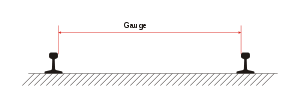
Railway rules change and the buff strength excuse, used by the railway companies to deliberately prevent LRT form track sharing dates back to wooden framed cars, modern TramTrains with steel frames and carbon fibre bodies are very robust and again, such vehicles operate safely in mixed railway traffic in Europe for many years now. It is the same sort of dated thinking that forced the Toronto streetcar system to be broad gauge, 1495 mm, instead of standard gauge of 1435 mm, to prevent any thought of the streetcars track sharing with the regular railways.
The key for safety is signaling – preventing a TramTrain and a regular train from colliding. And please, don't say the rules can't change, as the lowly caboose is all but a memory with freight train operation, yet were a common sight on all freight trains a mere twenty years ago.
The real problem of course is political support and if the public demand is strong enough for the Valley interurban, then politicians will do what is necessary to make it happen or face the wrath of the voters at the polls.
Click to see the famous Karlsruhe TramTrain in action.
Where’s The Transit?

It has been overAi??six months since the release of the Rail for the ground breakingAi??Valley/Leewood TramTrain report and very little of substance has happened. In BC and Metro Vancouver, it is business as usual, where civic and provincial politicians are fretting about funding for the discredited Evergreen metro line. The hype and hoopla on the mainstream media about the RAV/Canada line being massively successful, despite the fact that TransLink fails to actually state the numbers of new transit customers the truncated metro has attracted, is nothing more than pabulum for the masses to put put pressure on regional mayors to ante up more taxpayers money to fill the $400 million funding gap.
Mayors South of the Fraser are feeling somewhat rebellious as there is little investment in transit South of the Fraser, yet more money is needed to fund prestigious metro projects on the other side of the river. Some municipalities are openly mulling leaving TransLink, which must sent shivers up the SkyTrain Lobby’s spine, for if South of the Fraser municipalities pull out of TransLink, SkyTrain expansion will be doomed.
The RftV/Leewood study is a breathe of fresh air as a transit consultant, from outside the box, planned for an affordable railAi??transit solution for the Fraser Valley, a solution that has been largely ignored by the powers that be.
Just think, for the cost of the new retractable roof at BC Place, we could have built a diesel TramTrain service from Scott road station to Chilliwack. For the cost of the $5 billion plus Gateway Highways program, we could build:
- A “full build” 138 km. Vancouver/Richmond to Rosedale TramTrain.
- A new Fraser River Rail Bridge.
- A UBC to BCIT to Stanley Park LRT.
- TwoAi?? 15 km. LRT Lines in Surrey.
- One 15 km. LRTAi??line in Langley.
- A rail connection to YXX.
Plus at least $1 billion left over for schools and hospitals!
In BC we do not have a transit problem, rather we have a financial allocation problem, where the provincial government is following its highways and metro only investment policy and it is time that regional politicians to stop and have a good look, where are current transportation/transit policies are taking us. With gas prices rising and the economy teetering on a recession due to world events, should we not get the biggest transit bang for our buck?
It is time that Valley mayors and councilors ask BC’s new Premier, Christy Clark: “Where is the Transit?”
Should we build TramTrain, with costs starting at $6 million/km.

Or Light Rail (LRT), with costs starting at $20 million/km.
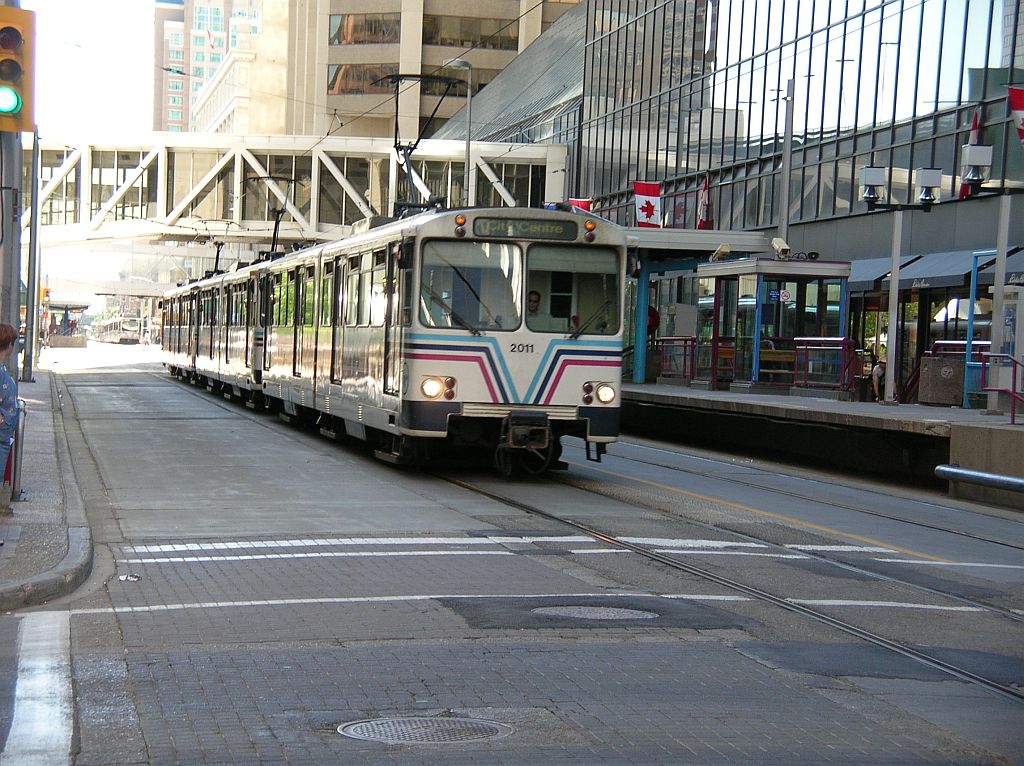
Or elevated metro, with costs starting at $125 million/km.

Or a subway, with costs starting at $200 million/km.
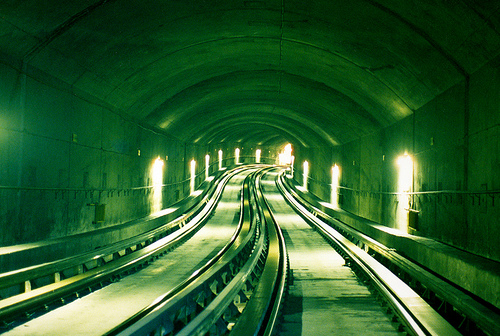
This the question that the politicians have to decide!
City of Victoria abandons Johnson Street Bridge rail plan
Victoria, B.C. – forget commuter rail entry into downtown
SaanichAi??News March 10th
http://www.bclocalnews.com/vancouver_island_south/saanichnews/news/117699518.html
The City of Victoriaai??i??s faint hope of finding funding partners to save the E&N rail on the Johnson Street Bridge fizzled Wednesday.
ai???Itai??i??s a reluctant decision that we have to take,ai??? said Coun. John Luton. ai???Many in this community are committed to supporting commuter rail into downtown Victoria.ai???
With the exception of Coun. Geoff Young, all on council voted to nix the $12-million project to include rail on the bridge.
That means the new $77-million bridge will have three lanes of traffic, two bike paths and a multi-use trail, but no train tracks.
The trainai??i??s final stop will likely be situated in Vic West instead of downtown. The city will preserve the rail corridor in case funding for a rail bridge is prioritized in the future.
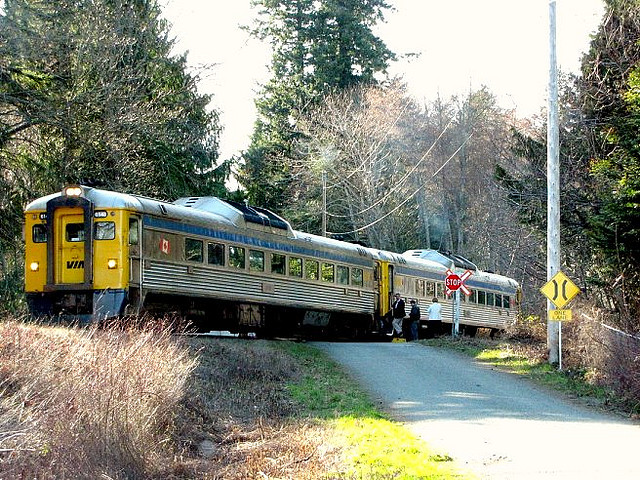
E & N Budd RDC
Victoria, the capital of British Columbia on Vancouver Island, had an opportunity to bring possible commuter rail service into downtown.
But that now has been precluded by a City Council decision to bar E-&-N (now known as Southern Railway of Vancouver Island) from sharing a new $77 million highway bridge.
Web site of the Island Transformations Organisation. http://vicito.jigsy.com/
A coalition with a vision to dynamically transform the way Vancouver Islanders live, work and play in their communities. We envision Vancouver Island being a safe, progressive, environmentally sensitive, energy self sufficient and lifeA?ai??i??A?sustaining place for all its inhabitants.
Nobody’s nostalgic for the freeway to nowhere
Nostalgia over easy was the order of the day at Sinbad’s, a waterfront restaurant in the shadow of the Ferry Building. The talk turned to fern bars, and fast cars, and long lunches in places like Paoli’s. Remember the ’80s? The men had narrower ties and the women had shorter skirts. “Hey,” somebody said. “Remember the Embarcadero Freeway?”
San Franciscans wince at the memory. It was the elevated freeway to nowhere, gray as a prison, ugly as sin. It ran right in front of the Ferry Building, which not long ago was a building with a past and no future.
The wrecking balls went to work on the freeway on Feb. 27, 1991, just 20 years ago last Sunday. The foes of the freeway threw a big party with music and Champagne toasts. Twenty years! It should have been an anniversary to remember, but I forgot about it myself.

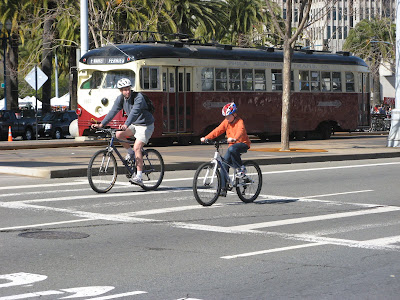
“I have a hard time believing that thing was ever here,” said Rex Clack, a maritime attorney, who used to use it as a shortcut from the waterfront to Broadway. He remembers the dark look of the street under the concrete legs of a double-decked freeway, roaring with traffic. Now the Embarcadero is a showpiece: open to the sky, lined with palm trees, the city on one side, the bay on the other. Colorful streetcars run down the middle.

You would think now that everybody would have seen what the Embarcadero could have become without the freeway. Think again.
The battle over the freeway is a cautionary tale of how San Francisco let the state impose highways that scarred the city in the name of progress, and then dithered over what to do next as opposing forces battled to a standstill.
The Embarcadero Freeway opened in 1958, part of an engineering dream – or nightmare – to ring the city with freeways. It was supposed to link the Bay Bridge with the Golden Gate, but a citizens revolt halted it at Broadway.
Civic-minded people hated the Embarcadero Freeway, but 60,000 cars a day used it. If it were torn down, what then? Why, said the dreamers, a boulevard, a parkway, views of the water.
In 1986, a proposal to tear down the freeway and build the boulevard went to the voters. As it turned out, the Embarcadero had a lot of friends: the public voted to keep the freeway by a large margin. Even Chronicle columnist Herb Caen, Mr. San Francisco himself, voted for the freeway.
http://en.wikipedia.org/wiki/Embarcadero_(San_Francisco)
Current issue of Trains should be required reading
Matthew at Transport Action BC http://transportactionbc.wordpress.com/
writes on March 8th
The April issue of Trains magazine has a special 48 page report on fast trains. It describes new high-speed trains in China, Korea, Taiwan, Japan and Europe, relative speed, why some Americans canai??i??t seem to embrace high-speed rail, a map showing the highest speed portions of tracks in the USA (70 mph (112 km/h) is considered high-speed for Amtrak) and many other articles.
A special article on Amtrak Cascades describes how Washington state has grown their system slowly and steadily over the past 10 years by focusing on small incremental improvements to increase the average speed over time, instead of trying to focus on top speeds. It is frequency, reliability and comfort that will bring people back to the train, not absolute top speed.Ai?? This article especially should be required reading for folks at the BC Ministry of Transportation who are overly focused on roads.
Never was a truer word spoke,
The response of the BC Ministry of Transport & TransLink to theAi??reportAi??on the Fraser Valley Interurban proposal, has been at best tardy at worst contemptuous to the population of the Lower Fraser Valley.




Recent Comments