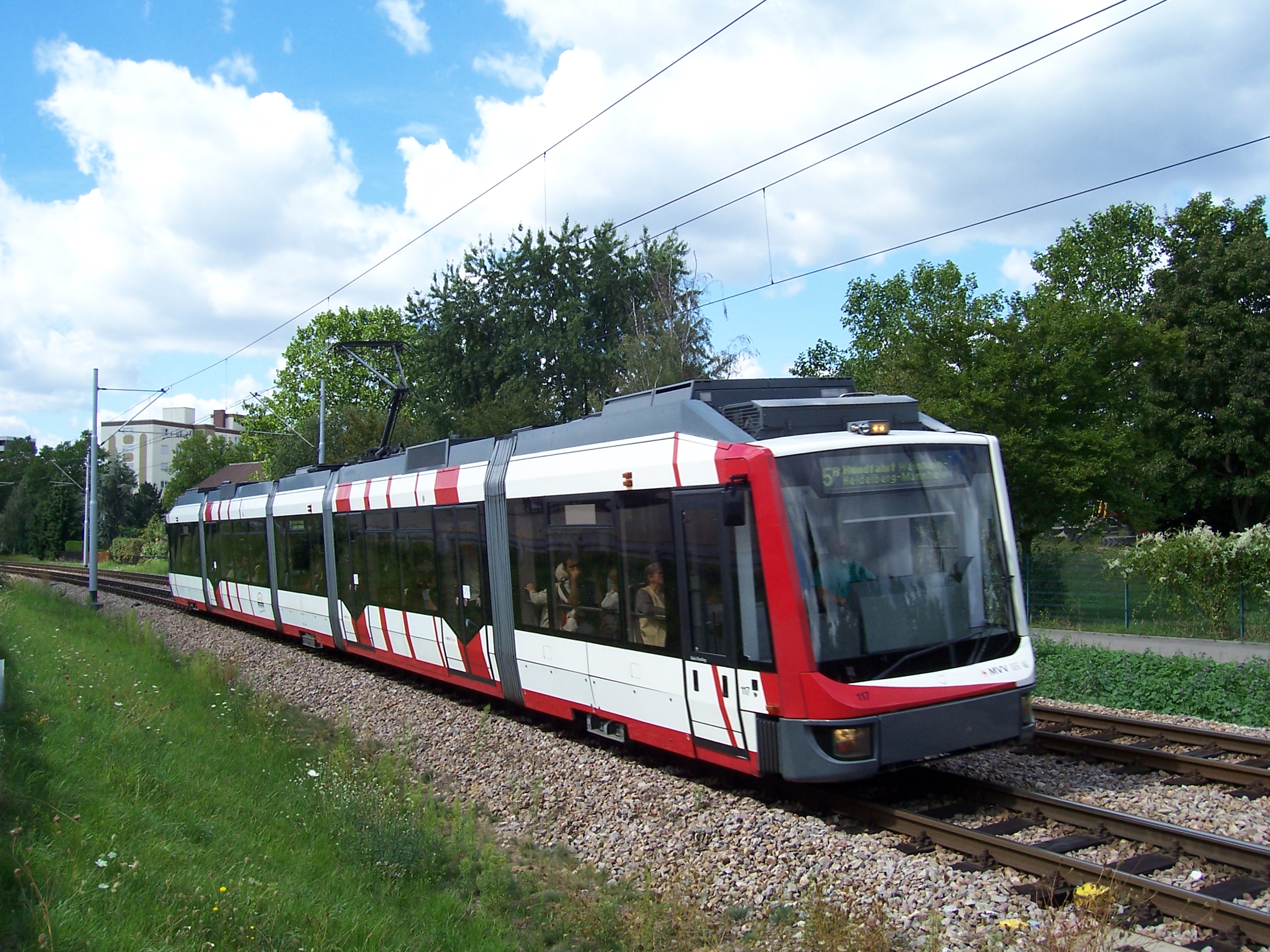
Pushing a wooden stake through the heart of darkness
I raised my head. The offing was barred by a black bank of clouds, and the tranquil waterway leading to the uttermost ends of the earth flowed somber under an overcast sky–seemed to lead into the heart of an immense darkness."
– Joseph Conrad, Heart of Darkness
It has not been a very good week for British Columbian or indeed Canadian public transit. Following the two articles published over the weekend of 25/26th March in the Vancouver Globe & Mail,
Transit a hit-and-miss affair in B.C.’s Lower Mainland
Transit problems across Canada prompt calls for politicians to address issue
The storm clouds from the Fraser Valley & Lower Mainland city's of Delta, Langley & Surrey determination to check-out of TransLink are gathering:-
Delta threatens to leave TransLink
http://www.bclocalnews.com/surrey_area/surreyleader/news/115218169.html
Delta is now talking about leaving TransLink unless better transit service is provided South of the Fraser.
The move comes as Surrey continues to voice its dissatisfaction with transit service here.
While it’s unclear whether either cities could actually cut ties with TransLink, it’s hoped the threat of the possibility will cause the province to review the situation.
Delta Mayor Lois Jackson said Tuesday the municipality gives $12 million annually in taxes to TransLink, and she believes that money could be better spent elsewhere.
“It’s not the TransLink board that has to go to the polls and answer to everybody,” Jackson said. “It’s the local council and mayors.”
Delta is considering supporting a South-of-Fraser transit option.
Metro Vancouver Mayors divided on how to pay for transportation projects
http://www.vancouver-bc.co/News/?NID=17
Vancouver mayors once again grapple with ways to pay for transportation projects, the wide transit disparities across the region are threatening to stand in the way of a consensus.
Talks have just begun, but mayors are already divided on potential options to fund projects such as the Evergreen Line and extra buses, ranging from road tolls to gas taxes, congestion charges and vehicle levies.
"There's more appetite in Vancouver to look at gas taxes and bridge tolls," said North Vancouver District Mayor Richard Walton, chairman of the mayors' council on regional transportation. "But up the valley, they feel they're terribly underserved [for transit] and distance-related levies or taxes are not palatable.
"We have to see what the possibilities are on the various sources; it's not an easy task. There's going to have to be a lot of concessions made between people."
The mayors agree on one thing, though: They don't want to raise property taxes for transit expansion.
None of this is new. Ten years after TransLink was formed to bring more stability to the region, mayors are still struggling over how best to raise the money for transit. In the late 1990s, there was a huge public outcry against a $75-a-year levy on automobiles. In 2006, TransLink imposed a parking-area tax to raise more revenue.
"The various types of funding aren't any different from what we've been talking about over the last decade," Walton said. "Who, ultimately, wants to pay any more taxes to anyone? No one."
TransLink's financial woes are coming to a head this year as the transportation authority's reserve funds dry up and it must find an additional $150 million a year just to maintain basic services.
The financial situation has led Delta to consider leaving TransLink altogether. "Our community doesn't feel they're getting their fair share for the $12 million in taxes every year that goes to TransLink," Mayor Lois Jackson said.
The statistics tell their own story: On the north side of the river, residents get two-and-a-half hours of transit service per person. On the south, it's half an hour, she said.
Langley Township Mayor Rick Green agrees. He, along with representatives of Delta and Surrey, is pushing for the province to use the old interurban line to connect those communities south of the Fraser, noting the infrastructure would cost around $500 million compared with $2.5 billion for a SkyTrain.
"Until Langley sees improvement to transit services, we're going to be hard-pressed to support much," Green said, adding 10,000 employees travel to Gloucester Industrial Park each day, yet there are no buses to take them. "If we're going to talk about a mileage issue, absolutely not. Out our way, it's not a matter of needing a vehicle; most families have two, three, four vehicles because there are no other options. Why should we be penalized?"
Transportation minister Shirley Bond, who last year agreed to give TransLink and the mayors' council an extension until the end of this month to come up with its $400-million share of the Evergreen Line, could not be reached by press time.
But Walton said the mayors' council is moving forward. He plans to meet with both mayors and councillors to identify the regional differences and perceptions.
A long-term transit plan should be ready by April. "It's going to be more of a basket of options than coming up with one funding source," Walton said. "Every time we have an expansion to the transit system we don't want to have to go through a cathartic experience."
TransLink spokesman Ken Hardie, whose staff has been researching various funding options used across North America, noted the disparities show that "depending on where you are, you will look at the world differently."
Langley City Mayor Peter Fassbender said there is some consensus: Many mayors support using revenue from the carbon tax for transit because it's seen as more equitable across the province. However, for this plan to happen the province would have to approve it.
Unlike Green, Fassbender isn't convinced it's such a bad idea if the Lions Gate and Ironworkers' Memorial bridges are tolled. "We need to look at all these things," he said. "We're looking also at trying to change behaviours."
But he adds: "The challenge for us south of the Fraser is we probably pay a higher share, per capita, of that because we don't have the transportation options, yet the vehicle levy penalizes us. Somebody living in an apartment in downtown Vancouver with a bus outside their door … [who doesn't] need a car, they don't care about a vehicle levy."
But Vancouver Coun. Geoff Meggs said tolls, such as the ones on the Golden Ears Bridge, aren't contributing to transit projects. "That's going to be a tough one for some people because the existing bridges across the Burrard Inlet are not tolled," he said.
He also argues it isn't fair to say Vancouver apartment-dwellers aren't feeling the pinch.
"Vancouver residents contribute every way to transit investment," he said, noting parking sales on downtown garages stuff the transit coffers with millions of dollars every year, while half of transit users are Vancouver residents who also pay taxes. "It's not just Vancouver residents who are riding transit in Vancouver, it's virtually every resident; as long as everyone is using the roads."
The Good & Bad; News from Toronto
Firstly the good news;
Toronto's transit system will receive 39 kilometres of new subway and light rail track in a $12-billion expansion package announced by the province and city on Thursday.
Ontario invests billions in Toronto transit 'spine'
http://www.ctv.ca/CTVNews/TopStories/20110331/toronto-transit-announcement-110331/
ctvtoronto.ca
Thu. Mar. 31 2011 1:01 PM ET

Toronto's transit system will receive 39 kilometres of new subway and light rail track in a $12-billion expansion package announced by the province and city on Thursday.
The details of a multi-billion dollar transit expansion were outlined by Ontario Premier Dalton McGuinty and Mayor Rob Ford on Thursday, with both men stressing the importance of getting construction underway as soon as possible.
McGuinty said the province would invest $8.4 billion to build an underground light rapid transit line along Eglinton Avenue, spanning 25 kilometres from Black Creek Drive to Kennedy station.
The line will also replace the Scarborough Rapid Transit line, running aboveground from Kennedy Station to Scarborough Town Centre.
"This is the biggest ever investment in Ontario on public transit. This transit line will be the spine of the Toronto and the regional systems," McGuinty told reporters on Thursday.
He added the provincial investment will cover the cost of 130 new LRT transit cars, which will be built in Thunder Bay, Ont.
Meantime, the city will move ahead with an extension to the Sheppard subway line at a cost of approximately $4 billion.
The subway extension will run 14 kilometres from Downsview subway station to the Scarborough Town Centre.
Ford was not prepared to outline how the city will pay for the expansion on Thursday, but said the majority of the cost will come from the private sector, stressing that the city would own the line after construction was complete.
He added that the city will ask the federal government to use a previous $330 million commitment to fund the Sheppard project, and that the province may provide more money to cover part of the cost.
McGuinty said if the province comes in under the $8.4 billion budget on its project, the savings would be dedicated to the Sheppard line.
Ford has received some criticism for excluding the Finch Avenue West neighbourhood from his transit plan. The low-income neighbourhood had been promised a rapid transit line under former-mayor David Miller's Transit City plan.
Ford promised on Thursday that the neighbourhood would have a subway line within ten years.
"We will make major improvements to the bus service along Finch Avenue West until we can introduce rapid transit there as well," he said.
Construction of the Eglinton rapid transit line and the Sheppard subway extension should be complete by 2019.
but the downside is:
Toronto is currently on the hook for at least $49 million for cancelling the Transit City light rail plan, says the head the regional transportation agency tasked with implementing Toronto Mayor Rob Ford's new transit plan.
That outlay is likely to rise, said Bruce McQuaig, the CEO of Metrolinx…
Toronto must pay at least $49M to cancel LRT plan
cbc News Apr 1, 2011 9:37 AM ET
http://www.cbc.ca/news/canada/toronto/story/2011/03/31/toronto-lrt-penalties524.html
"$49 million is what would be known at this point in time and then there would be additions based on how the discussions go with some of the suppliers," he told reporters Thursday.
Part of that figure includes the $8 to 9 million committed to planning the now cancelled Finch Avenue West light rail line, he said.
His comments come after Ford and Ontario Premier Dalton McGuinty announced a new transit plan to replace the Transit City project, which called for the installation of light rail lines all over the city.
$777M Bombardier deal will be changed
The city will now have to alter a $777-million contract with Bombardier. The city had originally ordered 185 LRT vehicles, and they now only need 130, according to Metrolinx.
But Bombardier may be interested in providing the city subway cars for Ford's proposed Sheppard subway extension, said McQuaig. That could just be added to the existing order for light rail vehicles.
"It's going to be a pretty complicated conversation," he said. "I just can't predict how much there might be of additional cost from the change in the light rail vehicle order at this point."
TTC Chair Karen Stintz was also unable to say exactly how much the city would have to pay for changing existing contracts.
So far, the city has committed $1.38 billion to Transit City-related contracts that may need to be altered or broken.
Questions around Sheppard line
Ford's plan would put Transit City's Eglinton light rail line entirely underground. There would also be a Scarborough LRT line that would replace the current RT line.
Those initiatives will come at a cost of $8.2 billion, which will come from the province.
At Ford's request, the province agreed to cancel the Sheppard Avenue light rail line in favour of a subway line, which the city will try to fund through public-private partnership and some funding from senior governments.
Ford offered few details of a possible public-private partnership.
"All the details will have to come out, but it will be built with private money," he told reporters Thursday, without elaborating.
McQuaig said it was "hard" for him to comment on the feasibility of the construction of the Sheppard line this early.
"The first step that needs to happen is that city needs to finalize its financial plan and their business case. Because fundamentally they need a decision by the TTC commission and city council to go ahead," he said.
When asked if he thought there was a business case for the subway extension given the current ridership on the Sheppard subway line, McQuaig said "the mayor has a vision of the kind of land use and development on the corridor that would build the ridership over time as well."
Sydney- light rail to be built into Central Business District
All change for light rail
Jacob Saulwick Transport The Sydney Morning Herald
March 31, 2011
http://www.smh.com.au/nsw/all-change-for-light-rail-20110330-1cgdc.html
THE O'Farrell government will soon be asked to approve a sweeping overhaul of Sydney's central business district, including plans for light rail down George Street and significant changes to bus routes.
Transport bureaucrats and consultants are close to finishing two studies that have the potential to reshape the way residents move about the CBD.
The studies, commissioned by the former Labor government, have identified George Street as the best route to run a tram line. It would go from Central Station to Alfred Street near Circular Quay.
But the government would also need to be prepared to redirect cars and buses to accommodate the trams.
The Premier, Barry O'Farrell, has nominated transport as his first priority in government. If Mr O'Farrell and his transport minister, Gladys Berejiklian, moved fast on CBD light rail, the project could be finished before the 2015 election.
Discussions with officials close to government and industry experts reveal the most likely spot for a light rail interchange would be at the southern end of the city at Rawson Place, near Eddy Avenue at Central.
Two tracks of light rail would run down George Street. The wider stretch of the street near Central Station could accommodate the tram lines alongside cars and buses. But as George Street narrows to the north, cars and some bus routes would need to shift off the corridor.
The lord mayor of Sydney, Clover Moore, has argued for a pedestrian boulevard, free of all cars and buses, on George Street near the Town Hall. However industry experts have told the Herald it would be extremely difficult to redirect all buses off any stretch of George Street. In particular, the long Metrobuses would find it difficult to chart other routes through the city.
A spokesman for Mr O'Farrell said: "We are committed to light rail in the CBD, but the government will be seeking briefings from Transport NSW on the current status of the plans."
The main advantage of light rail in the CBD is that, running regularly, it could transport up to twice as many people as buses without the congestion. Travelling from Central to Circular Quay by bus takes 35 minutes in peak hour, the City of Sydney estimates. But traffic-calming measures alongside light rail could cut the trip to 17 minutes.
Shifting bus routes to accommodate light rail would be a challenge. Some routes arriving in the city would need to either terminate near Central or pass across the city, requiring commuters to change to light rail to continue towards Circular Quay.
The extra interchange, however, would need a fare and ticketing structure that did not make commuters pay more to change.
Plans prepared for the previous government identified the George Street corridor as the first stage of a CBD light rail network. The work would leave open the option to extend the line along Hickson Road and to Barangaroo.
Broadway Transit Follies – TransLink Does The Gong Show – Part 2
Want to know how TransLink spends taxpayer’s hard earned money? It is easy, TransLink studies transit options for Broadway. TransLink’s Broadway “Rapid Transit” (which means metro) study for Broadway is dated and extremely misleading, but what else would one expect from an organization that has done little, but to waste time, justifying their existence. TransLink’s seven options are studies in mediocrity, nothing more. It is time TransLink get out of the planning business and let real transportation experts have go at it, at least we would get something resembling a 21st century public transit.
Memo to South Fraser Politicians: Dump this turkey called TransLink and form a new South Fraser Transportation Authority,Ai??asAi??TransLinkAi??couldn’t even plan for an outhouse, let alone understand its function.
The following are the seven transit options offered by TransLink with Zweisystem’s comments added.
Option 1: Street level Bus Rapid Transit – cost $350 million to $450 million
The problem with Bus Rapid Transit or BRT, is that to be truly rapid, it must operate on either a guideway or a dedicated bus way. If the proposed BRT is to be BRT, it will cost almost the same for a simple streetcar or tramway to install. As there is much more benefits that come with a streetcar/tramway than BRT, it is natural to spend a little more and get a far greater bang for your buck.
Here lies the Achilles heel of BRT.
Option 2: Street level LRT- Cost $1.1 billion
Here we see TransLink at its finest, loading cost onto LRT to make it more expensive than it should be, but then by not doing so, it would make the SkyTrain and Canada line metros (they are two completely different metro systems) look like bad bargains. modern LRT, either as a basic streetcar/tramway or light rail can handle capacities exceeding 20,000 persons per hour per direction, with just a basic there and back track design. The real costs for a light rail option:
- Streetcar/tramwayAi??(not including vehicles and using existingAi??electrical overhead): – $6 mil/km to $10 mil/km.
- LRTAi??(not including vehicles and using existingAi??electrical overhead) with 60% reserved rights-of-ways and priority signaling at intersections: $15 mil/km to $20 mil/km.
- Light Rail Vehicles: Used staring under $1 million to new (depending on size) $3 million to $6 million each.
Option 3:Ai?? LRT #2 – Cost $1.3 to $1.4 billion
This LRT variant is just puzzling and one must ask the question why? Why go via the Great Northern Way? It seems TransLink is just up to its puerile games, not knowing what to do and hoping someone will come along and fund a SkyTrain subway under Broadway.
Option 4: Bored tunnel Rail Rapid Transit – Cost $2.9 to $$3.2 billion
Here is the meat of the matter; here is what TransLink really wants to build – a SkyTrain subway to UBC. The real cost for a bored SkyTrain subway to UBC is nearer to $4 billion and there isn’t the ridership today or in the future that would justify such an expenditure. To reduce costs, revisiting cut and cover construction would be a real option, but will the memory of the ruined Cambie Street merchants, still linger when the final decision is made?
Option 5: Street level LRT – bored tunnel RRT – elevated RRT – Cost $2.4 billion
Here we have a plan to keep the LRT and SkyTrain types happy, silly and unprofessional, but then I would expect nothing lessAi??from TransLink. A planned forced transfer for UBC bound passengers at ArbutusAi??defies modern public transit philosophy of providing a seamless or no transfer journey.
Option 6: Street level BRT/Tunnel Elevated RRTAi??- CostAi??$1.9 billion
Here we have real silliness by TransLink, a plan to keep the bus boys and SkyTrain types happy. It’s not quite April Fools Day, but TransLink’s bizarre BRT planning could fund over 60 km of streetcar/LRT for the city of Vancouver.
Option 7: Best bus – Cost $325 million
Here we come to the transit plan that will probably be implemented, the Best Bus option – it is what TransLink can afford.
I try not to be tooAi??hard with my comments about TransLink, but really, when such rubbish is presented at public meetings it is hard to contain ones self. Not one of the plans addresses real transit problems, rather they seem to be a continuation of the Expo Line in one form or another and those bureaucrats in those ivory hall on Kingsway should hang their heads in shame. Not one plan will offer an attractive alternative to the car. Buses, in their various guises, have singularly failed to attract the motorist from the car and haphazard and meandering light rail lines will do likewise. forced transfers are well know to deter ridership and in Europe transit is so designed to minimize or eliminateAi??transfers altogether.
Why doesn’t TransLink use the simple term metro or subway, instead of using Rail Rapid Transit or RRT. Could it be that TransLink wants to play the old SkyTrain shell game once again by claiming that RRT is faster and carries more customers than LRT? Sad to say, TransLink played this game with the Evergreen Line, until US transit expert Gerald fox caught them out!
In 2008, noted AmericanAi??transit expert Gerald Fox, statedAi??in a letter to a Victoria transportation group,Ai??shredded TransLink’sAi??Evergreen Line business case, stating; “I found several instances where the analysis had made assumptions that were inaccurate, or had been manipulated to make the case for SkyTrain. If the underlying assumptions are inaccurate, the conclusions may be so too.”Ai??
FoxAi??later said; It is interesting how TransLink has used this cunning method of manipulating analysis to justify SkyTrain in corridor after corridor, and has thus succeeded in keeping its proprietary rail system expanding. In the US, all new transit projects that seek federal support are now subjected to scrutiny by a panel of transit peers, selected and monitored by the federal government, to ensure that projects are analyzed honestly, and the taxpayersai??i?? interests are protected. No SkyTrain project has ever passed this scrutiny in the US.”Ai??
Over 15 years ago, during the Millennium Line fiasco, Zweisystem had a long chat with a transit professional from Asea Brown Boveri, regarding the application of a successful light rail line on Broadway. His comments still ring true and show how dated TransLink’s present day efforts are.
He stated that a BCIT to UBC line with a second line from Main Street, through Vancouver’s downtown to Stanley park, would more than double present bus ridership on the two routes in two to three years, creating the ridershipAi??which fares would not only pay for the operational costs, but the capital costs of the new LRT. With such revenue, we could find an operator that would design, build and operate the new transit line at no cost to the taxpayer.
Maybe this is why TransLink has done so poorly in planning for transit, they are afraid that the private sector would show what TransLink really is, a ponderous bureaucracy whose only efforts is to create jobs for itself to pretend that it is actually accomplishing something. But then, there is no money for any of this, except for the last Best Bus option and what is planned for today, will be stale-dated by future events, when what ever option is implemented.
It is time that civic and provincial politicians put this expensive gong show out of its misery.
Ai??
Ai??
1st Alstom Citadis LRV’s for UK
Tramlink Nottingham
http://www.tramlinknottingham.co.uk/index.phpAi??
NET Phase Two Preferred Bidder Named
Nottingham City Council has selected Tramlink Nottingham as its preferred bidder to build two new tram lines to Clifton and Chilwell (NET Phase Two) and operate the extended tram network.
http://www.nottinghamcity.gov.uk/netphase2/index.aspx?articleid=7522
One of the proposed routes will see a line from Nottingham City Centre to Toton Lane Park and Ride, running past the Medical School at QMC Campus, into University Park Campus along Science Road (passing the Faculty of Engineering), behind Lakeside Arts and following the perimeter of Highfields Park towards Beeston, with an additional stop on University Boulevard.
http://www.nottingham.ac.uk/shared/shared_trams/documents/Beeston_low_quality_bw_colour_email.pdf
The other route connects Nottingham City and Clifton.
http://www.nottingham.ac.uk/shared/shared_trams/documents/Clifton_low_qualitybw_colour_email.pdf
Tramlink Nottingham selected as preferred bidder for city tram extension
http://www.alstom.com/uk/press-releases/Nottingham-tram-290311/
Work began today on a five- month programme to finalise details of the high-profile contract to deliver a major extension to Nottinghamai??i??s tram system.
Nottingham City Council has announced that the Tramlink Nottingham consortium has been chosen as the preferred bidder for the NET Phase Two project which will provide two new lines and expand the existing network by 17.5 km.
Alstom will draw on its expertise in infrastructure and turnkey projects for the construction of the new track, power, signalling and the supply and maintenance of 22 Citadis trams as well as the maintenance of the existing 15 Phase One trams.
http://www.alstom.com/transport/products-and-services/rolling-stock/citadis-tramways/
Consortium Members
Alstom
Keolis
trent barton
VINCI Construction UK
OFI Infravia
Meridiam Infrastructure.
http://www.tramlinknottingham.co.uk/whoweare.php
The Broadway Transit Debate Continues. Has The Decision To Build A SkyTrain Subway Been Already Made For 2030?
Well, it seems TransLink is again having more public consultations for the proposed Broadway Rapid Transit project, but has the decision to build a subway been already made? Just the name, "Rapid Transit", means a metro and any reference to a light rail option is equated to a slow streetcar. TransLink hasn't a clue about modern light rail, nor its application or operating parameters, which is lost on Vancouver politicians, who want another politically prestigious, yet extremely expensive subway.

Will the spectre of the Cambie St. cut-and-cover subway debacle loom over Broadway merchants?
Bored tunnel, with costs exceeding $250 million/km. to build, coupled with tight funding, means that a cut-and-cover subway option will raise its ugly head again. With the debacle on Cambie St. Canada Line cut-and-cover subway fresh in their minds, merchants and other businesses along Broadway must have more than that 'uneasy' feeling every time they hear the phrase, "Broadway Rapid Transit Project." Cut and cover construction along Broadway is a real threat because it is much cheaper than a bored tunnel and TransLink is unique in the world, by not paying compensation to those whose businesses which are destroyed by cut and cover subway construction.

A simple reserved R-o-W on a raised median, accessible by emergency vehicles. in Portland Ore.
What of course TransLink doesn't tell the public is that a light rail line, operating on a reserved rights-of-way (reserved for the exclusive use of LRT), will carry as many passengers or more (surface transit tends to attract more ridership) as a SkyTrain light-metro, at a commercial speed comparable to SkyTrain at a cost up to one tenth less of that of SkyTrain!
The following document for the proposed Copenhagen LRT……..
http://www.letbaner.dk/docs/Radiallinie-folder3.3-uk.pdf
……..shows that for the cost of one metro (subway) line, one could build up to six light rail lines! Both metro and LRT has about the same capacity, with LRT being 30% faster than the bus and a metro a mere 2% faster than light rail! What is more interesting is that the proposed LRT for Copenhagen would reduce auto traffic by 20% to 25%, while a metro would would reduce auto traffic barely 1%!
A surface light rail line along Broadway would reduce auto congestion, greatly increase the capacity
of the street while keeping all important vehicular access to merchants along Broadway.
Sadly, TransLink is out of its depth when it comes to light rail, or modern public transit philosophy and still believes that a SkyTrain subway is the only way to go. Sad that, as a Broadway SkyTrain subway maybe the straw that breaks the camels back, leading South Fraser municipalities to reject TransLink and secede from organization.
What is more important, there is no money for any 'rail' transit expansion in the region, which begs the question; "Why is TransLink wasting money for transit planning that will not happen for decades?" Could it be that this so called public consultation process nothing more than a make work project for under employees TransLink employees?
Bridge tolls are inequitable – From the North Shore news
Liz James is one of the few Newspaper types that gets it.Ai??SheAi??is one of the very few newspaper types that actually does research.
Instead of the rah-rah SkyTrain/TransLink is good crowd, Ms. James actually gets to theAi??heart of the matter.
TransLink is in trouble financially. TransLink needs lots cash to survive; so its a the “mean old car driver who has to pay“, is the refrain from bureaucrats and Langley mayor Fassbender.
But the car driver has had enough and is fighting back, with the election of Toronto’s new anti-tram mayor Rob Ford as a good example. As well, South Fraser municipalities are mulling over opting out of TransLink, as they are tired having their taxpayers shelling out more and more money for grandAi??North FraserAi??SkyTrain projects!
As prophesied by transit experts in the 1980’s, our SkyTrain light metro system has created a very small transitAi??network at great taxpayer’s expense,again requiring huge sums of tax money to maintain. Our localAi??politicians and planning bureaucrats, grossly ignorant of the art of providing affordable ‘rail‘ transit, have blundered on and on, from 1980, planning and building three very expensive metro lines that have done little to alleviate auto congestion in the region; in fact, evidence shows that the Canada Line maybe forcing more people back to the car! Yet the region plans for more light-metro! TheAi??$2.5 billion Canada line hasAi??nowhere near taken 200,000 car trip a days off the road per day as predicted by former premier Gordon Campbell, form mayor Sam Sullivan, and former Minister of Transportation, Kevin Falcon.
Forcing former bus customers to transfer to the new metro and claiming that they are new customers to transit is plain dishonest.
Add into this caustic mess is the $1 a day U-Pass, forced upon all post secondary students in the coreAi??METROAi?? region, with over 100,000 U-PassesAi??in circulation. With students making up toAi??four trips a day (which could count asAi??8 dailyAi??boardings) has greatly skewed our ridership numbers on the regional transit system. Having a premium light-metro system, used mainly by people having cheap fares (Example: the previously mentioned 8 boardings with a $1 a day U-Pass effectively means that the person using theAi??metro is actually paying less than 13 cents a trip!) will cause major financial problems in the near future.
Building expensive, yet obsolete SkyTrain; providing heavily subsidized U-Passes, are only a few of the many financial problems facing TransLink, yet no serious discussions are taking place, except how to extract more money from the car driver to pay for a transit system that is unaffordable.
Bridge tolls are inequitable
By Elizabeth James, Special To North Shore News
The Emperor has no Clothes and no Transit
Vancouver is at first glance a beautiful city. It is surrounded by sweeping vistas and a dramatic skyline.
The climate is moderate butAi??spend some time here and scratch the surface and it becomes far less attractive. It is a city that is divided politically; it is parochial, narrow minded and shallow. The people are characterless, flaky and disingenuous. Vancouver is the scam capital of North America, a skill set for which the local population is particularly adept.
There are times when I am certain that Vancouver is something straight out of Conrad’s Heart of Darkness.
It is a cold place, people in the same business do not interact of share information they do not network or help each other. There is an almost a Darwinian or Hobbesian social culture – Vancouver is an empty void.
The political environment is polarized and doctrinaire. The left adheres to ideas that are at least a generation out of date. Vancouverites think that Naomi Klein is an intellectual when in reality she is a very silly charlatan. To Vancouverites the secret is a serious work of self help. The right is equally foolish in the banality of their free market ideology.
You don’t meet people of substance here. You meet flakes. The press is dominated by yellow journalism. Rarely if ever have I read a real piece of investigative journalism. You do not meet people who form their opinions based upon facts. When you encounter Vancouverites and engage them in the discussion of social issues the argument usually become circular and they end of talking only about themselves. There is a kind of deep insecurity that comes from profound feeling of self loathing that is hard wired into the political culture here. Narcissism is the dominate religion and worshipping at the Temple of Mammon – real estate speculation isAi??the Holy Grail.
People here (generally speaking of course) are stuck up, materialistic yuppies. The downtown scene used to have decent variety, now it’s full of “cookie-cutter” clubs and bars that cater to Armani clones.
Go east of here, or especially south of here, and you’ll find friendlier people that aren’t so consumed with cliques and materialism. If one hails from Harare, Timbuktu, Tripoli, or Darfur then yes, Vancouver appears pretty good, but “the most liveable city on Earth”?
Not only is this pretentious, it’s just plain wrong.
No where is the contrast more apparent, than in Coquitlam and Port Moody; cities like Surrey, Delta and Langley, South of the Fraser River andAi??east along the Valley to Abbotsford and Chilliwack.
Politicians, planners, decision makers, wealthy Vancouver suburbanites and the `movers & shakersai??i?? contemptuously dismiss the communities beyond downtown as the boondocks; the disdain for the citizens of the Greater Vancouver Regional Districtand the Fraser Valley is illustrated in the attitude of the Ministry of Transportation and Infrastructure, BC Transit and Ai??TransLink, to public transport in these areas.
The Emperor has no Clothes and no Transit.
In December 2010;
the FRASER VALLEY TRANSIT STUDY http://www.th.gov.bc.ca/FraserValleyTransit/publications.htm
was released and condemned the communities of the Fraser Valley Regional District to a life of perpetuity with no more than a second-rate bus service as an alternative to the private car.
TheAi??Rail for the Valley movement has long campaigned against this inequity:
Whereai??i??s The Transit?
http://www.railforthevalley.com/latest-news/zweisystem/wheres-the-transit/
Transit Planning In Metro Vancouver ai??i?? Where Have We Gone Wrong?
Added costs for the Canada Line ai??i?? Has The Taxpayer Assumed Risk?
The truth is now beginning to be realised by the wider community;Ai??The Globe & Mail published the two following articles on March 25 & 26th.
Transit a hit-and-miss affair in B.C.ai??i??s Lower Mainland
Transit problems across Canada prompt calls for politicians to address issue
We can only hope that the National Election called on the 2nd May and the endAi??to the ten years of ineptitude, inequality, corruptionAi??& nepotism in Gordon Campbell’s BC Liberal administration will improve the outlook; we can but hope and wish.
One should have some basis for comparison before showering such hyperbole on the overpriced, congested, and conceited squalor that is the most liveable city in the world. If any city (or province) is presumptuous enough to put “the best place on Earth” on its license plates; it’d better well be the case, becauseAi??it’s citizens don’tAi??uphold the credibility.
Vancouver is a poor-man’s version of Seattle that, ironically, costs five times at much. Unlike Seattle, however, Vancouver has a dearth of friendly (and English-speaking) people, good music, and reasonably-priced beer. The self-satisfied smugness Vancouverites have toward their neighbour city to the south (or any metropolis, for that matter) stems from an amalgamation of an inferiority complex coupled with an identity crisis. Canada is like the U.S. in every way, except not quite as good. Nowhere is this exemplified more than in Vancouver.
Transit problems across Canada prompt calls for politicians to address issue
Time to lead
SIRI AGRELL, LES PERREAUX, WENDY STUECK AND JOSH WINGROVE
Globe and Mail Saturday, Mar. 26, 2011 1:31PM EDT
Commute times in Canadian cities are no longer just a source of rush-hour irritation, but a national liability affecting the economic performance of our urban centres and requiring immediate intervention from Ottawa.
A new ranking of international cities by the Toronto Board of Trade saw major Canadian municipalities fall dramatically behind in the realm of transportation and transit, prompting big-city mayors and transit experts to call on all federal parties to address the issue in the election, or suffer the consequences.
“We need to make this a significant election issue and it’s critical that parties develop a response,” said Michael Roschlau, president of the Canadian Urban Transit Association. “I just hope it doesn’t take a crisis to get there: that traffic congestion gets so bad, commute times get so long, that we have to react instead of being proactive.”
The rankings in the Board of Trade’s annual Scorecard on Prosperity, which measures cities on a number of economic, social and structural indicators, suggest that Canadian cities are already on the brink of crisis.
Not a single Canadian city cracked the top 10 on transportation issues, which measured such factors as commute times, transit ridership, kilometres of existing rail and vehicles per capita.
Montreal fared best, in 12th place, followed by Calgary (13), Toronto (19) and Vancouver (21), but all were outperformed by Hong Kong, Stockholm, Paris, London and New York.
And Canada’s failings in the transportation realm had a negative impact on cities’ overall rating, with Toronto dropping from fourth to eighth place due largely to its “crippling congestion.”
The report noted that Toronto’s reputation is also tarnished by its 80-minute average round-trip commute, signalling an “urgent need to invest in public transportation.”
“We would certainly hope that one of the key issues that this election is fought on is around a national transit strategy,” said Board of Trade president and CEO Carol Wilding. “There has to be a vision brought to it across all levels of government.”
Unlike other countries, Canada has never had a national transit strategy. Although Ottawa has grown increasingly involved in transit over the past 10 years, averaging investments of about $600-million a year, the funding remains ad hoc, with no predictability.
In the lead-up to this week’s federal budget, the mayors of some of Canada’s largest cities appealed to Finance Minister Jim Flaherty to address transit and the $123-billion urban infrastructure deficit.
But while Mr. Flaherty promised to develop an infrastructure plan and make the transit-funding gas tax permanent through legislation, no new money was designated.
Vancouver Mayor Gregor Robertson derided the budget for being “thin on public transit” and said he looked forward to seeing the issue raised on the campaign trail.
“I hope that cities figure largely in the federal election,” he said. “There’s been years of sliding behind on economically critical steps for cities, and that trend has got to be reversed.”
Calgary Mayor Naheed Nenshi said he plans to spend much of the coming campaign “pushing the parties” on the urban agenda and noted that any leader who hopes to win a majority government will have to win ground in large cities.
“You have to shift your thinking from transit as an expense to be managed, to an investment in the future of the community,” he said.
Without a fixed source of funding, cities will remain unable to keep up with their growing populations.
In Vancouver, which posted the worst showing in the Toronto Board of Trade’s transportation rankings, major new projects have been few and far between, despite the recent Olympic Games. The SkyTrain debuted for Expo 86. The proposed Evergreen Line – a $1.4-billion SkyTrain extension that would link Coquitlam to Vancouver – has been on the drawing board since the 1990s but has stalled repeatedly over money problems. South of the Fraser River, cities like Surrey, Delta and Langley are forecast to have some of the biggest population increases in the region over the next 30 years, but haven’t seen an increased share of transit cash, or service.
Last year, the mayors’ council for TransLink, the regional transit authority, turned down a plan that would have relied on property tax increases to fund several major projects, including the Evergreen Line.
Provincial and federal dollars for the project have been lined up, but TransLink still needs to come up with its $400-million share of the tab, and funding for the project has been an issue for more than a decade.
“It hasn’t gone away, it has gotten worse,” Port Moody Mayor Joe Trasolini said. “Business suffers when you don’t have efficient transportation systems and you have things left in the air without any certainty.”
Calgary, too, is having trouble keeping up. The city received a D ranking from the Board of Trade largely because 76.8 per cent of its population drive to work, the highest of any Canadian city.
Still, about 270,000 commuters pile onto Calgary’s 30-year-old C-Train light-rail system each day, and it’s at the limit.
The city is building a West LRT extension, a six-station line to be completed next year at a cost of $1-billion, adding to the two-line, 38-station system currently in place.
In Toronto, congestion has reached epic proportion and large-scale projects by the regional transit authority Metrolinx (the Big Move plan) have been thrown into jeopardy by the election of Mayor Rob Ford, who is firmly opposed to expanding light rail.
Neil McMonagle, a Washington-based transit consultant who has been working with Metrolinx, argues that a transit plan needs to exist outside the realm of politics.
“The Big Move, conceptually is a really good document, but it seems to have been knocked off course because of the politics,” he said. “You need an agency that takes a longer-term view, simply because these projects themselves are going to span multiple terms of office and multiple governments.”
Of all the Canadian cities ranked by the Board of Trade, Montreal did best when it came to transit, due mostly to more affordable fares and heavier usage of its commuter rail system.
But many Montreal commuters are more likely to point out the city is still only graded a mediocre C.
Philip Morgan, a transit commuter and self-described “transportation freak,” says Montreal’s is plagued by basic equipment problems, such as unheated switches that become jammed by ice and snow. But he said transit systems in Toronto and Montreal both lack the corporate culture he’s seen overseas where it’s unacceptable for trains and buses to run late.
And the commuter rail system – Montreal’s main supposed advantage over Toronto – has become a running joke and is even the subject of a class-action lawsuit for being late.
“It’s fine to compare to Toronto,” he said. “How about comparing to cities in Asia and Europe where transit truly works?”
Transit a hit-and-miss affair in B.C.A?ai??i??ai???s Lower Mainland
Wendy Stueck Vancouverai??i?? Globe and Mail Update Published Friday, Mar. 25, 2011 11:00PM EDT
Shuttling sleekly between Richmond and downtown Vancouver, the $2-billion Canada Line has been a hit since it opened in 2009. But while the Canada Line whisks hundreds of passengers a day to their destinations, hundreds more huddle at bus stops or fume in their cars. Transit is a hit-and-miss affair in the Lower Mainland, with some neighbourhoods well-served and others out of the loop.
The patchy coverage reflects geography, history and financial constraints. TransLink, the Lower Mainlandai??i??s regional transit authority, serves an area that covers nearly 3,000 square kilometres, has more than 2 million residents and takes in 21 municipalities, including Bowen Island. Modes of transit include buses, the SkyTrain light rapid transit system, a SeaBus that links the North Shore to downtown and the West Coast Express, a weekday commuter rail service between Vancouver and Mission. In addition, TransLink shares responsibility for major roads and bridges with local governments.
Over the past few decades, the regionai??i??s population has outpaced transit development. Major new projects have been few and far between. SkyTrain debuted for Expo 86. The proposed Evergreen Line ai??i?? a $1.4-billion SkyTrain extension that would link Coquitlam to Vancouver ai??i?? has been on the drawing board since the 1990s, but has stalled repeatedly over money problems. South of the Fraser River, cities like Surrey, Delta and Langley are forecast to have some of the biggest population increases in the region over the next 30 years but at this point argue that they havenai??i??t seen their share of transit cash, or service.
Last year, TransLinkai??i??s mayorsai??i?? council turned down a plan that would have relied on property tax increases to fund several major projects, including the Evergreen Line.
Provincial and federal dollars for the project have been lined up but TransLink still needs to come up with its $400-million share of the tab.
ai???The supplemental plan didnai??i??t go anywhere because their ai???planai??i?? was to put more of a burden on property taxes,ai??? says West Vancouver mayor Pamela Goldsmith-Jones, who is vice-chair of the mayorsai??i?? council. ai???And we as mayors have been very clear that is not tenable.ai???
The province and mayors in 2010 signed a memorandum of understanding that both sides would look at ai???all optionsai??? for future transit funding. TransLinkai??i??s current revenue sources include property, fuel and parking taxes. The agency also has the authority to impose a vehicle levy and an ai???area benefiting taxai??? ai??i?? a levy that would be paid from property owners that stand to benefit from transit improvements.
TransLinkai??i??s funding bind has been an issue for more than a decade, says Port Moody Mayor Joe Trasolini.
ai???It hasnai??i??t gone away ai??i?? it has gotten worse. And the delegated funding sources that TransLink was given are not enough to sustain the plan,ai??? he says.
In the meantime, urban planning in Port Coquitlam, Port Moody and Coquitlam has been based on the belief that ai???some day the train will comeai??? ai??i?? a belief that is at times difficult to maintain.
ai???Business wants certainty. Investment in our sector is suffering because of skepticism about rapid transit,ai??? Mr. Trasolini says. ai???Business suffers when you donai??i??t have efficient transportation systems and you have things left in the air without any certainty.ai???
Future fixes
For transportation planners, big sports or cultural events can be virtual laboratories, ripe with possibilities for experiments and innovation.
After monitoring transportation and travel patterns in Vancouver during the 2010 Olympic games, Tarek Sayed has one overriding conclusion.
ai???We can set the bar much higher than what we are doing right now,ai??? says Mr. Sayed, who oversaw a study, commissioned by the city, that dispatched squads of University of British Columbia student survey teams to monitor people coming in to or leaving downtown. ai???We can expect a larger per cent shift in sustainable modes, including transit.ai???
The study found that trips by ai???sustainableai??? modes ai??i?? transit, walk or bike ai??i?? more than doubled during the games and accounted for 79.5 per cent of spectator travel to event venues.
Faced with the closure of major roadways into downtown, people adjusted ai??i?? walking, taking the bus or working from home. That adjustment holds lessons, including the potential to use a ai???carrot and stickai??? approach to transit and travel planning, says Mr. Sayed.
A ai???carrotai??? might be a speedy new transit line, while a stick could be costly parking fees or road closures ai??i?? all designed to encourage ai???compactai??? living.
In Vancouver, planners are weighing proposals for higher-density developments along the Cambie Corridor travelled by the Canada Line. Richmond, too, is pursuing transit-oriented development.
Cities can also woo passengers through technology, such as electronic fare cards ai??i?? names in the running for TransLinkai??i??s planned smart card include Tpass, Compass and Starfish, along the lines of Londonai??i??s Oyster ai??i?? and other changes that make transit more convenient and efficient, such as traffic systems that provide green lights for transit vehicles.
TransLink is trying to build on its Olympic legacy, which includes higher-than-forecast ridership for the Canada Line, with TravelSmart, a program that encourages people to use sustainable options to travel around the region.
Outside of Vancouver, that concept can be more difficult to embrace.
TransLink has boosted bus service in Surrey, but thatai??i??s not enough for many people to give up the convenience and comfort of their cars, says Surrey mayor Dianne Watts.
ai???That SkyTrain is called the Expo line because it was built for Expo, with four stops,ai??? Ms. Watts says, referring to Surreyai??i??s four SkyTrain stations. ai???The population at that time was about 240,000 people. Today we have about half a million people and we have the same four stops.
ai???The situation south of the Fraser just exacerbates the problem of people getting in their cars. South of the Fraser we are going to take 70 per cent of the regionai??i??s growth over the next 10, 15, 20 years ai??i?? and there has to be infrastructure put in place.ai???
Ms. Watts, like many of her counterparts, says TransLink needs a different funding mechanism that would allow the agency to put together an integrated, long-term plan.
For Surrey, she favours a light rail systems that would link different ai???nodesai??? of Surrey to SkyTrain network.
SkyTrain is great for linking two urban centres but is far too expensive to run through sprawling Surrey, she says.
ai???That kind of money is just not sitting in a pot somewhere.ai???


Recent Comments